Lowes Garage Door Lubricant: Step-by-Step Maintenance Guide
Learn how to select the right lubricant for garage doors, apply it safely, and maintain quiet operation with a clear, expert, step-by-step approach from GarageDoorAdjust.


This guide helps homeowners choose the right lubricant for garage doors, apply it safely to hinges and rollers, avoid common mistakes, and establish a simple maintenance routine. You’ll learn what to lubricate, how much to use, and how often to perform the task to reduce noise and wear.
Understanding Garage Door Lubrication
Lubrication reduces friction, noise, and wear on moving parts of a garage door, including hinges, rollers, and bearings. Over time, dust and grime accumulate on metal parts, which can cause creaking, binding, and slower operation. When you apply a suitable lubricant, you create a slippery film that allows components to move smoothly. It's particularly important in climates with temperature fluctuations, humidity, or heavy use. The GarageDoorAdjust team finds that homeowners who adopt a regular lubrication routine report quieter doors and fewer sticking points. Before you start, remember that not all lubricants are created equal, and some parts should not be lubricated at all. This guide focuses on safe, effective practices you can perform with common household tools and a budget-friendly lubricant like silicone spray. If you search for 'lowes garage door lubricant' you’ll encounter silicone-based products suitable for nylon rollers and metal hinges without attracting excess dust.
Choosing the Right Lubricant
When selecting a garage door lubricant, silicone-based sprays are a popular default because they work well on nylon rollers and metal hinges without attracting dust. Lithium-based grease is a strong option for metal-to-metal joints that see higher loads, like certain hinges or bearing surfaces. Avoid petroleum-based products on nylon rollers, as they can cause more wear over time. If you shop at Lowe's or other big-box retailers, you may see listings for 'lowes garage door lubricant' — these typically refer to silicone-based products suitable for garage doors. Always check the label for suitability on nylon and metal components, and follow manufacturer recommendations. In general, silicone spray provides a light film, while lithium grease offers longer-lasting protection on metal parts. For most DIYers, a silicone spray plus a small amount of white lithium grease covers the majority of lubrication needs.
Preparing Your Workspace and Safety Checklist
Before you begin, lay out a clean workspace, wear safety glasses and protective gloves, and ensure the area is dry. If possible, disconnect the garage door opener from power to reduce the risk of accidental movement while you’re working. Clear the floor of debris and place a mat or towel under the door to catch any drips. Work on a dry day to avoid moisture saturating the metal parts. If you’re new to maintenance, set a timer and pace yourself so you don’t rush critical steps. Keeping kids and pets away during the process prevents accidental injuries. Remember: when you’re using sprays near moving parts, a light, controlled application is safer than heavy saturation.
Lubrication Points: What to Oil (and What Not To Oil)
The primary targets for lubrication are door hinges, roller bearings, and the pivot points where the door sections meet. Do not lubricate torsion springs, counterweights, or the track surface itself, as oil on these components can attract dirt or compromise spring performance. Apply a light film to each hinge joint and to the roller bearings where they rotate inside the brackets. If your rollers are nylon, silicone-based products are preferred. For metal hinges or bearings, a small amount of lithium grease can increase durability. The goal is a thin, even layer that reduces friction without pooling.
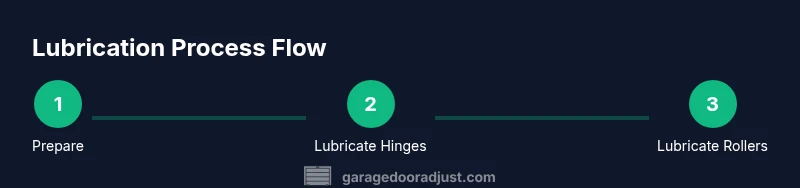
The Lubrication Process: A Quick Overview
Begin by cleaning any visible grime from hinges and rollers with a dry rag. Apply lubricant in short, steady bursts to the moving parts rather than an over-saturated spray. Move the door up and down slowly to help distribute the product and identify any spots that may require a touch more. Avoid spraying lubricants directly on the door’s tracks or torsion springs. Once the operation feels smooth and quiet, wipe away any excess to prevent dust accumulation. Finally, reattach the opener if you had disconnected it and run a full test cycle to confirm proper function.
Common Mistakes and Troubleshooting
Common errors include using the wrong lubricant (petroleum-based on nylon rollers), applying too much, and lubricating the track surface. Over-lubrication can cause dirt to stick to the film, creating more resistance rather than less. If you hear grinding or squealing after lubrication, wipe the area again and reapply sparingly. Always avoid lubricating torsion springs or the belt/chain inside powered openers unless the manufacturer explicitly recommends it. If in doubt, consult the owner’s manual or a professional technician.
Maintenance Schedule and Long-Term Care
Aim to lubricate your garage door every 6–12 months, with more frequent care in harsh climates or high-use scenarios. Temperature fluctuations, dust, and humidity can shorten the effectiveness of a lubricant film. Keep a simple maintenance log to remind you when you last serviced the door. If you notice rising noise or stiffness after rain or winter, consider re-lubricating earlier in the season. Regular checks also help you spot worn hinges or rollers before they fail, saving you time and money in the long run.
Environmental and Safety Considerations
When disposing of used rags or empty lubricant containers, follow local recycling or hazardous-w waste guidelines. Avoid letting lubricants drain into soil or waterways; wipe spills promptly and use a tray to catch drips. If you work on an elevated area, ensure your ladder or platform is stable. Store lubricants out of reach of children and pets, and use only the minimum amount necessary to achieve smooth operation. Proper ventilation is beneficial when spraying in enclosed spaces.
When to Call a Professional
If your door makes unusual noises, sticks despite lubrication, or you notice frayed cables or damaged springs, it’s prudent to contact a licensed garage-door technician. A pro can assess torsion-spring tension, structural components, and the opener’s safety features. Regular lubrication supports a pro’s maintenance plan but does not replace necessary inspections when wear or damage is evident.
Authority Sources and Further Reading
For general safety guidelines and best practices, see OSHA at https://www.osha.gov, the FTC consumer safety resources at https://www.consumer.ftc.gov, and extension articles from credible universities at https://extension.psu.edu. These sources provide foundational safety principles that underpin DIY maintenance and help homeowners operate with confidence.
Tools & Materials
- Safety glasses(Protect eyes from drips and spray mist.)
- Nitrile gloves(Keep hands clean and protect skin.)
- Ladder or stable step stool(Access high hinge points safely.)
- Clean rag or microfiber cloth(Wipe excess lubricant and grime.)
- Silicone-based garage door spray lubricant(Best for nylon rollers and metal hinges.)
- White lithium grease (or lithium-based grease)(Use sparingly on metal-to-metal joints.)
- Mild cleaner or degreaser(Optional for heavy grime on hinges.)
- Drop cloth or old towel(Protect floors from drips.)
Steps
Estimated time: 30-45 minutes
- 1
Prepare the area and secure the door
Clear the workspace, wear protective gear, and ensure the door is in a safe position. If possible, unplug the opener to prevent movement during the task. Place a drop cloth to catch any drips and keep pets away.
Tip: Always start with the door closed and stationary to avoid pinch points. - 2
Identify lubrication points
Inspect hinges, roller bearings, and the pivot points where sections meet. Do not lubricate torsion springs or the track surface. Take note of any components that look worn or cracked and plan to replace if needed.
Tip: Mark each point with a small sticker or your memory so you don’t miss any during application. - 3
Clean surfaces and remove grime
Wipe hinges and rollers with a dry rag to remove dust and grime. If there’s heavy buildup, use a mild cleaner on a cloth, then dry thoroughly. Cleaning helps the lubricant adhere and spread more evenly.
Tip: Avoid solvents that could degrade plastic rollers; keep it gentle. - 4
Apply lubricant to hinges
Spray a light film on each hinge pivot point, focusing on the areas where metal meets metal. Avoid over-saturating. Wipe any excess with a clean cloth to prevent dust accumulation.
Tip: Steady, short bursts are better than a long spray that pools. - 5
Lubricate rollers and bearings
Apply a small amount of silicone spray to the wheel bearings where they rotate inside the brackets. If you have metal rollers, you can add a touch of lithium grease to the contact points, but keep it light.
Tip: Do not spray directly into the track interior; aim at the wheel contact surface. - 6
Avoid tracks and springs
Do not apply lubricants to the vertical/horizontal tracks. Do not lubricate torsion springs or any spring system. If you notice noise coming from springs, contact a professional.
Tip: Lubrication is about friction points; springs and tracks have different maintenance needs. - 7
Distribute and test
Manually move the door up and down a few times to distribute the product. Listen for smooth operation and observe for any sticking. Reconnect the opener if you had unplugged it and run a full cycle.
Tip: If you hear new noises, recheck the hinges and rollers for binding spots. - 8
Document maintenance
Record the date and components lubricated so you maintain a regular schedule. Consider rechecking every 6–12 months or sooner in harsh climates.
Tip: Create a simple calendar reminder to avoid skipping intervals.
Got Questions?
Can I use WD-40 on garage door components?
WD-40 is primarily a solvent and moisture-displacer, not a long-lasting lubricant. It can attract dust and dry out over time. For ongoing lubrication, use silicone spray for nylon parts and lithium grease for metal joints.
WD-40 isn’t a long-term lubricant for garage doors. Use silicone spray or lithium grease for lasting protection instead.
Should I lubricate torsion springs?
No. Torsion springs operate under high tension and lubrication can attract dust and cause issues. If you suspect spring wear, contact a licensed technician. Lubricate only the hinges and rollers as recommended.
No, torsion springs should not be lubricated. If in doubt, consult a professional.
How often should I lubricate a garage door?
Most doors benefit from lubrication every 6 to 12 months, with more frequent care in dusty, humid, or high-use environments. Adjust the interval based on performance and climate.
Lubricate roughly every six to twelve months, more often if weather or use is extreme.
What’s the best lubricant for nylon rollers?
Silicone-based lubricants are typically best for nylon rollers, as they reduce friction without attracting excessive dust. Avoid petroleum-based products on nylon components.
Silicone sprays are usually best for nylon rollers; avoid petroleum-based products.
Can too much lubricant cause problems?
Yes. Over-lubrication can attract dirt and create a slippery film that picks up debris, leading to more resistance and noise. Apply sparingly and wipe away excess.
Too much lubricant can attract dust and worsen noise—use a light film and wipe excess.
Watch Video
Quick Summary
- Lubricate only hinges and rollers; avoid tracks and springs.
- Choose silicone spray for nylon components and lithium grease for metal joints.
- Keep maintenance on a 6–12 month schedule and log dates.
- Test the door after lubrication and wipe away excess.