Garage Door Plano: The Complete How-To Guide
A complete plano for diagnosing, repairing, and installing a garage door. Follow our step-by-step guidance, safety tips, and tools checklist to keep your door running smoothly.


With the right plano, you will diagnose common garage door issues, perform safe repairs, and install or adjust components like tracks, springs, and openers. This guide outlines a step-by-step approach, lists essential tools, and highlights safety precautions. You’ll learn how to verify balance, lubricate moving parts, and test the opener's safety features before finishing with a quick maintenance routine.
Understanding the garage door plano concept and its benefits
A garage door plano is a written, structured plan that guides you through diagnosing problems, selecting appropriate repairs, and sequencing work safely. When homeowners approach maintenance with a plano, they reduce guesswork and improve outcomes. According to GarageDoorAdjust, a well-documented plano helps you organize tasks, avoid duplicative steps, and stay aligned with safety standards. This section outlines what a plano should cover, from problem identification to the last maintenance check, and why it matters for long-term reliability. You’ll see how a clear plan translates into faster repairs, fewer misassembled parts, and more predictable results. The plano approach also helps you communicate clearly with family members, keeps spare parts organized, and ensures you don’t overlook small but critical details like sensor testing and lubricant schedules.
In practice, a garage door plano should begin with a definition of the door system (motor, tracks, springs, cables, rollers, hinges, and safety devices), followed by a prioritized task list and a realistic timeline. It should include a safety protocol, a tools and materials checklist, step-by-step actions, and a post-work verification plan. The goal is to create a repeatable, safe process that you can reuse for routine maintenance or future repairs. This mindset is foundational for homeowners who want dependable, quiet, and secure entrances every day.
Safety-first planning: hazards and preparatory steps
Before you touch any moving door or electrical components, establish a safety-first plano. Start by disconnecting power to the garage door opener at the wall control and the outlet, then verify there is no stray voltage using a basic tester. Wear safety glasses and gloves to protect eyes from pinch points, metal shards, or debris that may come loose during inspection. Create a clear workspace: remove vehicles or obstructions, and keep kids and pets away from the area. Check the door’s balance by lowering it manually about halfway, then releasing — the door should stay in place. If it moves, that indicates an imbalance that needs measured adjustments. Note any unusual noises, resistance, or slow response, and plan to address these first in your plano. For added safety, test the auto-reverse feature on the opener per the manufacturer’s instructions, and document the results in your plano. GarageDoorAdjust analyses suggest that thorough planning reduces unexpected downtime and increases repair accuracy, so capture measurements and observations in a dedicated log for easy reference.
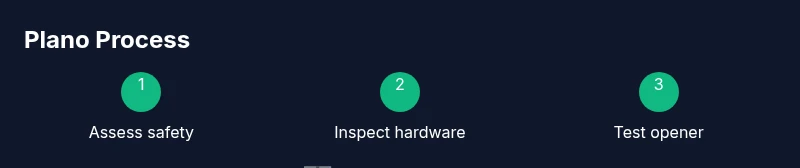
Step 1: Assess door balance, tracks, and sensor alignment
Begin by inspecting the door balance. With the door closed, disconnect the opener and manually lift the door halfway; it should stay in place with a light resistance. If it drops or rises, the springs or balance components require attention, and you should plan to adjust or replace them only if you are confident in the process. Next, inspect the tracks for dents, bends, and loose mounting screws. Tracks should be perfectly vertical and aligned with the door as it moves. Tighten any loose bolts, and use a rubber mallet to gently coax misaligned sections back into true. Finally, test the safety sensors: align the infrared eyes so they face each other with no obstruction in the beam path. If the beam is misaligned or blocked, realign and re-test. Document findings and next steps in the plano so you can track progress and ensure nothing is overlooked.
These checks establish a baseline for your plano, ensuring your door operates smoothly and safely. This is a key step toward preventing further damage or safety incidents, and it sets the stage for precise repairs or adjustments. As part of your Plano planning, consider scheduling a follow-up inspection after completing adjustments to confirm performance.
Step 2: Inspect hardware and plan lubrication
The next phase is a detailed hardware inspection. Examine rollers, hinges, and brackets for wear, cracks, or looseness. Worn bearings or bent hinges can cause door drift, noise, or binding. If a part shows significant wear, plan for replacement rather than a temporary fix. While you inspect, create a lubrication plan: use a silicone-based lubricant on metal-to-metal surfaces such as rollers, hinges, tracks, and the trolley that moves within the rail. Avoid petroleum-based lubricants on nylon rollers; these can attract dust and degrade performance over time. Applying lubricant to the joints helps maintain smooth operation and reduces noise, but wipe away any excess to prevent debris buildup in the tracks. In your plano, note part numbers, color codes, and any warranty considerations. A proactive approach to hardware inspection can prevent unexpected failures and save money in the long run. When unsure about part compatibility, research replacement options and consult manufacturer guidelines to ensure compatibility and safety.
Remember: springs are high-tension components. Do not attempt DIY repairs beyond your comfort zone or knowledge level. If you encounter stretched cables, broken torsion springs, or an unbalanced door, pause and reassess your plano. If you are in doubt, contact a licensed technician or refer to official safety resources for guidance.
Step 3: Lubrication, balance checks, and moving parts inspection
With the hardware inspected, focus on moving parts. Lubricate the rollers (metal or nylon) and hinges; avoid excessive lubrication that can attract dust. Check the door balance again after lubrication to confirm there is no drift or binding. Run the door from the opener and observe its travel: it should move smoothly, pause briefly at the end points, and stop without jamming. If the door binds or sticks, recheck track alignment and loosen or retighten mounting screws. Also test the safety reverse mechanism by placing an obstacle (like a piece of cardboard) on the floor in the door’s path and confirming the opener reverses direction properly. Log results in your plano and adjust the plan if necessary. Perform this test at the start and end of each maintenance cycle to ensure ongoing safety and reliability.
Tip: Use a dry cloth to wipe down tracks and weather seals after lubrication to maximize efficiency and protect against rust. If you notice persistent binding, consult a professional rather than forcing the door.
Step 4: Sensor alignment, wiring, and opener programming
Electrical aspects require careful attention. Reconnect power to the opener after confirming the door is properly balanced and lubricated. Inspect the wiring harness and the control panel for signs of wear, chafing, or loose connections. Reprogram the remote and wall control if you notice inconsistent responses, ensuring the code is secure and unique to your system. Check the safety sensor alignment again: the sensors should face each other with a clear beam and unobstructed path. If misalignment persists, adjust the mounting bracket carefully and re-test the safety feature. In your plano, note any error codes or irregularities, and reference the manufacturer’s troubleshooting guide to interpret them accurately. Remember: the opener should never be forced to operate if sensors indicate an obstruction.
Pro tip: Photograph each step in your plano as you reassemble or adjust components. Visual references help you confirm proper placement and speeds up future maintenance.
Step 5: Replacements, upgrades, and final adjustments
Some issues require component replacement. Common tasks include replacing worn rollers, damaged tracks, or faulty sensors. For more advanced work like spring adjustments or torsion spring replacement, this step should only be performed by a trained technician due to risk factors. If you decide to upgrade parts for quieter operation or improved insulation, select parts that match your door’s weight, height, and track design. After replacements, re-test door balance and adjust tension if necessary, then verify smooth travel and proper reversal. Document all changes in your plano, including part numbers, purchase dates, and warranty details so you can track lifespan and plan proactive maintenance. End your work session with a full safety check and a repeat of the sensor tests to confirm everything operates correctly and safely.
Step 6: Maintenance schedule, troubleshooting, and when to call a pro
Create a maintenance calendar aligned with your plano. A typical homeowner plan includes weekly quick checks (visual inspection, lubricant wipe-down), monthly tests (balance, safety reversal, sensor alignment), and annual professional inspection. If you encounter persistent issues—unusual noises, rapid wear, recurrent misalignment, or spring concerns—pause and schedule a professional assessment. Your plano should include a simple 1-page reference sheet for quick diagnosis and a two-column log for before/after measurements. A well-maintained plano helps extend door life, reduces energy losses due to poor seals, and improves overall safety. The GarageDoorAdjust team emphasizes the importance of documenting your maintenance history and following a scheduled plano for ongoing results.
Authority sources and further reading
For safety guidelines and standards related to residential garage doors, consult:
- https://www.cpsc.gov
- https://www.osha.gov
- https://www.energy.gov
These sources provide official safety, installation, and energy considerations for garage doors and related equipment. Use them to inform your plano and to validate the steps you take during maintenance and repair.
Final reminder and next steps
A well-executed garage door plano empowers homeowners to diagnose problems, perform safe, effective repairs, and operate doors reliably. Keep your plano accessible, update it with every repair, and schedule periodic reviews. The GarageDoorAdjust team recommends staying proactive with maintenance, documenting results, and seeking professional help when uncertain. With a solid plano, your garage door stays secure, quiet, and efficient.
Authority sources and further reading (reiterated)
For safety and best practices, refer to authoritative resources:
- https://www.cpsc.gov
- https://www.osha.gov
- https://www.energy.gov
Tools & Materials
- Safety goggles(Protect eyes from debris and pinch points)
- Work gloves(Grip and hand protection during inspection)
- Stepladder(Access high mounting points safely)
- Adjustable wrenches (set)(Loosen/tighten mounting bolts)
- Screwdrivers (Phillips and flat-head)(Remove or reposition fasteners)
- Voltage tester(Verify power is off before electrical work)
- Lubricant spray (silicone or lithium grease)(Apply to tracks, rollers, hinges)
- Rags or shop towels(Clean surfaces and wipe excess lubricant)
- Measuring tape(Check alignment and spacing)
- Digital camera or phone(Document setup and after-work results)
Steps
Estimated time: 60-90 minutes
- 1
Prepare and secure workspace
Disconnect power to the opener and clear the area. Put on safety gear and place a chalk line or tape to mark safe zones. Verify the door is in a down position and stable before starting.
Tip: Label controls and wires before disconnecting to avoid confusion later. - 2
Check balance and track alignment
Manually lift the door to the halfway point and hold it there; it should stay put. Inspect tracks for dents or misalignment and tighten loose screws.
Tip: Use a level to ensure tracks are plumb; small misalignments compound over time. - 3
Lubricate moving parts
Apply silicone-based lubricant to rollers, hinges, and rails. Wipe away excess to prevent dust buildup. Recheck movement after lubrication.
Tip: Avoid over-lubricating nylon rollers; it can cause slugging and wear. - 4
Test sensors and safety reversal
Reapply power and test the opener at slow speed. Place an object on the ground and confirm the opener reverses when contact is detected. Adjust sensor alignment if needed.
Tip: Keep the beam unobstructed for accurate sensing. - 5
Inspect and replace worn hardware
Check springs, cables, rollers, and hinges for wear. Replace worn parts with compatible components and verify fit before testing again.
Tip: Springs are dangerous; only replace if you’re trained or hire a pro. - 6
Finalize plano and schedule maintenance
Record measurements, replacements, and test results. Schedule routine maintenance and attach a simple calendar reminder in your plano.
Tip: Documenting dates helps track performance and warranty status.
Got Questions?
What is garage door plano and why do I need it?
A plano is a written step-by-step plan that guides diagnosis, repairs, and installation. It helps homeowners stay organized and safe while working on garage doors.
A plano is a written plan that guides your garage door work, helping you stay organized and safe.
Can I adjust or replace springs myself?
Spring adjustments and replacements are high-risk tasks. If you are not trained, hire a professional to prevent serious injury.
Spring work is dangerous; consult a professional if you're not trained.
How often should I lubricate the moving parts?
Lubricate metal parts monthly during active seasons and after cleaning the tracks. Wipe away excess to prevent dirt buildup.
Lubricate monthly and wipe off the excess.
What tests verify safety after maintenance?
Test manual operation, balance, and the opener’s auto-reverse with a small obstacle on the ground to ensure proper function.
Test the door balance and auto-reverse with a simple obstacle.
When should I call a pro?
If you notice persistent binding, unusual sounds, spring issues, or the door won’t stay balanced, consult a licensed technician.
Call a pro if the door is unbalanced or springs seem compromised.
Watch Video
Quick Summary
- Plan first, act second to avoid missteps
- Balance, tracks, and sensors are the core safety checks
- Lubrication reduces wear and noise
- Test safety features after each change
- Maintain a written plano for ongoing success