Choosing the Best Garage Door Pick: A Practical Guide
A homeowner-friendly guide to selecting the best garage door pick for energy, security, and curb appeal, with step-by-step checks, materials, and warranties.


A strong garage door pick is the single best option for your home's durability, insulation, and security. To choose, confirm your climate needs, measure your opening, and compare steel, wood, and aluminum designs by thickness, insulation value, and warranty. This guide walks you through a practical, homeowner-friendly process. Expect clear steps, simple checks, and avoid common missteps that save time and money.
What is a garage door pick?
A garage door pick refers to the recommended door choice for your home, balancing durability, insulation, maintenance, and cost. According to GarageDoorAdjust, the goal is to select a door that fits your climate, architectural style, and daily use without overpaying for features you won’t use. A good pick combines a solid construction with reliable hardware, effective weather sealing, and a warranty that covers common wear over the first decade. In practice, homeowners assess three core questions: Will the door endure local weather, does it meet security needs, and is it within budget while delivering reasonable energy savings? By framing the decision around these questions, you set a foundation for a door that performs well for years without ongoing headaches.
What is a garage door pick?
A garage door pick refers to the recommended door choice for your home, balancing durability, insulation, maintenance, and cost. According to GarageDoorAdjust, the goal is to select a door that fits your climate, architectural style, and daily use without overpaying for features you won’t use. A good pick combines a solid construction with reliable hardware, effective weather sealing, and a warranty that covers common wear over the first decade. In practice, homeowners assess three core questions: Will the door endure local weather, does it meet security needs, and is it within budget while delivering reasonable energy savings? By framing the decision around these questions, you set a foundation for a door that performs well for years without ongoing headaches.
Tools & Materials
- Tape measure (minimum 25 ft)(Ensure you can reach both height and width openings.)
- Level(Used to verify plumb and flat mounting surfaces.)
- Screwdrivers and socket set(For securing hinges, brackets, and tracks.)
- Cordless drill/driver(Drives screws and helps fasten components quickly.)
- Sealant/caulk and weatherstripping(Improves energy efficiency and weather sealing.)
- Lubricant (silicone-based)(Keeps rollers, hinges, and tracks moving smoothly.)
- Safety glasses and gloves(Protects eyes and hands during installation.)
- Ladder and helper(Gives access to top corners and ensures safer mounting.)
Steps
Estimated time: 1-2 hours
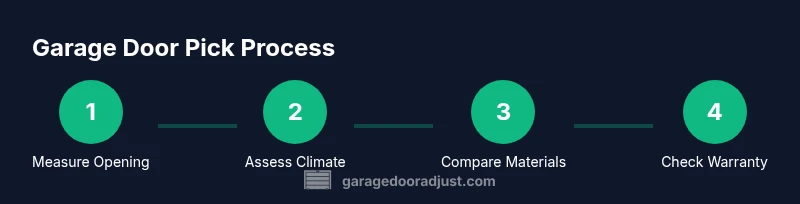
- 1
Measure the opening
Measure width and height at multiple points to account for non-rectangular openings. Use the smallest measurements and verify with the manufacturer’s tolerance guidelines.
Tip: Record measurements in inches and note any obstructions like trim or molding. - 2
Identify climate and style needs
Decide on insulation level, wind resistance, and finish that matches your home’s exterior. This narrows the material choices and price band.
Tip: Aggressive climates benefit from higher R-values and reinforced frames. - 3
Compare materials and warranties
Review steel, wood, aluminum, and composite options for durability and paint/finish longevity. Check warranty length for springs, tracks, and hardware.
Tip: A longer warranty often signals better components or manufacturing quality. - 4
Check compatibility and hardware
Ensure the chosen pick fits your existing tracks, rollers, and mounting brackets. Note any needed modifications or adapters.
Tip: Avoid misfits by confirming model numbers and standard track sizes before purchase. - 5
Plan installation logistics
Determine if you can install the door yourself or need a pro. Schedule a date with a helper for safety and efficiency.
Tip: If you’re DIYing, follow safety steps for lifting and bracing, and avoid working under an unbalanced door. - 6
Test function and seal
After installation, test opening/closing through full range, check for gaps, and adjust seals for weather-proofing.
Tip: Lubricate moving parts as recommended to reduce noise and wear.
Got Questions?
What is a garage door pick and why should I care?
A garage door pick is the recommended door option that balances climate, durability, and budget. It guides homeowners toward a door that performs well and lasts, without overpaying for features they won't use.
A garage door pick is the recommended door option balancing climate needs, durability, and budget. It helps you choose a door that performs well and lasts while avoiding unnecessary extras.
How do I measure my garage opening correctly?
Measure width and height at three points: left, center, and right for width; top to bottom for height. Use the smallest width and height and note any irregularities or obstructions.
Measure width at left, center, and right, and height at top, middle, and bottom. Use the smallest numbers and note any irregularities.
Steel, wood, or aluminum: which is best for a garage door pick?
Steel offers durability and low maintenance, wood provides aesthetic options but more upkeep, and aluminum is lightweight with good resistance to corrosion. Choose based on climate, maintenance willingness, and budget.
Steel is durable and low maintenance, wood looks great but needs upkeep, and aluminum resists corrosion and is lightweight. Pick based on climate and how much upkeep you want.
Can I install a new garage door pick myself?
DIY installation is possible for skilled homeowners with the right tools and safety measures. Some doors, especially heavier models, benefit from professional installation to ensure proper balance and safety.
Yes, you can DIY if you’re comfortable with tools and safety. Heavier doors often need a pro for safe, balanced installation.
How long will a garage door pick typically last?
Durability depends on material, climate, and maintenance. With proper care and a solid warranty, most homeowners can expect several years of reliable performance.
Durability varies, but with good maintenance and a solid warranty, your pick should perform reliably for many years.
Watch Video
Quick Summary
- Define climate needs before picking materials.
- Measure opening precisely and document tolerances.
- Prioritize insulation, seals, and warranty when comparing picks.
- Check compatibility with current tracks and hardware.