Do You Need to Grease Garage Door Tracks? A Homeowner's Step-by-Step Guide
Do you need to grease garage door tracks? Learn when lubrication is needed, which parts to lubricate, and how to maintain tracks safely with a practical homeowner's guide from GarageDoorAdjust.


Do you need to grease garage door tracks? In most cases, the answer is no—the tracks themselves don’t require lubrication and can attract dirt if you grease them. Focus on moving components (rollers, hinges, bearings) and only lubricate the track with a light film if the manufacturer approves.
Do You Really Need to Lubricate Garage Door Tracks?
When homeowners ask, do you need to grease garage door tracks, the short answer is usually no. Tracks are designed to guide the door along a metal rail, and a dry surface helps prevent dirt and grime from sticking to the surface. Excess lubricant on the track can attract more dust, debris, and spiderwebs, leading to sticky doors and louder operation. According to GarageDoorAdjust, most maintenance questions involve alignment, worn rollers, and loose hardware rather than lubrication of the track itself. For many doors, a quick inspection and cleaning will resolve squeaks or resistance better than slathering a lubricant on the rail. If you do decide to lubricate, keep it to moving parts only and avoid heavy applications on the track surface.
How Tracks Work and Why Lubrication Often Isn’t Needed
Garage door tracks are precision guides that constrain the door’s path. Lubrication can work against this precision if applied directly to the rail, allowing dust to stick and corrosion to form in crevices. The rollers and hinges are where friction occurs; those components benefit from targeted lubrication that reduces friction without compromising track alignment. The track’s role is to maintain alignment and balance; lubrication on the track can mask underlying issues like bent rails or loose mounting screws. Always prioritize alignment checks and hardware tightness before considering any lubrication on the rail itself.
Tools & Materials
- Safety glasses(Protect eyes from dust and debris during inspection and cleaning)
- Work gloves(Keep hands safe when handling rough hardware)
- Step ladder(Access higher tracks safely)
- Soft brush or microfiber cloth(Remove dust and debris from rails)
- Rag or paper towels(Wipe surfaces and excess lubricant)
- Silicone-based lubricant spray(Use only on moving parts if approved by manufacturer)
- WD-40 or lithium grease (optional)(Reserve for hinges or specific components if the manufacturer allows)
- Screwdriver or hex wrench(Tighten mounting screws if needed)
Steps
Estimated time: 20-40 minutes
- 1
Prepare and secure the door
Unplug the garage door opener and prop the door with clamps or wedges to prevent accidental movement. This creates a safe working area and prevents the door from drifting while you inspect the tracks.
Tip: Use two clamps on the track nearest the floor for stability. - 2
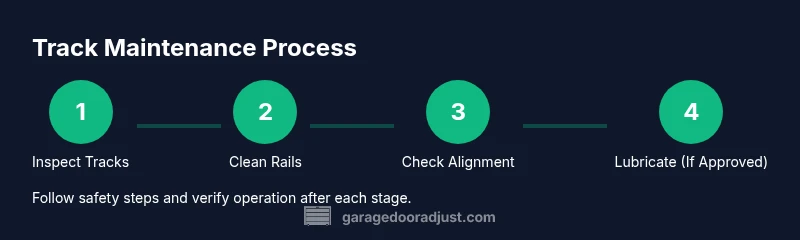
Inspect tracks for damage
Look for bends, cracks, or loose mounting screws. Any deformation can cause misalignment and is a common reason doors bind or squeak.
Tip: If you see a bend, do not force the door—call a professional for straightening. - 3
Clean the rails
Wipe the rails with a dry microfiber cloth to remove dust and grime. A clean track reduces the chance of debris acting as an abrasive.
Tip: Avoid using solvents that could degrade track coatings. - 4
Check alignment and hardware
Verify the track is parallel on both sides and the rollers sit smoothly in the track. Tighten loose screws and ensure brackets are secure.
Tip: If you adjust alignment, make small, incremental changes and test the door after each change. - 5
Apply lubrication to moving parts only
If the manufacturer approves lubrication, apply a light film to rollers, hinges, and bearings. Avoid applying to the rail surface itself.
Tip: Wipe away excess lubricant to prevent drips onto frames or floors. - 6
Test door operation
Manually operate the door to ensure smooth movement and listen for unusual noises. If anything feels off, recheck alignment and hardware before reactivating the opener.
Tip: Operate the door slowly and observe the path for any binding or misalignment.
Got Questions?
Do you have to grease garage door tracks?
Generally not. Tracks guide the door and dry surfaces reduce dirt buildup. Lubricate only if the manufacturer explicitly approves and focus on moving parts instead.
Generally not. Tracks usually don’t need lubrication unless the manufacturer says so; focus on moving parts like rollers and hinges instead.
What parts should I lubricate on a garage door?
Lubricate moving components such as rollers, hinges, and bearings if your manual permits. Avoid applying lubricant to the track surface.
Lubricate rollers, hinges, and bearings if your manual approves it; avoid the track surface itself.
What lubricant should I use on garage door components?
Use a silicone-based lubricant or a manufacturer-approved product. Avoid regular WD-40 on rails and heavy greases unless specified by the manufacturer.
Choose silicone-based or manufacturer-approved lubricants; avoid generic oils on tracks.
How often should I inspect or lubricate?
Inspect monthly for wear, alignment, and loose hardware. Lubrication should be done only when recommended, typically not on the track itself.
Check monthly; lubrication only if the manufacturer approves and as needed.
What safety precautions should I take?
Unplug the opener, secure the door, and wear gloves. Keep hands away from moving parts and never work under a door that could fall.
Unplug the opener and secure the door, wear gloves, and stay clear of moving parts.
What if lubrication doesn’t solve the noise?
Persistent noise after inspection suggests misalignment or worn components. Consider professional service for accurate diagnosis and repair.
If noise persists after proper maintenance, it may be misalignment or worn parts—seek a pro.
Watch Video
Quick Summary
- Do not automatically lubricate the rails; check the manual first.
- Lubricate only moving components if approved by the manufacturer.
- Regularly inspect alignment and mounting hardware for safety.
- Clean tracks to remove dust before considering any lubrication.
- Consult GarageDoorAdjust for guidance if in doubt about lubrication needs.