Grease Garage Door Tracks: Step-by-Step Guide for Homeowners
Learn to grease garage door tracks safely and effectively. This guide covers tools, steps, and best practices to reduce noise, improve door balance, and extend your door’s life.


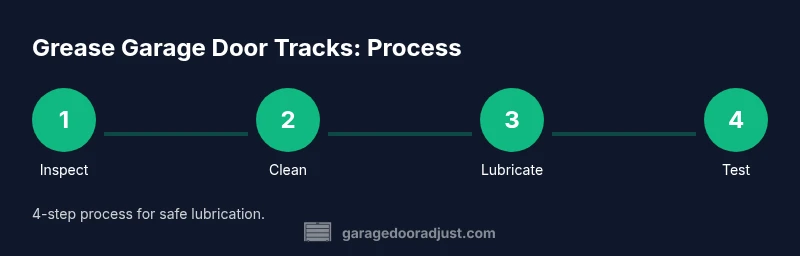
Goal: grease garage door tracks to quiet a squeak and extend door life. You’ll need basic lubricants, a soft cloth, and a few tools, plus a step-by-step approach to avoid over-lubricating. According to GarageDoorAdjust, start by cleaning the tracks, then apply lubricant only to the recommended points, and finally test the door for smooth operation.
Why Greasing Garage Door Tracks Matters
Grease garage door tracks to support quiet, smooth operation and longer-lasting hardware. The tracks guide the door as it moves, and dust, moisture, and friction can cause resistance that accelerates wear on rollers, bearings, and hinges. The GarageDoorAdjust team notes that proper lubrication reduces friction at contact points, leads to quieter operation, and helps prevent sticking at the high and low travel points. When the tracks are adequately greased, the door glides more freely rather than grinding, which minimizes noise and strain on the opener.
Before you begin, take a quick look at track alignment and obvious damage. A bent or misaligned track can negate lubrication benefits and may require professional adjustment. If you see dents, loose mounting screws, or worn rollers, address those issues first. Clean the rail surfaces with a lint-free rag to remove dirt and grime, focusing on areas where the rollers ride. Then apply a light, even film of lubricant to the inside surfaces of the track and to the roller axles, avoiding pools of grease that could attract dirt. This approach supports regular home maintenance that aligns with guidance from GarageDoorAdjust. If you want to grease garage door tracks, this guide shows you how.
Safety and Prep Before You Start
Safety comes first whenever you work on a garage door. Begin by unplugging the garage door opener from power and removing any remote controls from reach of children. If possible, manually move the door to a mid-travel position to reduce weight and avoid sudden movement. Set a sturdy ladder on a flat surface and wear work gloves to protect your hands from sharp edges and pinch points. Keep the area clear of pets and obstacles, and wipe up any drips as you go. Finally, avoid getting lubricant on the belt or chain drive, sensors, or the electric motor area. A calm, organized prep reduces risk and makes the lubrication step more effective.
Tools, Materials, and Where to Find Them
Gather a small kit of items that you’ll use for maintenance. Essential tools include a ladder, safety gloves, a soft rag, and a silicone-based garage door lubricant spray. A screwdriver (flat and Phillips) can help adjust mounting screws if needed, and a mild degreaser can be useful for cleaning stubborn grime, provided you avoid soaking bearings. Keep a trash bag or paper towels handy for cleanup, and consider a small utility tray to hold screws and small parts while you work. Having these items on hand minimizes trips back to the toolbox and helps you stay efficient during the process.
Common Mistakes and Best Practices When Lubricating Tracks
Common mistakes include over-lubricating, using the wrong lubricant, and applying lubricant to parts that don’t need it (like belts, pulleys not designed for lubrication, or sensors). Use a silicone-based spray or lightweight white lithium grease in modest amounts to avoid attracting dust. Lubricate only the contact points along the track and the roller axles; avoid spraying directly onto the rollers’ bearings if the manufacturer recommends otherwise. Wipe away any excess with a clean cloth and distribute the lubricant by moving the door through a few cycles. This helps ensure even coverage without creating greasy buildup that can attract more dirt and hinder performance.
Inspecting for Damage and Signs You May Need Service
Lubrication is not a substitute for damage assessment. After lubing, inspect for bent or misaligned tracks, loose screws, or worn rollers. If you notice persistent rubbing, grinding sounds, or uneven travel, stop and reassess—these can indicate structural issues that require professional attention. Regularly check the mounting brackets and screws to ensure the tracks stay properly aligned. If you detect any safety concerns or extensive wear, contact a qualified technician rather than attempting risky repairs yourself.
Tools & Materials
- Work gloves(Protect hands from sharp edges and pinch points)
- Sturdy ladder(Stable on a flat surface; avoid overreaching)
- Lint-free cloth or microfiber rag(For cleaning dust and grime from tracks)
- Silicone-based garage door lubricant spray(Light, even coverage on track surfaces)
- White lithium grease (optional)(Only if silicone isn’t recommended for certain metal bearings)
- Screwdriver set (flat-head and Phillips)(Used to adjust mounting screws if needed)
- Mild degreaser or soap solution(For stubborn grime—avoid areas near sensors)
Steps
Estimated time: 20-40 minutes
- 1
Prepare and Inspect
Line up your workspace and unplug the opener to prevent unexpected operation. Manually lift the door to mid-travel to reduce weight and test for smooth movement. Inspect tracks for dents, misalignment, or obvious damage, and note any worn rollers or loose screws that might need attention before lubricating.
Tip: Move slowly and use both hands; keep your fingers away from hinges and springs. - 2
Clean the Tracks
Wipe the rails with a clean rag to remove dirt, dust, and moisture. If grime is stubborn, use a mild degreaser on a damp cloth, then wipe dry. Avoid soaking bearings and keep the spray lubricant away from electrical components.
Tip: Dry tracks ensure lubricant adheres properly and won’t attract more dirt. - 3
Apply Lubricant to Contact Points
Apply a light, even film of silicone-based lubricant to the inside surfaces of the tracks where the rollers ride and to the roller axles. Do not overspray; an excess layer can collect dust and hinder movement. Wipe away any visible drips to prevent misalignment or mess.
Tip: Focus on contact points and avoid spraying onto belts or sensors. - 4
Distribute the Lubricant
Move the door up and down a few times manually to distribute the lubricant evenly. This helps the lubricant reach hard-to-see areas and prevents dry spots. If you notice binding, pause and recheck track alignment before continuing.
Tip: Manual cycling is safer than relying solely on the opener to distribute lubricant. - 5
Inspect for Excess and Recheck Alignment
Wipe away any excess product and re-inspect the tracks for alignment and secure mounting screws. Listen for changes in noise and movement; lingering squeaks or uneven travel may indicate a more serious issue.
Tip: Never leave a buildup near screws or welds; clean it off before testing again. - 6
Test with Opener and Final Check
Reconnect power and test the door with the opener and by manual operation. Observe reversal safety features and ensure the door travels smoothly without hesitation. If anything feels off, stop and reassess or contact a professional.
Tip: Test safety reversing mechanism to confirm a safe, functional system.
Got Questions?
Should I disconnect power before lubricating the tracks?
Yes. Power off the garage door opener to prevent accidental movement, then manually operate the door to check movement. This adds a safety margin and reduces risk while applying lubricant.
Yes, unplug the opener and manually check the door before applying lubricant for safety.
Is WD-40 appropriate for track lubrication?
WD-40 is a degreaser and moisture dispersant, not a long-term lubricant for tracks. Use silicone-based spray or a light lithium grease as recommended by manufacturers to maintain smooth operation.
WD-40 isn’t the best for ongoing track lubrication; choose silicone spray or light grease instead.
Where exactly should the lubricant be applied on the track?
Apply a thin film to the inside surface of the track where the rollers ride and to the roller axles. Avoid spraying onto belts, pulleys not designed for lubrication, or electronics.
Lubricate the track’s inside surface and the roller axles, avoiding belts and sensors.
How often should I grease the tracks?
Use lubrication as part of a regular maintenance routine rather than a fixed schedule. If you notice noise, stiffness, or slower movement, inspect and lubricate as needed, and re-evaluate the tracks for damage or misalignment.
Lubricate as part of regular maintenance, and recheck if you hear noise or feel stiffness.
Can lubrication fix a noisy door completely?
Lubrication can significantly reduce noise from tracks and rollers, but persistent noise may indicate worn components or misalignment requiring professional service.
Lubrication helps a lot, but continuing noise may mean parts need repair or realignment.
Is it safe to lubricate near sensors or the opener’s electrical components?
Keep lubricant away from sensors and the opener’s electrical components. Apply carefully to track surfaces and axle areas only to avoid interference with safety devices.
Avoid sensors and electronics when applying lubricant; focus on tracks and rollers.
Watch Video
Quick Summary
- Check track condition before lubrication.
- Use the right lubricant and apply sparingly.
- Wipe off excess to prevent dirt collection.
- Test door carefully after lubrication.
- The GarageDoorAdjust team recommends including lubrication as part of routine maintenance.