Difference Between Garage Door Hinges: A Practical Guide
Explore the difference between garage door hinges, their types, how they affect door balance and operation, and practical maintenance tips to keep your overhead door running smoothly.


The difference between garage door hinges mainly comes down to hinge type, durability, maintenance needs, and how each type affects door balance and operation. For homeowners, understanding hinge options helps prevent sag, binding, and excessive wear, ensuring smoother operation and safer repairs. This quick comparison focuses on residential hinges used on sectional doors, explains key distinctions, and points to maintenance steps that extend hinge life.
What are garage door hinges and why they matter
Hinges are the pivots that let sectional garage doors bend and slide along tracks. The difference between garage door hinges matters because it affects panel alignment, door balance, wind load performance, and safety. According to GarageDoorAdjust, hinge wear is one of the most overlooked causes of misalignment and increased noise in home garages. In residential setups, hinges connect adjacent door sections and carry the weight as the door travels from closed to open. Understanding hinge design helps homeowners anticipate wear patterns and plan preventive maintenance.
When you look at a typical two- or three-panel sectional door, you’ll notice hinges located at each seam: at the top, middle, and bottom sections. These hinges aren’t just fasteners; they act as articulation points that control how the panels fold. If one hinge loosens, the door may sag or bind, pulling the others out of alignment. The difference between garage door hinges becomes especially clear when comparing standard fixed hinges to continuous hinges: the former are discrete pins, the latter run the length of the panel. This distinction matters for installation, load distribution, and serviceability.
Key questions homeowners ask include: How many hinges does my door need? Are more hinges better for heavy doors? Do specialty hinges reduce wear? The short answer is that hinge selection should reflect door weight, panel length, track geometry, and climate exposure. In the following sections, we’ll break down hinge types, how to assess wear, and practical steps you can take to extend hinge life without replacing the entire system.
Standard butt hinges vs continuous hinges: basic definitions
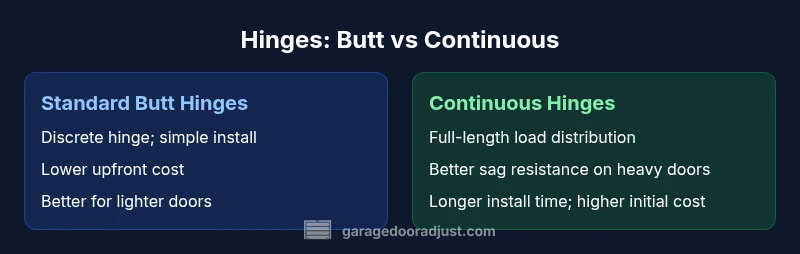
To understand the difference between garage door hinges, start with basic definitions. Standard butt hinges are discrete, two-leaf assemblies pinned at a single axis. Each hinge supports a single seam and provides predictable, moderate movement. They are common on lighter doors or where space around the hinge is tight. Continuous hinges, sometimes called piano hinges, span the full length of a panel. They distribute weight along the entire seam, reducing stress on any single point and offering superior resistance to sag.
Another consideration is material and finish. Most residential hinges are steel with a zinc or ceramic coating to resist rust. Stainless variants offer longer life in humid or coastal environments. The choice between butt and continuous hinges is driven by door weight, environmental exposure, and installation constraints. For heavy doors, continuous hinges can be preferable because they reduce point loads, but they require precise alignment during installation. This section aligns with the difference between garage door hinges that responsible homeowners consider before replacement or upgrade, not just lookup of part numbers.
In practice, many garages use a hybrid approach: butt hinges in some sections and a continuous hinge along the main door span. The bottom line is that the hinge type influences door travel smoothness, alignment tolerance, and the effort required for future maintenance.
How hinge design impacts door balance and operation
A key factor in the difference between garage door hinges is how design translates into balance. If hinges wear or loosen, the door can tilt, causing the entire panel stack to misalign with the tracks. Sagging is the most common symptom and may be mistaken for a failed spring or worn roller. Regular inspection reveals loose screws, bent hinges, or worn pin sleeves. When a hinge begins to bind, you often notice increased friction as the door moves, producing squeaks or jerky motion.
GarageDoorAdjust analysis indicates that wearing hinges can accelerate track wear and create gaps at the top or bottom of the door. This can lead to safety concerns, such as the door not fully closing or reopening if the latch or safety sensors are misaligned. A properly installed hinge set distributes weight along the hinge line, reducing stress on the rollers and tracks. The difference between garage door hinges also shows up in the way doors respond to wind gusts; continuous hinges generally provide more uniform deflection along the seam and better resilience to repeated movement.
For homeowners, a practical approach is to evaluate hinge health during routine lubrication and tightening. If you can wiggle a hinge and see daylight between the leafs, or if screws have loosened more than a quarter turn, it’s time to plan maintenance or replacement. Understanding these cues helps you maintain door balance without chasing every creak.
When to repair vs replace hinges: signs to look for
Not all hinge issues require full replacement; some problems are simple to fix, and others indicate imminent failure. First, look for excessive play or looseness around screw holes. If screws strip easily or the hinge pins wobble, the hinge may be worn beyond basic tightening. Corrosion or rust at hinge barrels can weaken the connection and affect movement. Any visible bending or cracking of the hinge knuckles is a clear sign that replacement is necessary.
Next, assess door alignment. Sag at the bottom or a gap at the top edge can indicate hinge wear rather than a misadjusted track. If hinge replacement improves alignment but new gaps appear after a few weeks, you may have more serious structural issues or misfit panels. The difference between garage door hinges becomes obvious when you compare a small hinge repair to a full hinge set replacement. In some cases, the mounting screws have become elongated, requiring longer screws or pilot holes to restore rigidity.
Finally, consider performance. If the door starts to jam, stalls, or makes loud grinding sounds only at certain positions, check hinges first. They are often the easiest, fastest source of wear and can avoid more expensive repairs later. A methodical inspection and staged replacement can restore smooth operation while keeping costs within reason.
How to choose the right hinges for your door
Choosing hinges begins with a careful assessment of weight, panel length, and track geometry. Heavier doors place greater load on the hinge pins and knuckles, so you may need larger or more robust hinges. If your door is a coastal or high-humidity installation, corrosion resistance becomes a top priority, and stainless or coated steel may be preferable. The difference between garage door hinges is also about installation tolerance. Ensure you have enough clearance for the hinge to rotate without rubbing on adjacent components or the track.
Measure the hinge spacing along the seam and match the hinge count to the number of panels. Five- or six-panel doors typically use three or more hinges per seam, while lighter doors can function well with fewer. When substituting parts, keep the same hinge width and pin diameter to maintain alignment with the roller track and weatherstripping. If you rely on torsion springs or extension springs, verify that hinge selection won’t conflict with safety brackets or track stops. In short, hinge selection should align with serviceability and future maintenance tasks, not just initial fit.
Finally, source from reputable brands and verify compatibility with existing anchors and mounting hardware. The difference between garage door hinges becomes easier to navigate when you stick to standard sizes and familiar mounting patterns. When in doubt, consult installation guidelines or contact a professional for a quick assessment.
Step-by-step basic maintenance for hinges
A proactive maintenance routine extends hinge life and keeps the difference between garage door hinges from becoming a recurring problem. Start with a visual inspection: look for rust, bent leaves, or any movement in the hinge relative to the door. Tighten screws within a quarter turn of tightness, being careful not to strip the wood or metal anchors. If a screw head sits proud, replace it with a longer machine screw sized for the mounting hole and ensure you use proper thread engagement.
Lubrication is essential but choose a lightweight, non-sediment-laden lubricant such as white lithium grease or spray-on silicone. Apply a small amount to the pin and moving surfaces, then operate the door several times to distribute the lubricant. Wipe away excess to prevent dust buildup, which can accelerate wear. For doors that sag, you may need to reposition the hinge by adding or removing shims behind the hinge plate. In cases of rust, remove the hinge, scrub the rust with a mild abrasive, dry thoroughly, and apply a protective coating.
Finally, keep an eye on environmental exposure. Salt, moisture, and temperature swings can accelerate hinge deterioration. A simple monthly check helps you catch early signs of wear before alignment issues escalate. If you notice ongoing loosening or unusual noise after maintenance, consider replacing hinges rather than chasing fleeting fixes.
Common installation considerations and DIY safety
Hinge installation is a practical area for DIY projects, but it requires precision and safety discipline. Always disconnect power to the opener before working around moving parts. Use a sturdy ladder and wear safety glasses to protect against metal shavings when drilling or riveting. When replacing hinges, mark hole locations and use a drill with the correct bit size, then fasten screws uniformly to avoid misalignment.
Check the compatibility with your door’s weatherstripping and track inline stops. If the hinge isn’t aligned, you’ll hear rubbing or experience binding as the door travels. Expect 1 to 2 hours for a typical hinge swap on average-weight doors, depending on whether hardware is accessible and whether you also service the tracks or rollers. If you run into stubborn rivets or corroded screws, stop and call a professional. Mistakes here can compromise safety and roll-time.
Lastly, verify the door balance after replacement by testing in multiple positions and ensuring the opener’s safety features remain aligned. If you have any doubt about torque, load rating, or mounting patterns, a qualified tech can complete the job quickly and safely.
Cost considerations and value: hinge replacement vs door replacement
From a cost perspective, replacing hinges is typically less expensive upfront than replacing the entire door, but the difference between garage door hinges becomes more pronounced when you factor long-term maintenance. Hinges are relatively simple components, but improper installation or degraded hardware can lead to repeated service calls. A hinge replacement project includes hardware, fasteners, lubricants, and installation time, which your DIY project costs will reflect.
If your door is older or has experienced substantial frame or panel sag, you may reach a decision point where hinge replacement only provides part of the solution. In some cases, a full door replacement might be more cost-effective when you factor insulation, weather sealing, and the door’s life expectancy. For homeowners, it’s important to weigh not only the immediate cost but the long-term value—especially if you anticipate frequent cycling in hot or cold climates which can accelerate hinge wear. GarageDoorAdjust’s assessment emphasizes a measured approach: address hinge wear early to avoid track wear and additional parts replacement.
To optimize value, combine hinge maintenance with track alignment and roller replacement if needed. This approach keeps the difference between garage door hinges manageable and helps maintain system reliability.
Quick-start checklist: diagnosing hinge issues today
- Inspect all hinges for looseness, rust, or bending.
- Tighten mounting screws; replace stripped or damaged fasteners.
- Check the door’s alignment in multiple positions to identify sag or binding.
- Lubricate moving parts with a light grease and wipe away excess.
- Look for unusual noises at the hinges; track or roller wear may also cause them.
This succinct checklist helps homeowners act fast. The difference between garage door hinges and other hardware often becomes evident when you perform these steps and compare the door’s motion before and after maintenance. If problems persist after a guided self-check, schedule a professional evaluation to ensure safety and continued operation.
Comparison
| Feature | Standard butt hinges | Continuous hinges (piano hinges) |
|---|---|---|
| Durability | Moderate with regular maintenance | High with full-length load distribution |
| Ease of Installation | Moderate; requires precise alignment | Challenging; longer hinge rail complicates installation |
| Best For | Lighter doors, budget-sensitive projects | Heavy doors, high-sag resistance |
| Cost Range | Lower per-hinge cost | Higher initial cost but longer life |
Upsides
- Improves door stability and alignment
- Easier to replace individual hinges
- Variety of materials and finishes
- Customizable to door weight and climate
Disadvantages
- Wrong hinge type can worsen binding
- More fasteners can complicate installation
- Continuous hinges require precise alignment during install
- Hinge maintenance may be needed over time
Choose hinges based on door weight and climate; for most homeowners, continuous hinges offer longevity on heavy doors, while standard butt hinges are adequate for lighter doors.
For heavy doors, continuous hinges reduce sag and spread load across the panel. For lighter doors, standard butt hinges are cost-effective and straightforward. Regular maintenance and proper installation are essential no matter which hinge you choose.
Got Questions?
What is the difference between garage door hinges?
The difference between garage door hinges mainly lies in hinge type and how weight is distributed along the door seam. Standard butt hinges are discrete and easier to install, while continuous hinges run the full length of the panel and offer better load distribution and sag resistance. Material and finish also affect durability and climate performance.
Hinges differ by type and weight distribution; butt hinges are common and simple, while continuous hinges spread load along the door and resist sag better.
How do I know if hinges need replacement?
Look for visible wear such as loose screws, bent leaves, rust, or excessive play. Sagging at the edges and binding during operation are strong signs. If tightening or lubrication doesn’t restore smooth motion, replacement is usually the best option.
Check for looseness, rust, and sagging. If in doubt, replace hinges rather than risking damage to the door.
Can I replace hinges myself?
Yes, with careful measurement and proper tools. Disconnect power to the opener, support the door, and replace hinges one at a time to maintain alignment. If you’re unsure about load ratings or torque, consult a professional.
You can do it yourself if you follow safety steps and use the right parts; otherwise, hire a pro.
Are continuous hinges better for all doors?
Not always. Continuous hinges offer improved load distribution and less sag for heavy doors, but they require precise installation and can be overkill for light doors. Choose based on door weight, climate, and space around the hinge.
Continuous hinges are great for heavy doors but aren’t necessary for every setup.
What maintenance do hinges require?
Regular inspection, lubrication, and screw tightening are key. Replace rusted parts and address wear before it worsens. Seasonal checks help catch issues early and protect door balance.
Keep hinges clean, lubricated, and tightened to extend life.
How much does hinge replacement cost?
Costs vary with hinge type, material, and labor. Expect a price range that depends on whether you DIY or hire a pro and whether you replace multiple hinges at once.
Costs depend on hinge type and labor; consult a local pro for an accurate quote.
Quick Summary
- Assess door weight before selecting hinges
- Continuous hinges suit heavy doors and long-term wear
- Regular hinge maintenance preserves balance and reduces noise
- Choose standard hinges for light doors and budget-conscious projects
- Prioritize corrosion-resistant finishes in humid or coastal environments