050actwf: Actuator Fault Wiring Troubleshooting for Garage Doors
Urgent guide for diagnosing and fixing the 050actwf actuator fault wiring code on your garage door opener. Quick fixes, safety steps, and cost ranges to get your door moving again.


050actwf indicates an actuator fault wiring issue in many garage door openers. The quickest fixes are to reseat or replace a damaged actuator harness, verify all connections, and reset the opener after cutting power. If the fault persists, stop testing and contact a professional to prevent injury or further door damage.
What 050actwf Means
The code 050actwf identifies an actuator fault wiring issue reported by many garage door openers. It points to a problem in the harness, connector, or control wiring that links the motorized actuator to the logic board. When this fault is active, the opener may stall, refuse to move, or cycle unpredictably. According to GarageDoorAdjust, loose connections, damaged wires, or corrosion on the actuator harness are among the most frequent triggers. Always unplug the unit and switch off the circuit breaker before inspecting. The goal is to restore a clean electrical path and confirm the fault does not recur after tests. Remember: brands differ in how they spell or categorize faults, so treat 050actwf as a wiring-related issue first and rule out mechanical jams or sensor faults as you progress. By understanding the wiring path—from the control board to the actuator, through the safety sensors, and back to the logic controller—you can focus your checks efficiently and reduce unnecessary disassembly.
Symptoms That Point to a Wiring Actuator Fault
The presence of 050actwf is typically accompanied by signs that point to wiring rather than a seized motor. You may notice the opener beeping or displaying the code while the door remains still; the motor can sound strained or fail to move at all. Intermittent operation, slow crawling rather than smooth movement, or unusual odors near the actuator are red flags. Visibly damaged wires, corroded connectors, or a harness that looks pinched near mounting brackets also signals a wiring fault. In many cases, weather changes or a recent installation can loosen connections and trigger the fault. Recognizing these cues helps you isolate the problem quickly and safely. GarageDoorAdjust notes that early identification saves time and reduces the risk of further damage to drivetrains or sensors.
Quick Home Fixes You Can Try Now (If Safe)
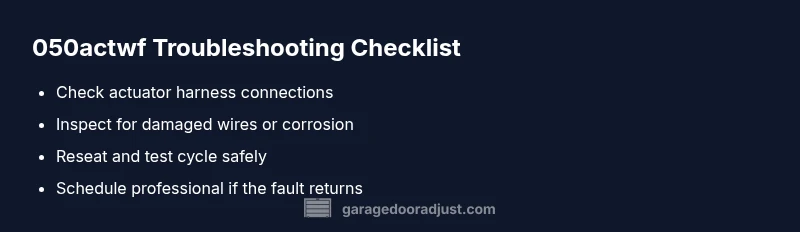
Start with the simplest steps to confirm whether the fault is electrical rather than mechanical. Power off at the outlet, unplug the opener, and lock out the circuit to prevent reconnection. Inspect the actuator harness and reseat every connector; listen for a click indicating a secure seat. Look for obvious damage, corrosion, or frayed insulation on wires—do not use damaged sections. If you find moisture near connectors, dry thoroughly and apply dielectric grease to protect against future corrosion. Reconnect, restore power, and run a test cycle gently. If the code reappears, do not force movement; instead proceed to a formal diagnostic or call a pro. These quick fixes can save time and cost when the problem is a loose connection rather than a failed motor.
How a Professional Diagnoses the Issue
A technician will verify the power supply and ground continuity to ensure the actuator is receiving correct voltage. They will test the actuator with a multimeter and inspect the control board for shorts or burn marks. Harness routing is checked for abrasion, pinched wires, or water intrusion, especially in garages with poor sealing. If needed, a known-good actuator or harness may be swapped in to determine the fault source. The goal is to confirm whether you need a harness replacement, actuator replacement, or a combination of both, and to ensure the code does not return after repair. A professional assessment also includes safety calibration of limit switches and sanity checks of the door's travel path.
Why Wires and Connectors Fail (And How to Prevent It)
Wiring faults are often the result of moisture exposure, temperature swings, or vibration. Corrosion at terminals reduces conductivity and triggers intermittent faults like 050actwf. Loose or bulky wiring bundles can rub insulation and wear conductors over time. Poor routing near moving parts or sharp edges accelerates wear. Regular visual inspections, moisture control, and tidy cable management reduce these risks. To prevent future faults, keep the area dry, avoid excessive bending of wires, and ensure connectors remain fully seated during operation. A simple annual check can prevent extended downtime.
Safety First: When to Stop and Call a Pro
If you smell burning, see smoke, or notice melted plastic near the actuator, shut power off immediately and contact a professional. If you cannot access the wiring safely from the ceiling or wall area, do not attempt DIY repairs. Do not bypass safety sensors or force the door to operate to test the code, as this can endanger you or others. In most cases, a professional repair will include harness or actuator replacement and a calibration of safety features; expect service charges and parts costs quoted before work begins.
Steps
Estimated time: 45-75 minutes
- 1
Power down and secure area
Shut off power at the outlet and disconnect the opener from the supply. Lock out the circuit to prevent accidental reconnection. This ensures you won’t be shocked while inspecting the wiring.
Tip: Use a non-contact voltage tester to confirm power is off before touching any wires. - 2
Inspect actuator harness and connectors
Open the access panel and visually inspect all connectors. Unplug and re-seat each connector firmly. Look for signs of corrosion, bent pins, or damaged insulation that could cause a short.
Tip: Take a photo of the wiring layout before disconnecting anything to aid reassembly. - 3
Test wiring continuity
If you have a multimeter, test continuity from the control board to the actuator. Look for open circuits or unexpected resistance. Replace damaged wires or connectors as needed.
Tip: Use the correct voltage range and gentle probing to avoid further damage. - 4
Reset the opener and re-test
Reconnect everything, restore power, and perform a soft test cycle. Observe whether the 050actwf code returns and verify the door movement is smooth.
Tip: Do not force the door; if it struggles, stop and consult a professional. - 5
Decide on repair vs replacement
If multiple wires show wear or the harness is damaged beyond simple repair, plan for harness or actuator replacement. Confirm whether parts are under warranty and obtain a cost estimate before proceeding.
Tip: Check if the unit has a service plan that covers parts and labor. - 6
Final safety check and documentation
After repair, run several test cycles, verify door reversing safety edges, and confirm the limit switches are calibrated. Document the fixes for future maintenance.
Tip: Record part numbers and your test results for future troubleshooting.
Diagnosis: 05Oactwf error code on the garage door opener, door won't move
Possible Causes
- highLoosened or damaged actuator harness
- mediumCorroded or loose connectors at the harness
- lowControl board fault or short in the logic wiring
Fixes
- easyReseat connectors and replace damaged harness
- easyClean connectors and protect from moisture
- hardReplace actuator or harness assembly
Got Questions?
What does 050actwf mean on my garage door opener?
050actwf is an actuator fault wiring code indicating issues in the actuator harness or related wiring. It often points to loose connections, damaged wires, or corrosion rather than a seized motor. A systematic wiring check usually resolves the issue.
050actwf is an actuator wiring fault code, usually due to harness or connector problems. A careful wiring check often fixes it.
Can I fix 050actwf myself?
You can attempt safe, basic checks such as reseating connectors and inspecting for obvious damage. Do not work on live wiring, and avoid disassembly if you are unsure about electrical safety. If the code persists, consult a professional.
You can try reseating connectors if power is off, but if the code stays, call a professional.
Is it safe to inspect the wiring myself?
Only with power off and proper precautions. Wear eye protection, avoid touching energized parts, and use insulated tools. If you are uncertain, stop and hire a pro.
Make sure power is off and you’re careful; if unsure, hire a pro.
How long does a typical repair take?
A simple harness reseat may take 30-60 minutes; a full actuator replacement plus calibration can take 1-2 hours depending on access and parts.
Most repairs take about one to two hours depending on parts and access.
What is the typical cost to fix 050actwf?
DIY harness repair parts commonly run $20-$100. Professional actuator work typically ranges from $150-$500, including parts and labor.
DIY parts are usually under $100; professional work is typically between $150 and $500.
How can I prevent actuator faults in the future?
Keep connectors dry and seated, avoid sharp bends in wiring, and perform annual inspections. Regular maintenance can significantly reduce the risk of 050actwf reoccurring.
Keep connectors dry, check wiring regularly, and schedule annual inspections.
Quick Summary
- Inspect connections first and reseat harnesses.
- 050actwf is usually wiring-related, not a motor failure.
- Costs range; plan for parts and labor in the repair budget.
- Always prioritize safety and call a pro if unsure.