How to Tell If Your Garage Door Is Insulated: A Homeowner's Guide
Learn how to tell if your garage door is insulated, why insulation matters, and practical at-home checks. This step-by-step guide from GarageDoorAdjust helps homeowners improve comfort and energy efficiency.


By the end, you’ll know how to tell if your garage door is insulated, why insulation matters for comfort and energy bills, and the simple checks you can perform at home. This guide covers material types, door construction cues, and practical tests you can complete with common tools. According to GarageDoorAdjust, a thorough inspection yields reliable results without professional help.
Why insulation matters for garage doors
Insulation is not just for living spaces. A door that resists heat transfer reduces energy loss, minimizes condensation, and helps control indoor humidity. For homeowners, understanding how to tell if garage door is insulated begins with appreciating what insulation does. A well-insulated door can keep a garage warmer in winter and cooler in summer, lessen noise transmission, and shield stored items from extreme temperatures. It also contributes to overall energy efficiency by reducing the workload on your home’s heating and cooling system. According to GarageDoorAdjust, the most noticeable benefits occur in climates with harsh seasonal temperatures and for interiors that are sensitive to temperature changes, such as home gyms, workshops, or garages converted into living spaces.
When you start assessing insulation, you’ll consider the door’s overall construction, including panel cores, exterior skins, and edge seals. Many doors hide a foam core or a dense panel that acts as a barrier to air leaks. Even if your door isn’t labeled insulated, you can often infer insulation by examining its thickness and structure. Non-insulated doors are usually thinner and lack visible foam seams along the panel edges. The goal is not just to know if insulation exists, but to understand how effectively it reduces heat flow. For GarageDoorAdjust homeowners, a quick visual check combined with a simple at-home test is enough to determine whether insulation meets your needs, or if upgrades would improve comfort and energy costs.
description_only_for_parsing":false}
How garage doors are insulated
Garage doors achieve insulation primarily through the core material and how it’s bonded to the skins. Common core options include a foam-filled cavity such as polyurethane foam or polystyrene foam. Polyurethane foam can be sprayed in to create a continuous, gap-free barrier, while polystyrene often exists as rigid panels inserted between steel skins. Some doors include reflective foils or radiant barriers to reduce heat gain from sunlight. The insulation performance is influenced by the thickness of the core, the quality of the bonds to the skins, and how well the door is sealed at the edges. You’ll often see manufacturers list insulation characteristics on a door label or in product specs. If there’s no label, you can infer insulation by thickness and the heft of the door. Remember, the term insulation here can refer to both heat resistance and acoustic dampening, so a door that reduces street noise might still have solid thermal performance depending on the construction.
Understanding door construction helps you answer the question of how to tell if garage door is insulated. Insulated doors usually have a more substantial profile and visible edge seams where foam may be evident. If the door feels hollow or flexible across most of its surface, it’s more likely non-insulated. In some cases, homeowners find that even non-insulated doors can benefit from added weather-stripping or retrofit panels to improve thermal performance. GarageDoorAdjust notes that evaluating both the type of core and the sealing around the door provides a reliable picture of insulation status without disassembling the entire door.
description_only_for_parsing":false}
Visual cues that a door is insulated
Visual inspection can reveal insulation status without taking the door apart. Look for a thick panel profile and lines or seams that align with foam cores. Check around the door’s perimeter for robust weather-stripping—insulated doors often rely on well-sealed edges to keep drafts out. Some doors feature a visible foam edge when panels are slightly misaligned or when trim is removed. If you see a smooth, uniform surface with evidence of foam, this is a strong indicator of insulation. Also, inspect any manufacturer labels or stickers that mention R-values or insulation ratings. While not universal, these cues combined with door weight and thickness provide a practical clue about insulation status without specialized equipment.
description_only_for_parsing":false}
Home testing methods for insulation effectiveness
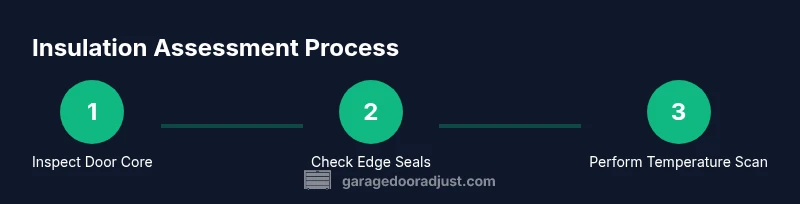
A practical at-home test blends observation with simple measurements. Start by comparing the door’s interior surface temperature with a nearby, non-insulated reference area. If the interior surface near the door feels significantly cooler or warmer than the rest of the garage, the door’s insulation may be insufficient or compromised. For a more objective assessment, use an infrared thermometer to scan multiple points along the door’s interior surface and around the bottom seal. Note any cold spots or warm pockets, especially along seams and edges. You can also run a wind-check near the door during a windy day—drafts at the threshold and along edges suggest gaps that undermine insulation. Keep in mind that outdoor temperature and sun exposure will affect readings, so perform tests under similar conditions for consistency. All these checks—visual cues, weather-stripping inspection, and temperature measurements—form a comprehensive picture of how well the door is insulated. By combining these observations, you can determine whether insulation improvements are warranted and plan next steps accordingly.
description_only_for_parsing":false}
Safety and practical considerations when inspecting a door
Inspecting a garage door involves potential hazards, especially around springs, tracks, and openers. Always work with the door in a fully closed position and disconnect the power to the opener before touching any mechanical components. Do not attempt to remove panels or alter springs, as these parts are under high tension and can cause severe injury if mishandled. Use a sturdy ladder and wear protective gloves when handling sharp edges or frayed weather-stripping. If you need to move or adjust heavy panels, enlist a helper to prevent strains or accidental falls. If the door shows signs of significant damage or if you suspect a compromised spring or balance system, contact a qualified technician. This safety-first approach aligns with GarageDoorAdjust’s guidance for homeowners who want accurate insulation assessments without risking injury.
description_only_for_parsing":false}
Upgrading or retrofitting insulation: options and considerations
If your inspection shows that your door isn’t well-insulated or has degraded edges, several upgrading options can improve performance. Weather-stripping around the perimeter is a low-cost, high-impact improvement that reduces drafts. You can also consider adding an insulation kit designed for your door type, which typically involves attaching foam panels or replacing interior panels with insulated variants. For some doors, retrofitting with polyurethane foam or dense foam cores is possible but may require professional installation to ensure a proper bond and door balance. When evaluating options, consider your climate, whether the garage is attached to the home, and how frequently the area is used for living or work. Warranty considerations are also important; check with the manufacturer before performing substantial modifications to avoid voiding coverage. In some cases, upgrading the entire door to an insulated model may yield the best return on investment in comfort and energy savings.
description_only_for_parsing":false}
Quick-start checklist you can complete today
- Inspect door thickness and edge seals for obvious insulation cues.
- Check for a foam core or dense panel by looking at the interior profile.
- Test for drafts and temperature differences near the door using a basic thermometer.
- Inspect weather-stripping and replace if worn.
- Decide whether to add weather-stripping, retrofit insulation, or upgrade to an insulated door.
Tools & Materials
- Tape measure(Measure door thickness and panel dimensions)
- Flashlight(Inspect seams and foam edges in dim light)
- Step ladder(Access header and top panels safely)
- Screwdriver set(Remove trim or access panels if needed)
- Utility knife(Trim weatherstripping or foam as needed)
- Infrared thermometer (optional)(Scan surface temperatures for cold spots)
- Masking tape and marker(Label sections during inspection)
Steps
Estimated time: 60-90 minutes
- 1
Secure the workspace
Clear the area around the door and secure the door in a fully closed position. If you use a manual opener, disconnect power as an added safety measure. This creates a stable, safe environment for inspection.
Tip: Make sure no one is standing near the door and never drill or pry with the door under tension. - 2
Inspect exterior for insulation clues
From a safe distance, look for a thicker door profile, edge seals, or visible foam seams along the panels. Note any labels indicating insulation ratings and compare exterior skin quality.
Tip: Take clear photos of any labels or foam seams for reference. - 3
Open panels to view the core (if safe)
If your door allows safe access to interior panels, inspect the core for foam presence and uniform bonding. Do not remove heavy panels or alter springs without professional help.
Tip: Do not attempt to access internal cores if you feel unsure or hear creaking sounds. - 4
Measure thickness and inspect seams
Use the tape measure to gauge overall door thickness and check seams along edges for gaps. Note irregularities that could allow air leakage.
Tip: Record measurements in a labeled diagram for later comparison. - 5
Evaluate weather-stripping and seals
Inspect bottom thresholds and side seals for wear, tears, or compression. Replace worn weather-stripping to improve thermal performance.
Tip: Ensure a snug seal without restricting door movement. - 6
Test insulation effectiveness
Place a thermometer near the door interior surface and compare with a distant reference point in similar conditions. If you have an infrared thermometer, scan multiple points for cold spots.
Tip: Run tests at similar temperatures to maintain consistency. - 7
Decide on upgrades and next steps
If insulation is lacking or degraded, decide between weather-stripping, an insulation kit, or upgrading to an insulated door. Consider cost, climate, and whether professional installation is warranted.
Tip: Document findings to guide future upgrades and warranty considerations.
Got Questions?
Can I tell if my garage door is insulated just by looking at it?
Often you can tell by a thick panel profile, visible foam, or a label indicating insulation. If unsure, combine visual cues with a simple temperature test.
Yes—look for foam cores or thicker panels, then test with a thermometer for confirmation.
What’s the difference between insulated and non-insulated garage doors?
Insulated doors have a foam core or thicker panels that slow heat transfer, while non-insulated doors are thinner and transmit more temperature changes.
Insulated doors resist heat flow better than non-insulated ones.
Is insulation worth upgrading on an older door?
Upgrading can improve energy efficiency and comfort, especially in extreme climates or attached garages. Weigh climate, usage, and cost.
Upgrading can help, particularly in cold or hot climates.
How much does insulating a garage door cost?
Costs vary based on door size and method. DIY kits are typically cheaper than professional retrofits.
It depends on your method; DIY kits are usually less expensive.
Can I install insulation myself?
Yes. You can add foam panels or use insulation kits. Follow safety guidelines and avoid modifying springs or balance systems.
Yes, with proper instructions, DIY insulation is doable.
Watch Video
Quick Summary
- Identify insulation cues through visual inspection
- Use simple at-home tests to gauge performance
- Seal gaps and upgrade weather-stripping for immediate gains
- DIY insulation is feasible; consider professional help for complex retrofits
- Document findings to guide upgrades and decisions