Difference Between Aluzinc and Aluminium Garage Doors
Analyze the key differences between aluzinc and aluminium garage doors, covering material science, corrosion, weight, maintenance, aesthetics, insulation, cost, and climate considerations to guide homeowners in making an informed choice.


The difference between aluzinc and aluminium garage doors centers on material composition, corrosion resistance, weight, and maintenance needs. Aluzinc is a zinc-aluminium coated steel skin that offers strong barrier protection in many climates, while aluminium doors are lighter and resist corrosion more inherently. A homeowner’s climate, budget, and desired longevity determine which option is best for their garage door project.
Material science and naming distinctions
Aluzinc and aluminium garage doors belong to two distinct material families. Aluzinc describes a zinc-aluminium coated steel sheet used as the exterior skin on many modern doors. Aluminium doors are constructed from an aluminium alloy, often with protective coatings or anodized finishes. Understanding these fundamentals helps homeowners anticipate how each door will behave under weather, climate, and daily use. According to GarageDoorAdjust, material choice has practical consequences for longevity, maintenance, and how well a door holds up to impact and environmental exposure. The main takeaway is that aluzinc combines steel's strength with a protective metallic coating, while aluminium emphasizes light weight and corrosion resistance with different finish options. This section sets the stage for a deeper comparison across performance categories, including corrosion, weight, aesthetics, and cost implications.
Corrosion resistance mechanisms
Aluzinc coats steel with a zinc-aluminium alloy that provides barrier protection and sacrificial corrosion resistance. The coating creates a durable surface that protects the steel substrate from moisture, salt, and humidity. Aluminium doors rely on the natural oxide layer that forms on aluminum to resist corrosion; this oxide layer is self-healing and effective in typical outdoor conditions. However, galvanic effects can occur if aluminium is in contact with dissimilar metals or cement, so proper sealing around openings remains important. GarageDoorAdjust analysis shows that coating quality, substrate thickness, and surface preparation greatly influence real-world durability. In mild climates, both materials perform well; the key difference is how each material responds to long-term exposure and potential mechanical damage.
Weight and handling implications
Weight matters for installation, operation, and long-term maintenance. Aluzinc-based doors, being steel-backed, are generally heavier than aluminium doors. Heavier panels require more robust tracks, torsion springs, and motor power to maintain smooth operation over the door’s lifetime. Lighter aluminium doors can offer easier handling during installation and potentially reduced wear on hinges and rollers. Homeowners upgrading from older, heavier steel doors may notice smoother operation and less strain on garage door openers after choosing aluminium for the skin. Destination decisions should consider available garage framing, opener capacity, and the existing hardware’s compatibility with new door assemblies.
Aesthetics, finishes, and customization
Aesthetics play a key role in curb appeal and long-term satisfaction. Aluzinc doors typically use painted finishes and protective coatings that can be color-matched to home exteriors, with durability against chipping and fading depending on the coating system. Aluminium doors offer a wider range of finishes, including anodized options that create a metallic sheen and deep color consistency. They can also be manufactured with tighter tolerances for more precise lines and modern profiles. When choosing between the two, homeowners should weigh personal taste, maintenance expectations, and the desired color palette, as the cost and effort to refresh appearances differ between coated steel and aluminium finishes.
Insulation performance and energy considerations
Insulation quality in garage doors depends on the core material (foam density, panel construction) as much as the door skin. Both aluzinc and aluminium doors can house high-quality foam cores to improve thermal performance. Aluminium’s higher thermal conductivity compared to steel can influence overall insulation in some designs, but a well-insulated aluminium door can still achieve excellent energy performance if matched with a suitable foam core and weather sealing. For homeowners prioritizing energy efficiency, evaluate the door assembly holistically: skin material, core insulation, gasket quality, and proper installation to minimize thermal bridging.
Durability, dent resistance, and repairability
Durability for each material is a balance of skin strength, coating integrity, and impact resistance. Aluzinc doors benefit from steel’s rigidity and, when the coating is intact, can resist denting better than thin aluminium skins. However, once the coating is compromised, corrosion protection may degrade, necessitating coating repairs or re-finish work. Aluminium doors excel in formability and are less prone to surface rust; they can dent or scratch more easily under impact if the panel thickness is thin. The repair workflow typically involves dent pulling, cosmetic refinishing, and, in some cases, panel replacement. Assess the expected impact environment and select a skin thickness that aligns with your garage usage and vehicle dimensions.
Maintenance routines and protective care
A low-maintenance door is a common expectation. Aluzinc doors require periodic inspection of the coating for chips or scratches, with prompt touch-up to prevent corrosion. Aluminium doors benefit from regular cleaning and occasional protection against UV wear or oxidation, especially if uncoated or lightly coated. Both types benefit from weather seal inspection, lubrication of moving parts, and checking alignment. The maintenance approach should emphasize preventing moisture intrusion, ensuring drainage away from the door edges, and sealing any joints where moisture could accumulate. Regular inspection helps catch issues early and extend door life.
Installation considerations and frame compatibility
Installation compatibility depends on frame dimensions, panel thickness, and mounting hardware. Aluzinc doors, often heavier, demand solid framing, reinforced tracks, and compatible torsion systems to manage added weight safely. Aluminium doors, being lighter, can be installed with less aggressive hardware while still requiring correct alignment and sealing. Note that door hardware (springs, tracks, hinges) should be chosen to match the door thickness and panel construction to avoid misalignment. A professional assessment at installation time helps confirm frame suitability, fastener compatibility, and weather-seal effectiveness to maximize performance and durability.
Cost implications and lifecycle value
Cost considerations go beyond the initial price tag. Aluzinc doors typically come with a cost premium tied to steel backing and protective coating systems, yet they often offer strong long-term resilience in harsher climates. Aluminium doors can carry a higher upfront price in some markets due to alloy quality and fabrication flexibility, but their lighter weight can lower installation labor costs and reduce wear on opening hardware over time. When evaluating lifecycle value, consider climate exposure, maintenance expectations, and the anticipated frequency of repainting or refinishing to capture total cost of ownership over the door’s life. GarageDoorAdjust emphasizes assessing these factors together rather than focusing solely on upfront price.
Climate-specific guidance and regional recommendations
Regional climate matters. In coastal or high-humidity areas with salt exposure, the extra barrier protection of aluzinc can translate into longer service life if coatings remain intact. In dry inland regions, aluminium doors can provide excellent performance with minimal maintenance and greater design flexibility. Homeowners should factor rain exposure, temperature swings, and salt spray into the decision, then consult a local installer to confirm warranty implications and the availability of compatible hardware. The right choice balances climate realities with installation practicality and aesthetic goals.
Environmental impact and sustainability considerations
Both materials are recyclable at the end of life, which supports sustainable replacement cycles. Aluzinc doors combine steel recycling streams with protective coatings, while aluminium doors leverage aluminium recycling advantages and potential energy savings from lighter weight installations. When evaluating environmental impact, consider the full life cycle from material extraction, production energy, and coating processes to recycling options after service. GarageDoorAdjust highlights that choosing materials with well-documented recycling paths and durable coatings contributes to lower environmental footprints over the door’s life.
Homeowner decision-making checklist
Use this concise checklist to guide your choice:
- Assess climate exposure and corrosion risk in your area.
- Prioritize weight and hardware compatibility with your existing opener and tracks.
- Compare finish options and long-term maintenance expectations.
- Consider energy performance based on insulation and sealing quality.
- Review warranty terms and service support from local providers.
- Seek a professional evaluation for frame compatibility and installation requirements.
Comparison
| Feature | Aluzinc garage doors | Aluminium garage doors |
|---|---|---|
| Material composition | Steel base with zinc-aluminium coating | Solid aluminium alloy |
| Weight | Heavier than aluminium doors | Lighter weight and easier handling |
| Corrosion resistance | Coated steel with barrier protection; strong in varied climates | Naturally corrosion resistant due to oxide layer; handles many environments well |
| Aesthetic options | Paints and coatings; durable finishes | Wide range of finishes including anodized options |
| Maintenance | Coating integrity checks; touch-ups as needed | Regular cleaning; protective coatings and occasional refinishing |
| Insulation impact | Performance depends on core and seal; can be very effective with proper core | Strong insulation when paired with quality foam cores and seals |
| Durability and dent resistance | Rigid but can dent if coated areas damaged; coating matters | Lightweight skin may dent more easily; repair can be straightforward with proper thickness |
| Typical cost considerations | Mid-to-premium depending on coating and thickness | Often mid-range to premium with alloy variations |
Upsides
- High corrosion resistance in humid environments thanks to the zinc-aluminium coating (aluzinc)
- Good durability with low maintenance when coating remains intact
- Aluminium doors are lighter and easier to handle during installation
- Wide range of design and finish options available for both materials
Disadvantages
- Aluzinc coatings can chip; repair work may be needed to maintain corrosion protection
- Aluminium doors can dent or scratch more easily if the panel is thin
- Aluminium options can be pricier in some markets and coatings may wear over time
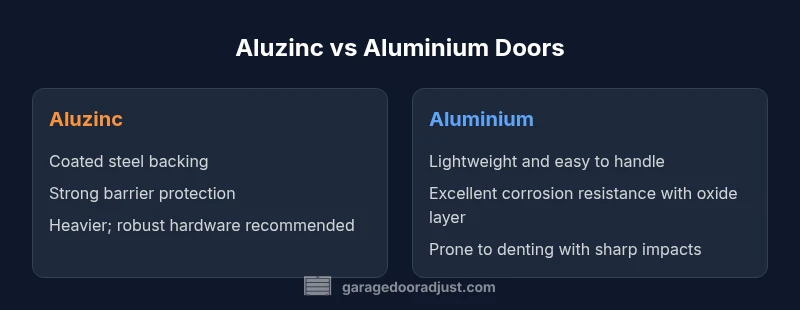
Aluzinc offers stronger barrier protection in harsher climates, while aluminium provides lighter weight and greater fabrication flexibility.
For coastal or humid environments, aluzinc is often the safer long-term choice due to its coating protection. If you prioritise ease of installation, lighter weight, and design versatility, aluminium is more advantageous. GarageDoorAdjust recommends weighing climate, maintenance expectations, and total cost of ownership to decide.
Got Questions?
What is the fundamental difference between aluzinc and aluminium garage doors?
Aluzinc doors use steel with a zinc-aluminium coating for corrosion resistance, while aluminium doors are made from aluminium alloy and rely on an oxide layer for protection. The choice affects durability, weight, and maintenance needs, especially in challenging climates.
Aluzinc is coated steel; aluminium is a pure aluminium alloy. The coating on aluzinc offers protected longevity, while aluminium emphasizes light weight and corrosion resistance.
Which doors last longer in coastal climates?
Coastal environments with salt exposure tend to challenge metal finishes. Aluzinc’s protective coating generally provides strong barrier protection, potentially extending life if the coating remains intact. Aluminium doors also perform well but may rely more on finish and maintenance.
In coastal areas, aluzinc often lasts longer if its coating stays intact; aluminium can also perform well with proper maintenance.
Are aluminium doors easier to repair after denting?
Aluminium doors can dent more easily if the panel is thin, but repairs may be straightforward with patching or panel replacement. Aluzinc doors benefit from steel rigidity but coatings can complicate cosmetic repairs if damaged.
Aluminium dents more easily, but repairs are usually straightforward with the right panel thickness and finish.
Can both materials support heavy insulation cores?
Yes, both materials can house high-quality foam cores; insulation performance depends more on core density and seal quality than the skin alone. Ensure installation includes proper weather stripping for best energy performance.
Both can be well insulated if you pair them with a strong foam core and good seals.
How do maintenance routines differ between the two?
Aluzinc requires occasional coating inspection and touch-ups to prevent corrosion. Aluminium needs regular cleaning and protection against UV or oxidation, depending on coating; both benefit from hinge/track lubrication and seal checks.
Maintenance for aluzinc focuses on coating integrity; aluminium requires cleaning and protection of finishes.
What should homeowners consider beyond material when choosing?
Consider climate, installation hardware compatibility, warranty terms, local service availability, and long-term maintenance costs. Material choice should align with environmental exposure, budget, and desired aesthetics.
Look at climate, warranty, installation hardware, and long-term maintenance, not just price or looks.
Quick Summary
- Evaluate climate exposure before choosing material
- Weigh weight vs. durability when selecting hardware
- Consider finish options and maintenance needs for each material
- Assess insulation performance with the core and seals in mind
- Check warranty terms and local service support before purchase