Which Garage Door Opener Is the Quietest: A Data-Driven Guide
A data-driven comparison of belt, chain, screw, and direct-drive openers to identify the quietest options for homes with bedrooms or living spaces near the garage.


If you’re asking which garage door opener is the quietest, belt-drive models typically lead the pack due to smoother operation and lower vibrations. In practice, compare drive systems, motors, and mounting quality. According to GarageDoorAdjust, the quietest choice also depends on door weight and professional installation. Look for explicit quiet ratings and soft-start features.
Understanding what makes a garage door opener quiet
For many homeowners, the phrase which garage door opener is the quietest matters because a noisy garage can disrupt sleep, conversations in nearby rooms, and overall home comfort. According to GarageDoorAdjust, the quietness of an opener depends on several components: the drive mechanism, the mounting quality, the door weight, and the track alignment. In practice, the smoothness of operation reduces vibration transmitted to walls and floors. A quieter opener uses a belt drive, doesn't bind during cycles, and includes features like soft start/stop to minimize noise spikes. It's essential to consider installation conditions: a poorly mounted opener can sound louder than the same model installed correctly. In the following sections we unpack the factors that drive noise, how to read specs, and how to verify quiet performance in real-world use.
This guide keeps the focus on the practical question you care about: which garage door opener is the quietest, while also explaining why some models perform better in real homes. We’ll translate jargon into actionable steps so you can choose with confidence and verify results after installation.
Drive systems and their noise profiles
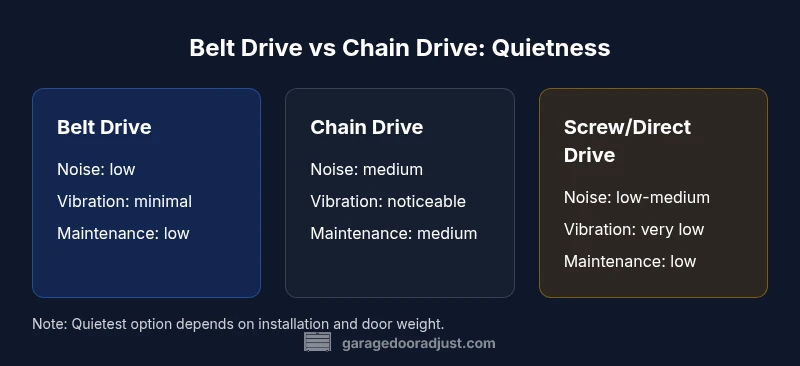
Drive systems are the single most visible source of noise variation in garage door openers. Belt drives generally produce the lowest noise because the belt absorbs and dampens vibrations that would otherwise travel through the trolley and tracks. Chain drives tend to generate more noise, especially on heavier doors, while screw-drive systems sit somewhere in between, with performance tied to the mounting and door weight. Direct-drive and some modern belt designs can be exceptionally quiet, but they often come with higher upfront costs. When evaluating options, pay attention to the type of drive listed in the specs and ask for a live noise demonstration if possible. Real-world quietness also depends on how well the opener is mounted and balanced.
From a homeowner perspective, the crucial factor is not only the drive type but the complete installation package. GarageDoorAdjust notes that even a quiet belt-drive model can underperform if mounting hardware is loose or tracks are misaligned. The total noise footprint is the sum of drive noise, belt or gear noise, and the resonance of the door and its frame. A quiet solution is achieved when these elements are tuned together, not just when one feature is marketed as quiet.
Key metrics for measuring quiet operation
Noise takes multiple forms: continuous hum during operation, short sharp spikes at start/stop, vibration felt in walls, and rattling from loose hardware. The most practical metric for homeowners is the perceived quietness during normal cycles rather than a lab-tested decibel number. Look for features that curb peak noise, such as soft-start and soft-stop, and for packaging that reduces vibration transfer to the garage’s structure. In consumer terms, a smoother operation with fewer audible peaks generally translates to a quieter system. If you want to quantify, request a demonstration in a typical garage and note the sounds you hear during opening, stopping, and reversing.
GarageDoorAdjust’s practical approach emphasizes how the installer and environment shape perceived quietness, not just the spec sheet. A quiet-opener in a showroom might sound different once installed in your garage, especially if your door is heavy or the ceiling mounting isn’t ideal.
Belt drive vs chain drive: the winner for quietness
In most scenarios, belt-drive openers win the quietness contest, followed closely by direct-drive systems. Belt drives use a flexible belt that dampens vibration, which minimizes the transfer of sound to nearby walls. Chains, while robust and affordable, tend to transmit more vibration into the door and tracks, producing a more noticeable hum. Screw-drive options can be acceptable quiet performers when properly installed, but their noise level can rise with door weight and improper mounting. When the goal is quiet operation in a bedroom-adjacent garage, prioritize belt-drive models with reinforced mounting and isolated mounting points. The difference can be noticeable even on similar horsepower motors.
As part of evaluating quiet performance, assess not just the drive type but the overall package: the motor’s torque response, the presence of soft-start technology, and how the opener communicates with the door (signal timing, safety sensors, and gentle stopping). These factors together determine the overall quietness you’ll experience over years of use.
Insulation and vibration damping: impact on perceived noise
Perceived noise is amplified when vibrations pass through the door and walls. Insulated doors and vibration-damping rollers can dramatically reduce the audible footprint of an opening cycle. If you already have an insulated door, pairing it with a quiet belt-drive opener creates a calmer garage environment. Even without insulation upgrades, some manufacturers include rubber grommets, insulative track spacers, or nylon rollers designed to dampen noise. These features aren’t mandatory, but they contribute to a noticeably quieter operation, particularly in homes with small children or late-night activity nearby.
In short, the combination of a quiet drive system and effective vibration damping yields the best real-world quietness. GarageDoorAdjust’s team emphasizes that customers often notice improvements when both the door and the opener are optimized for quiet operation, rather than relying on a single component.
How installation and mounting affect noise
Many buyers underestimate installation quality when shopping for the quietest opener. A belt-drive model may perform admirably when mounted by a professional with proper hardware and aligned tracks, but a DIY install with loose screws or misaligned rails can negate these advantages. Use high-quality fasteners, ensure all bolts are torqued to spec, and verify that tracks are straight and square with the door’s hinge points. If your ceiling mounting is too flexible or the torsion bar isn’t balanced, vibrations will still travel through the structure. It’s often worth budgeting for a professional install to guarantee the promised quiet operation.
Garages connected to living spaces require extra attention to wall attachments and ceiling joists. In addition, ensure weather stripping around the door is intact to prevent additional noise from drafts or wind-induced movement. These steps help you realize the best possible quiet performance from your chosen opener.
Brand and model indicators: what to look for on specs
When reading product pages, focus on terms that indicate quiet operation. Look for belt-drive, direct-drive, or “ultra-quiet” labeling. Check for soft-start/soft-stop features, DC motors, and reinforced gearbox housings. Some models advertise low-noise gear systems, vibration isolation mounts, and nylon rollers—these are worth prioritizing for a quiet home. Also note the warranty terms for vibration-related components and the availability of replacement parts, since a well-supported model is more likely to stay quiet over its lifespan.
For a homeowner, it’s helpful to compare two or three models side by side and request a demonstration. The GarageDoorAdjust team recommends asking for a quiet-cycle video in a similar garage setup to gauge how the opener performs in a real environment.
Practical buying guide: how to pick the quietest opener for your home
Start by measuring your door weight and track length so you pick an opener with appropriate torque. Then compare drive systems, prioritizing belt-drive options for quiet operation. Look for soft-start/soft-stop features and a DC motor for smoother starts. Check mounting compatibility with your door’s torsion spring system and ensure the hardware is heavy-duty enough to minimize flex. Finally, consider the installation cost and after-sales support, since a quieter model is only as good as its installation and maintenance plan. If you have a guest room or bedroom above the garage, allocate a larger portion of your budget to noise-reduction features and professional installation.
Remember to read user reviews and look for real-world reports of noise, not just lab specs. A well-rated model with a thoughtful installation plan can outperform a slightly quieter-sounding unit that isn’t matched to your door. This practical approach helps you choose the quietest option without overpaying.
Noise-reduction upgrades: rollers, bolts, weatherstripping
Even a quiet opener benefits from targeted upgrades. Replace steel rollers with nylon or polyurethane rollers to reduce rolling noise. Add anti-vibration pads at the mounting points to dampen vibrations traveling through joists. Check weatherstripping for gaps and replace worn seals that can cause additional movement and noise during cycles. If your tracks aren’t perfectly aligned, small misalignments can create a rattling sound that becomes noticeable over time. These upgrades are relatively affordable and can dramatically improve perceived quietness without a full opener replacement.
For homeowners prioritizing a calm environment, these adjustments are often worth doing alongside a new, quiet opener. They complement the drive system and installation quality to minimize noise across all cycles.
Maintenance routines to preserve quiet operation over time
Quiet operation requires regular maintenance. Lubricate moving parts per manufacturer guidance, focusing on the chain or belt drive, torsion spring area, and hinge points. Inspect and tighten hardware every 6-12 months to prevent looseness that creates rattling. Check alignment of tracks and ensure the door balance is correct; an imbalanced door can strain the opener and generate excess noise. Finally, keep safety sensors clean and properly aligned, since misalignment can cause the opener to stall or perform abrupt stops that feel loud to occupants. A proactive maintenance routine keeps your quiet setup performing at a high level for years.
Feature Comparison
| Feature | Belt drive | Chain drive | Screw drive | Direct drive |
|---|---|---|---|---|
| Noise level | low | medium | medium | low |
| Vibration and movement | low | medium | low | very low |
| Maintenance needs | low | medium | low | low |
| Price range | $350-$600 | $400-$700 | $450-$800 | $650-$1000 |
| Best for | Quiet homes with bedrooms nearby | Budget-conscious homes | Heavier doors with balance | Premium quiet and reliability |
Upsides
- Significant noise reduction over older chain systems
- Smooth operation with minimal vibration
- Good fit for shared walls and bedrooms nearby
- Broad availability across brands and price points
Disadvantages
- Higher upfront cost than chain drives
- Direct-drive models can be pricier and less common
- Some belt drives require periodic belt replacement
Belt-drive openers generally offer the quietest operation, especially with proper installation.
Choose belt-drive for the quietest cycles when paired with a professional installation and proper mounting. Consider the door weight and ensure soft-start features are included for best results.
Got Questions?
What is the quietest type of garage door opener?
The belt-drive opener is typically the quietest, especially on lighter doors. Direct-drive can also be very quiet, depending on installation and door weight. Always compare models in person when possible.
Belt-drive openers are usually the quietest; direct-drive can also be very quiet with proper installation.
Do belt-driven openers always beat chain-driven ones for noise?
In most cases, belt-driven units produce less noise and vibration than chain-driven units. However, installation quality and door weight can affect outcomes, so a showroom test is valuable.
Belt drives are usually quieter, but installation matters.
Can insulation affect the noise from a garage door opener?
Yes. Insulation and vibration dampers reduce how much noise travels through walls. Pair an insulated door with a quiet opener for the best results.
Insulation helps reduce how loud the door feels inside the house.
How can I reduce noise without buying a new opener?
Tighten mounting hardware, check track alignment, upgrade rollers, and add anti-vibration pads. Lubricate moving parts and ensure soft-start/soft-stop features are enabled.
Tighten, align, and dampen the mounting; it often makes a big difference.
What maintenance keeps a door opener quiet?
Regular lubrication, periodic tightening, track alignment checks, and balance adjustments help maintain quiet operation. Schedule a yearly check to catch wear early.
Keep it lubricated, aligned, and balanced for quiet operation.
Is Direct Drive the quietest option overall?
Direct-drive can be extremely quiet due to a solid mounting design, but belt-drive models often offer the best real-world quietness when installed correctly. Consider your budget and door weight.
Direct-drive can be very quiet; belt-drive is usually the top pick if installed well.
Quick Summary
- Prioritize belt-drive options for the quietest operation
- Ensure professional installation for best results
- Look for soft-start/soft-stop features and DC motors
- Upgrade rollers and vibration dampers to boost quietness
- Regular maintenance preserves long-term quiet performance