What Size Garage Door Opener for 9x7: A Practical Guide
Learn how to size a garage door opener for a 9x7 door, including horsepower, rail length, and drive options. Practical steps and safety notes from GarageDoorAdjust.


Selecting the right garage door opener for a 9x7 door means matching horsepower, rail length, and drive type to your door’s weight and usage. For a typical 9x7 panel, a 1/2 HP opener is usually sufficient, with 3/4 HP recommended if the door is insulated or heavier, or if daily use is frequent. Verify rail length clears a standard 9-foot ceiling and choose a reliable chain or belt drive.
Understanding the 9x7 Door and Opener Compatibility
Sizing a garage door opener for a 9x7 door starts with the door's weight, balance, track height, and how often you open it. A well-balanced door moves smoothly by hand; if it binds or sticks, the opener has to compensate for friction, which shortens its life and can compromise safety. According to GarageDoorAdjust, the sizing process emphasizes horsepower and rail length more than width alone, and it should start with a careful manual assessment of the door. For a typical 9x7 panel, the door may be light enough to run with a standard opener, but any insulation, wood overlays, or heavy hardware can increase the load. Inspect torsion springs and rollers for wear; a worn assembly transfers extra torque to the opener. Modern openers add safety sensors and smart controls, which you should verify fit your existing setup. Finally, record weight estimates and track heights so you can compare candidate models accurately. This upfront check helps avoid oversizing or undersizing, and it aligns with GarageDoorAdjust guidance on balancing performance with safety.
Determining the Right Motor Horsepower and Rail Length for 9x7
Horsepower (HP) is the most visible spec when sizing an opener. For most 9x7 doors, a 1/2 HP motor delivers adequate lifting power under typical duty cycles, with a 3/4 HP option offering extra torque for insulated or heavier doors. If the door has heavy cladding, tall springs, or is used multiple times daily, stepping up to 3/4 HP can reduce wear and noise while preserving lift speed. The rail length must accommodate your garage ceiling height; a 9-foot ceiling usually requires rails longer than the minimum 7 feet. Make sure the rail can reach from the motor to the door with a comfortable horizontal run and a safe clearance above the door opening. Belt drives are quieter but often cost more; chain drives tend to be rugged and affordable. Your decision should balance noise tolerance, budget, and how often you operate the door.
Sizing for 9x7: Key Considerations and Practical Rules
Beyond horsepower, consider door insulation, climate exposure, and frequency of use. An insulated 9x7 door adds weight, often pushing a 1/2 HP unit toward its limits; if you park under harsh weather or frequently run the door, a 3/4 HP model provides better durability. Track alignment and vertical clearance influence the required torque; ensure the tracks are straight and free of obstructions, and that the doorway header has adequate support. For tall garages, verify that your rails can extend to the necessary length without crowding the motor or ceiling fixtures. When choosing a model, look for safety features (auto-reverse, photoelectric sensors) and smart connectivity if you want remote control and status monitoring. Remember to consider future upgrades, such as energy-efficient insulation, which can alter door weight and opener performance.
Installation Options and Rough-In Measurements
Plan the installation by noting existing wiring, clearance, and ceiling structure. Start by measuring door width (9 feet) and height (7 feet), then measure to the ceiling to confirm rail length requirements. Typical rough-in points include a nearby junction box, a secure mounting surface for the header bracket, and a clear path for the rail. If you’re replacing an old opener, verify the new unit’s rail length is compatible with the existing tracks and that you can reuse the wall controls or remotes if desired. When mounting, maintain level alignment and avoid overtightening hardware that could distort the track. An accurate rough-in saves time and reduces the need for rework.
Safety, Maintenance, and Common Mistakes
Always disconnect power before any service, adjustment, or mounting. The most common mistakes include using a motor that’s too small for the door weight, misaligning tracks, or neglecting sensor alignment. Regular maintenance, including inspecting rollers, springs, and lubrication on moving parts, extends life and reduces wear on the opener. Keep the door balanced by manually lifting it halfway; if it doesn’t stay put, call a professional to adjust springs. For 9x7 doors, ensure the opener’s reversing system triggers reliably and the safety sensors have a clear path. Finally, avoid cheap knockoffs; invest in a reputable brand with a robust warranty.
The Upgrade Path: What to Expect When Replacing Your Opener
If you’re upgrading from an older unit, you’ll want models that match modern safety standards and compatibility with your existing remotes and wall controls. Consider chain vs belt drives for noise sensitivity and bootstrapping the performance, and verify that the run length is compatible with your ceiling height and door height. Smart features—like activity history, alerts, and remote operation—are common, but check compatibility with voice assistants or home automation if that’s important to you. Compare installation requirements, validate the opener’s warranty, and plan for the electrical connection and ceiling clearance needed for a clean, safe install.
Authority Sources
- OSHA Garage Door Safety Guidelines: https://www.osha.gov
- US Department of Energy: https://www.energy.gov
- Major Publications: https://www.popularmechanics.com
Tools & Materials
- Measuring tape(At least 25 ft for door and ceiling measurements)
- Pencil and notepad(For quick measurements and notes)
- Level(To ensure tracks and ceiling mounting are plumb)
- Drill/driver with bits(Socket and drill bits for mounting hardware)
- Screwdrivers (Flathead and Philips)(Assemble brackets and hardware)
- Ladder or scaffold(Safe access to ceiling and tracks)
- Safety gear (gloves, goggles)(Protect hands and eyes during work)
- Pliers and utility knife(Trim insulation or cut zip ties as needed)
- Helper or assistant(Assists with heavy lifting and alignment)
- Voltage tester or outlet tester(Verify power at outlet before work)
Steps
Estimated time: 1-2 hours
- 1
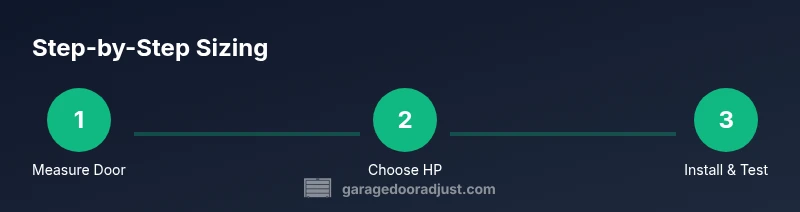
Measure door and assess weight
Measure the door width (9 feet) and height (7 feet) and check the door’s weight by manual lift. A balanced door should stay in place when you lift halfway; excessive effort indicates heavier hardware that may require more horsepower. Document measurements for model comparison.
Tip: Take multiple measurements from different points to avoid misreading the frame. - 2
Choose horsepower based on door weight
Select horsepower by door weight and usage. For most 9x7 doors, 1/2 HP suffices, but insulated or frequently used doors benefit from 3/4 HP. Higher horsepower improves durability and reduces wear on the drive train.
Tip: If you’re unsure, opt for 3/4 HP now to avoid early replacement. - 3
Verify rail length and ceiling clearance
Check ceiling height and rail length. Rails must extend from the motor to the door with a safe horizontal run and enough vertical clearance for the door to travel without hitting the ceiling or tracks. Choose rails that fit your garage’s height.
Tip: Prefer rails rated for your ceiling height even if you could squeeze a shorter version. - 4
Decide on drive type and install brackets
Choose chain, belt, or screw-drive based on noise tolerance, budget, and weight. Install header brackets and mounting rails per the manufacturer’s instructions, ensuring secure anchoring to studs or structural members.
Tip: Belt drives are quieter but cost more; ensure the mounting surface is solid. - 5
Set up wiring and safety sensors
Connect the opener to power, install safety sensors at the door track ends, and test auto-reverse and emergency stop. Confirm remotes and wall controls operate correctly and teach the door to respond to the control signals.
Tip: Keep sensor wiring away from moving parts to avoid snagging. - 6
Test, calibrate, and finalize
Test the door several times to verify smooth travel, proper stopping positions, and safe reversal. Calibrate limits as needed per the manual. Label the setup and keep a maintenance schedule.
Tip: Document calibration values for future service.
Got Questions?
What size garage door opener do I need for a 9x7 door?
For most 9x7 doors, a 1/2 HP opener is sufficient, but consider 3/4 HP if the door is insulated, heavier, or used frequently. Always verify ceiling clearance and rail length before purchasing.
Typically a 1/2 HP opener is enough for a 9x7 door, but upgrade to 3/4 HP for heavy or insulated doors or high use. Check ceiling clearance and rail length before buying.
Can I install a belt drive with a 9x7 door?
Yes, belt drives are quiet options and suitable for many 9x7 setups, especially in living spaces. If you prefer durability and price is less of a concern, chain drives are reliable but noisier.
Yes, belt drives are quiet and good for most 9x7 setups; chain drives work too but are louder.
Do I need longer rails for higher ceilings?
Yes. A higher ceiling generally requires longer rails to provide the proper horizontal run and vertical clearance for the door to travel smoothly.
Yes. Higher ceilings usually require longer rails for safe operation.
What safety features should a 9x7 opener have?
Auto-reverse, photoelectric sensors, manual release, and secure wall controls are essential safety features for any 9x7 opener.
Auto-reverse and sensors are essential, plus a manual release for emergencies.
Can I reuse parts from an older opener?
Some mounting brackets and remotes may be reusable, but track alignment and safety sensors often require new hardware for proper operation.
Sometimes you can reuse remotes, but safety sensors and tracks usually need new parts.
What maintenance is recommended for a 9x7 opener?
Regularly inspect tracks, lubricate moving parts, test sensors, and balance the door manually to catch issues early.
Inspect tracks, lubricate moving parts, test sensors, and check door balance regularly.
Watch Video
Quick Summary
- Choose horsepower based on door weight and usage.
- Rail length must match ceiling height for safe operation.
- Safety sensors and auto-reverse are non-negotiable features.
- Regular maintenance extends opener life and safety.
- Plan wiring and mounting before purchase to avoid rework.