Is Steel or Fiberglass Garage Door Better? A Practical Comparison
A thorough, objective comparison of steel and fiberglass garage doors, examining durability, insulation, maintenance, cost, and climate considerations to help homeowners decide which material is best for their home and budget.


Steel doors usually deliver the best value, combining durability with low maintenance and lower upfront cost. Fiberglass doors resist dents and weathering, performing well in coastal or humid climates but at a higher price. Your choice depends on climate, budget, and aesthetics; for a detailed side‑by‑side, read the full comparison. According to GarageDoorAdjust Analysis, steel generally offers better long-term value.
Material fundamentals: steel vs fiberglass garage doors
When evaluating whether steel or fiberglass garage doors are better for your home, it helps to understand the basic construction and performance profile of each material. Steel doors are typically a steel skin over an insulating core, often with a polyurethane layer for added R-value. Fiberglass doors use fiberglass-reinforced plastic (FRP) with a foam core and a robust exterior skin that can mimic wood or offer a modern flat finish. The question is not only about raw material but about how you live in your space. For homeowners asking is steel or fiberglass garage door better, the answer hinges on climate, budget, and tolerance for maintenance. According to GarageDoorAdjust, steel doors usually win on value and longevity in moderate climates, while fiberglass doors excel in dent resistance and weather stability in harsher environments. GarageDoorAdjust Analysis, 2026 underlines that long-term value often favors steel when properly maintained, but fiberglass has its own compelling strengths.
Durability, wear, and resilience over time
Durability matters more than most homeowners realize because a door takes a beating from wind, hail, and daily use. Steel doors tend to be tough, resisting impact but potentially denting if struck hard. Proper coating and periodic repainting help prevent rust and corrosion, especially in coastal or salty environments. Fiberglass doors resist denting far better than steel, which makes them appealing in homes with active households or in areas where frequent contact with vehicles is likely. However, fiberglass can crack if struck with heavy force or subjected to extreme temperature swings. In both cases, the door’s frame, tracks, and hardware set the foundation for longevity; a sturdy installation minimizes future problems. Another point from GarageDoorAdjust is that the door’s core insulation and weather seals play a pivotal role in overall performance as the door ages.
Insulation, energy efficiency, and thermal performance
Energy efficiency is largely driven by the door’s core insulation and seal integrity rather than the exterior material alone. Both steel and fiberglass doors can be ordered with high‑quality foam cores and thermal breaks, which reduce heat transfer and curb energy costs. The presence of insulation improves comfort and can lower the home’s heating or cooling load. In practice, fiberglass doors with a well‑designed foam core and tight seals can offer energy performance on par with steel doors. That said, the difference between steel and fiberglass in insulation tends to be modest when both options use modern cores, so choosing based on climate and durability often yields better long‑term satisfaction.
Appearance, finishes, and design flexibility
Aesthetics play a significant role in the decision. Steel doors are available in a wide range of colors and finishes, including embossed panels and textured surfaces; durable coatings help resist fading and rust. Fiberglass doors can mimic the look of real wood or offer a sleek contemporary appearance with less maintenance than wood. finishes on fiberglass tend to hold up well under sun exposure, though some lower‑quality finishes may fade faster in intense UV climates. For homeowners who want a specific style or texture, fiberglass can be a strong match, while steel remains unmatched in sheer color and finish variety.
Cost, warranty, and total value considerations
Price is a major differentiator. Steel doors typically offer lower upfront costs and widespread availability, contributing to a favorable short‑term value. Fiberglass doors command a premium upfront but can deliver long‑term gains through dent resistance and lower maintenance needs in harsh climates. Warranty terms vary by manufacturer and installer, but steel doors generally come with robust warranties on hardware and coatings, while fiberglass doors may emphasize barrier performance and color fidelity. When evaluating cost, consider not only the sticker price but also installation, maintenance intervals, and potential repainting needs over the door’s life.
Climate and installation realities you should know
Climate influences the practical performance of each material. Steel may fare well in temperate inland regions but can rust or corrode in salty coastal environments unless properly coated and maintained. Fiberglass shines in humidity and coastal areas due to its resistance to moisture and warping, though it can be more brittle in very cold, high‑impact settings. Installation is a shared challenge for both materials; a proper frame, aligned tracks, and balanced springs are essential for smooth operation and long life. Hiring a qualified technician ensures that the door’s weight, balance, and hardware are matched to your garage opening.
Practical maintenance routines and long‑term care
Maintenance extends the life of either material. Steel doors benefit from periodic cleaning, repainting as needed, and inspection of hinges, rollers, and weather seals. Fiberglass doors require less cosmetic upkeep but still need routine lubrication of moving parts, inspection for cracks or chips, and seal checks around the frame. In both cases, addressing any denting, ensuring hardware is secure, and replacing weatherstripping when worn help preserve energy efficiency and security. A proactive maintenance schedule reduces the risk of surprises and keeps the door operating safely for years.
Comparison
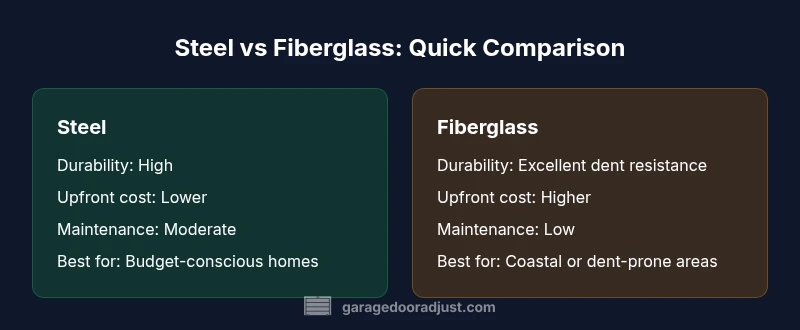
| Feature | Steel | Fiberglass |
|---|---|---|
| Durability and dent resistance | High durability with rust protection when properly finished; may dent under heavy impact | Excellent dent resistance; can crack if struck hard or exposed to extreme impacts |
| Maintenance requirements | Moderate maintenance; repainting and coatings as needed | Low maintenance; finishes are designed for longevity and moisture resistance |
| Insulation and energy efficiency | Good with foam cores; thermal performance improves with higher R‑values | Good to excellent with foam cores; tight seals help minimize heat loss |
| Appearance and customization | Wide range of colors, textures, and panel designs | Wood‑grain and smooth finishes; color stability and wood‑like aesthetics |
| Cost and value | Lower upfront cost; strong lifecycle value when well maintained | Higher upfront cost; potentially lower long‑term maintenance and better dent resistance |
| Climate suitability | Versatile for a wide range of climates with proper coatings | Excellent in humidity and coastal environments; less prone to warping |
Upsides
- Steel doors offer strong value with low upfront cost and broad availability
- Fiberglass doors provide excellent dent resistance and weather performance
- Both options support modern insulation cores for energy efficiency
- A wide range of designs and finishes keeps appearance flexible
- Solid warranties help protect long‑term ownership
Disadvantages
- Steel can dent and rust if not properly maintained; repainting may be required
- Fiberglass doors are typically pricier upfront and may require careful installation
- Color matching and fade resistance depend on coatings and sun exposure
- Repairs, when needed, can be more specialized for fiberglass
Steel generally offers the best overall value for most homes, but fiberglass is the smarter choice when dent resistance and coastal humidity are top priorities
The GarageDoorAdjust team recommends steel for long-term value and broad availability. Choose fiberglass if dent resistance and weather stability in harsh climates are your priority; the difference in climate handling can tip the decision in favor of fiberglass for certain homes.
Got Questions?
What are the main differences between steel and fiberglass garage doors?
Steel doors offer strong value and broad design options but can dent and rust if not well maintained. Fiberglass doors resist dents and weathering, with wood‑like aesthetics, but they can be pricier and may crack under heavy impact. Both can be insulated and are suitable for modern homes, depending on your priorities.
Steel doors are cost-effective and durable, while fiberglass doors resist dents and weathering. Consider your climate and budget when choosing.
Which door is more energy‑efficient?
Energy efficiency depends on the insulation core and seals rather than material alone. Both steel and fiberglass doors can use high‑quality foam cores to minimize heat transfer. In practice, either material can deliver similar thermal performance when paired with proper weatherstripping and installation.
Insulation and seals determine efficiency. Both materials can perform well with a good foam core.
Are fiberglass doors more expensive than steel doors?
Generally yes—the upfront cost for fiberglass doors tends to be higher than steel doors. However, fiberglass can offer lower maintenance costs in certain climates due to its dent resistance and moisture stability, which may balance the long‑term total cost.
Fiberglass usually costs more upfront but may save on maintenance later.
How should I maintain steel or fiberglass doors?
Keep the door and hardware clean, inspect weather seals, and lubricate moving parts regularly. For steel doors, repaint and recoat as needed to prevent rust. For fiberglass doors, check for cracks or chips in the finish and address them promptly to prevent moisture intrusion.
Clean regularly, inspect seals, and oil moving parts. Repaint steel doors as needed; watch fiberglass finishes for cracks.
Do fiberglass doors crack in cold climates?
Fiberglass doors are generally resistant to warping and moisture, but extreme cold and heavy impact can cause cracking in some instances. Choosing a high‑quality fiberglass door with a strong core and proper installation mitigates risk.
Extreme impact can crack fiberglass, but high‑quality products with proper installation reduce this risk.
What kind of warranty should I expect for steel vs fiberglass doors?
Warranties vary by manufacturer and installer, but steel doors often come with long warranties on skin and coatings, while fiberglass doors emphasize core performance and finish. Review coverage for insulation, hardware, and coatings to understand long‑term protection.
Warranties differ; steel often has strong skin/coating warranties, fiberglass emphasizes finish and core protection.
Quick Summary
- Assess climate before choosing material
- Prioritize long‑term value and maintenance needs
- Consider dent resistance if you have kids or pets
- Factor in installation costs and warranty terms
- Explore insulation options for both materials