Garage Door Looks Like Wood: A Comprehensive Comparison
Explore wood-look garage doors and compare wood-look steel, fiberglass, and composite options. Learn how realism, durability, insulation, and maintenance influence cost and long-term value. This GarageDoorAdjust guide helps homeowners choose the best wood-look door.


Wood-look doors balance authentic grain with durable construction, offering a warm curb appeal without the ongoing upkeep of real wood. This comparison covers wood-look steel, fiberglass wood grain, and composite wood-look doors, focusing on realism, maintenance, insulation, and value. For most homeowners, the right wood-look option provides compelling aesthetics and solid performance across weather, security, and energy efficiency.
The visual promise of wood-look doors
A wood-look garage door can transform a home’s curb appeal by delivering the warmth and character of real wood without the ongoing maintenance. When a door looks like wood, homeowners often weigh realism against durability, upkeep, and energy performance. This section explains why the wood-look aesthetic matters in exterior design and how modern manufacturing and finishes make convincing grain patterns possible. According to GarageDoorAdjust, achieving a convincing wood grain requires careful material choice, a high-quality surface finish, and consistent color across panels. The goal is depth and variation that read as authentic from the curb while maintaining resistance to sun fading and moisture. You’ll encounter three primary wood-look families in the market: wood-look steel, fiberglass with wood grain, and composite wood-look panels. Each option trades off realism with performance characteristics such as dent resistance, moisture tolerance, and insulation. This framing helps homeowners decide how closely realism should drive maintenance rituals, energy performance, and long-term value for a home with a distinct architectural style.
Material options for wood-look aesthetics
Wood-look doors come in three primary families: wood-look steel, fiberglass with wood grain, and composite wood-look panels. These options are designed to mimic real wood grain through embossing, stain-like finishes, and color variation. Wood-look steel is often the most dent-resistant and low-maintenance choice, while fiberglass can offer more natural grain depth and warmer undertones. Composite wood-look doors combine durability with authentic texture. Consider your climate, home style, and how often you plan to repaint or reseal when evaluating these options. For many homeowners, the choice hinges on realism vs. maintenance. In regions with strong sun exposure, a durable coating and UV protection are crucial to preserving the grain’s appearance over time. Aesthetic decisions should align with exterior materials (siding, trim, and roofing) to create a cohesive look that elevates curb appeal.
Realism in grain patterns: Can you tell real wood from a wood-look door?
Realism is a spectrum. High-end wood-look doors use multi-layer finishes and advanced embossing to create grain patterns that read as natural, with knots and color shifts that vary panel-to-panel. Low-cost options may read flat or repetitive, which can undermine the desired effect. When evaluating grain, inspect edge detail, panel seams, and the consistency of color across light conditions. The best options simulate depth by layering color, grain direction, and texture. In practice, a convincing look from five to ten feet away is often more important than microscopic accuracy up close. The takeaway: focus on texture variety, color consistency, and a finish that resists sun fading and moisture to keep the wood look fresh year after year.
Durability and weather resilience across options
Durability varies by material. Wood-look steel doors excel in dent resistance and low maintenance but may show scratches where the finish is compromised. Fiberglass with wood grain can provide excellent resistance to warping and moisture while delivering strong grain patterns. Composite wood-look doors aim to offer the most authentic texture with robust weather resistance and dimensional stability. Your climate, exposure to salt air, and the presence of nearby trees or debris will influence how each option ages. For a long-term decision, balance expected wear against the maintenance you’re willing to perform—paint touch-ups, sealant refresh, and cleaning routines all factor into longevity.
Maintenance routines to preserve wood-grain finishes
Maintenance for wood-look doors is generally lower than real wood but not zero. Regular cleaning with mild detergent and water prevents dirt buildup that dulls grain. If you choose a painted or stained finish, plan periodic resealing or repainting per the manufacturer’s guidelines. For steel doors, avoid abrasive cleaners that can scratch the surface; for fiberglass and composite doors, use non-abrasive cleaners to protect the embossed texture. Annual inspections should check for chipped paint, loose panels, and weatherstripping wear. In damp climates, ensure seals stay intact to prevent moisture intrusion, which can affect both appearance and insulation.
Insulation and energy implications of wood-look doors
Insulation quality varies by construction. Many wood-look doors include a layered core with polyurethane foam or higher-density materials that improve thermal performance, especially in attached garages. Steel and fiberglass options can be insulated more effectively when paired with a proper gasket system and weatherstripping. If your garage space is heated or connects directly to living areas, prioritize a wood-look door with a well-sealed perimeter and an insulated core to reduce heat exchange. UV-resistant finishes also help prevent color fade that otherwise reveals aging in the grain pattern. In sum, insulation is a practical factor for comfort and energy bills, not just a cosmetic concern.
Installation considerations and fitment specifics
Proper installation is essential for a convincing wood-look appearance and reliable operation. Ensure panel alignment, track routing, and hinge spacing match the door’s design. Many manufacturers offer ready-to-install kits for standard garage openings, but custom widths or unusual heights may require a professional installer. If you’re replacing a door, verify that the frame remains square and that the new door accommodates existing rails and sensors. A well-fitted wood-look door minimizes wind noise, improves sealing, and maintains the authentic look across all angles of sunlight.
Cost, value, and long-term ownership
Wood-look doors span mid-range to premium in price, influenced by material, grain complexity, and insulation quality. In practice, the most realistic grain patterns and strongest weather resistance come at a higher upfront cost, but this can be offset by lower maintenance and better energy efficiency over time. When evaluating value, compare warranty length, the availability of replacement panels, and the expected service life under your climate. Even with higher initial costs, the visual appeal and durable performance can add residential value and curb appeal that resonates with potential buyers.
Buying checklist for wood-look doors
- Assess grain realism: texture depth, color variation, and panel consistency
- Check insulation: core material, R-values, and gasket quality
- Review durability: dent resistance, warp resistance, and finish longevity
- Confirm weather protection: UV resistance and moisture tolerance
- Compare warranties: length, coverage, and replacement options
- Inspect installation: frame condition, track alignment, and sensor fit
- Consider maintenance needs: repaint cycles, resealing, and cleaning routines
Wood-look doors in practice: guidance for different home styles
Traditional homes benefit from warm, detailed grain patterns that mimic classic wood doors. Modern or industrial exteriors often pair better with smoother textures and subtle grain, maintaining a streamlined look. For cottages or craftsman-style homes, medium to heavy grain with warm undertones can echo natural materials like cedar or oak. Regardless of architectural style, the selection should harmonize with siding color, roof, and landscaping. In addition, consider seasonal lighting; wood-tone hues can appear warmer or cooler depending on natural and artificial lighting, so test samples at different times of day before deciding.
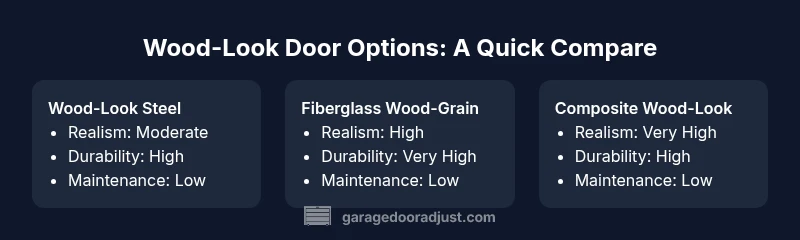
Feature Comparison
| Feature | Wood-look steel door | Fiberglass wood-grain door | Composite wood-look door |
|---|---|---|---|
| Aesthetic realism | Good realism with embossed grain; consistent but less natural variation | Excellent realism with deep grain and natural variation | Very good realism; most authentic texture among options |
| Durability and weather resistance | Excellent dent resistance; resistant to weathering, but finish can wear on edges | Very durable; excellent moisture resistance | High durability; strong resistance to warping and moisture |
| Maintenance | Low maintenance; occasional cleaning and touch-ups if painted | Low maintenance; occasional reseal or wash | Low maintenance; minimal upkeep beyond cleaning |
| Insulation | Moderate insulation; core depends on model | Good insulation; solid foam cores common | Excellent insulation; dense core with superior seals |
| Best for | Budget-conscious buyers who want decent realism | Homeowners prioritizing realism and moisture resistance | Premium look with best materials and insulation |
| Price range | mid-range | mid-to-premium | premium |
Upsides
- Mimics real wood without regular staining or painting
- Lower maintenance than authentic wood
- Wide range of grain patterns and colors
- Resists warping and swelling better than real wood
Disadvantages
- Higher upfront cost than standard steel doors
- Some wood-look materials may dent or scratch differently than metal
- Color and grain patterns may vary between manufacturers
Wood-look doors offer a compelling aesthetic with solid performance; wood-look steel is typically the best overall value.
Choose wood-look if curb appeal and durability matter; steel-wrapped grain is often the best balance of realism, maintenance, and cost for most homes.
Got Questions?
Which wood-look option is the most realistic?
Fiberglass wood-grain and composite wood-look doors typically offer the most convincing grain depth and natural variation. Steel can approach realism when embossed and finished with high-quality coatings, but texture depth may not match real wood in every light. Inspect multiple light conditions to judge realism before buying.
Fiberglass and composite wood-look doors usually look the most realistic, especially in grain depth. Check different lighting to judge texture before you buy.
Will wood-look doors require painting or refinishing?
Most wood-look doors arrive with a factory-applied finish that resists fading. If your finish is painted or stained, you may need periodic touch-ups or refinishing, depending on exposure. Check the manufacturer’s guidance for recommended refresh intervals.
Most wood-look doors don’t need painting, but some may require occasional refinishing if the finish wears down over time.
Are wood-look doors more energy-efficient than real wood?
Wood-look doors can be highly energy-efficient when built with insulated cores and proper weatherstripping. Real wood won’t inherently be more energy-efficient; the key is construction quality, seals, and core material rather than the grain appearance alone.
Energy performance comes from insulation and seals, not the wood look. Look for insulated cores and good weatherstripping.
What maintenance is needed for wood-look doors?
Regular cleaning to remove dirt and UV exposure, plus periodic seal or paint refresh if the finish requires. Inspect seals and tracks annually, and address any warping or dents promptly to preserve appearance and operation.
Clean it regularly, reseal or repaint as needed, and check seals and tracks each year.
How long do wood-look doors typically last compared to steel?
Lifespan varies by material. Steel options tend to offer excellent durability with less warping risk than wood, while fiberglass and composite doors can provide superior grain realism with strong weather resistance. Life expectancy is also influenced by climate and maintenance.
Steel generally lasts very long with minimal warping, while fiberglass and composite balance realism with durability.
Are installation differences needed for wood-look doors?
Installation requirements are similar to standard steel or fiberglass doors, but you should verify frame squareness and track compatibility for the chosen wood-look option. Some higher-end, thicker doors may require adjusted hardware or professional installation.
Installation is similar to standard doors, but confirm frame squareness and track compatibility.
Quick Summary
- Evaluate grain realism against maintenance needs before buying
- Prioritize insulation if the garage is attached to living spaces
- Balance upfront cost with long-term maintenance expectations
- Verify warranty and replacement options for your chosen material
- Match wood grain style to your home’s architectural character