Is Garage Door Lube the Same as WD-40? A Practical Guide
Explore whether WD-40 and dedicated garage-door lubricants are interchangeable. Learn where and how to apply for quiet, long-lasting hinges, tracks, and springs, plus maintenance tips and safety considerations.


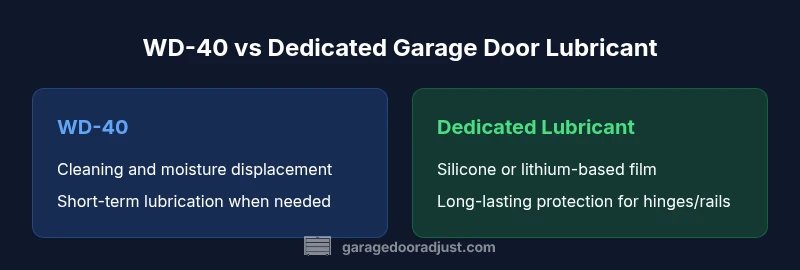
WD-40 is not the same as a dedicated garage-door lubricant. WD-40 cleans and displaces moisture but does not provide long-term protection. A silicone- or lithium-based garage door lubricant offers lasting protection for hinges, rollers, and tracks. For most maintenance tasks, choose a purpose-made lubricant and reserve WD-40 for cleaning and rust removal.
Core distinctions in lubricants for garage doors
Lubricants used on garage doors are not one-size-fits-all. Many homeowners wonder is garage door lube the same as wd 40, and the answer is nuanced. The right lubricant creates a durable film on metal parts, reduces friction, and resists collecting dirt. In contrast, WD-40 is a solvent-based product that cleans surfaces and displaces moisture, but it does not form a long-lasting protective film. According to GarageDoorAdjust, using the wrong product can accelerate wear on hinges, rollers, and tracks, leading to more noise and more frequent maintenance. Understanding these differences helps homeowners choose the right product for each component and climate.
From there, the block continues with examples of the hardware involved, including springs, tracks, hinges, rollers, and pulleys. Each part experiences different loads and exposure to the elements. A one-size-fits-all spray can leave you with sticky residue or insufficient lubrication where it’s most needed. The industry best practice is to use a dedicated lubricant formula designed for metal-to-metal contact in a sealed environment, and to reserve general-purpose sprays for cleanup or minor rust pre-treatment. This approach minimizes friction, reduces noise, and extends the life of moving parts.
How lubrication interacts with moving parts
Garage door hardware relies on consistent lubrication to keep metal-on-metal contact smooth. Hinges and rollers carry much of the load, while tracks guide movement with minimal friction. Lubricants that dry out or break down under load can cause squeaks, stiffness, or jerky operation. A proper lubricant forms a thin, durable film that remains on contact surfaces during operation, resisting water and dust intrusion. Inconsistent lubrication leads to higher wear on pins, bushings, and bearings, and can shorten the life of the door system. For homeowners, this means planning a lubrication routine around seasons (drier winters vs humid summers) and depending on door usage. For the best results, follow the manufacturer’s recommendations for lubrication points and product types. According to industry guidance, not all spray products are equal in terms of film strength and longevity, so match the product to the task and component.
WD-40: what it does well and what it doesn't do for garage doors
WD-40 excels at cleaning, moisture displacement, and mild rust pre-treatment. It can loosen sticky components and remove previous grime before applying a dedicated lubricant. However, WD-40 is a solvent-based spray that tends to evaporate or thin out over time, leaving little protective film for long-term lubrication. For moving components like hinges, tracks, and springs, relying on WD-40 alone can lead to more frequent maintenance and potential wear. The key takeaway is that WD-40 is a great preparatory solvent, but it should not replace a purpose-built garage door lubricant for ongoing protection and quieter operation. In other words, reserve WD-40 for initial cleaning or rust reduction, then apply a lubricant designed for hardware longevity.
Dedicated garage door lubricants: silicone-based vs lithium-based
Dedicated garage door lubricants come in silicone-based and lithium-based formulations, each with distinct advantages. Silicone sprays form a non-sticky film that works well on metal tracks, hinges, and rollers, resisting moisture and accumulating less dirt. Lithium-based lubricants provide heavier protection for high-load joints and bearings, offering longer-lasting lubrication in environments with frequent door use or temperature fluctuations. When choosing between these two, consider the door’s components and the climate. For most residential doors, a silicone-based product applied sparingly to hinges, rollers, and the top of tracks delivers a clean, quiet operation. For heavy-use doors or harsher climates, a lithium-based product can relieve frequent re-lubrication. Always avoid over-application and never mix lubricants, which can compromise performance.
Risks of using WD-40 long-term on door hardware
Routinely using WD-40 on garage door hardware can create a slippery surface that collects dust and grit, potentially increasing wear over time. The solvent in WD-40 can strip away protective coatings and degrade some rubber seals and gaskets if overapplied. Over-reliance on WD-40 may also mask underlying issues such as worn bearings or misaligned tracks, delaying necessary maintenance. To minimize risk, treat WD-40 as a clean-up or pre-treatment tool, not as a substitute for dedicated lubricants on moving metal surfaces. If you must use WD-40, apply a light layer and immediately follow with a silicone- or lithium-based lubricant on the same parts.
Practical maintenance plan: schedule, locations, and technique
A practical maintenance plan balances regular inspection with targeted lubrication. Identify lubrication points: hinge pivots, bearing points, roller axles, and the upper track contact surfaces. Start by cleaning these parts with WD-40 or a mild degreaser to remove old grime, then wipe dry. Apply a thin film of silicone-based lubricant to hinges and rollers, and a lithium-based product to bearings or high-load joints if recommended by the manufacturer. Avoid over-applying, which can attract dirt and impede movement. Record your maintenance date and plan a reapplication window based on usage and climate—typically every 6 to 12 months for most homes, with more frequent service in dusty or humid environments. Safety first: unplug the opener during lubrication, keep hands clear of moving parts, and wear gloves to minimize skin contact with chemical products.
Application tips by component
Different parts benefit from different application techniques. For hinges, apply to the pin and pivot points while the door is closed to ensure the lubricant reaches the contact surfaces. On rollers, apply to the wheel axle and the point where the roller meets the track; avoid contaminating the belt if the door uses a belt drive. For tracks, apply sparingly to the upper surfaces only when needed, avoiding excessive buildup that can attract dirt. When lubricating springs or cables, use only manufacturer-recommended products and avoid solvent-heavy sprays that could degrade materials. Always work in a well-ventilated area and wipe away excess product for a clean finish.
Choosing between WD-40 and dedicated lube: a decision matrix
The choice hinges on the task and the desired outcome. If you need cleaning or rust mitigation, WD-40 offers quick benefits but does not substitute long-term lubrication. For ongoing performance, silicone- or lithium-based lubricants provide lasting protection and smoother operation. Use WD-40 only as a preparatory step before applying the proper lubricant. Consider climate, door usage, and specific component recommendations from the manufacturer when building your maintenance plan. This approach minimizes noise, reduces friction, and extends the life of critical components.
Authority sources
- https://extension.illinois.edu
- https://extension.umn.edu
- https://www.osha.gov/laws-regulations/standards
Real-world scenarios and troubleshooting
Homeowners often encounter squeaky hinges, stiff rollers, or noisy tracks. Start by inspecting for visible wear, binding, or misalignment. Clean the area with WD-40 to remove grime (if needed), then apply a thin coat of silicone or lithium-based lubricant to the moving parts. If noise persists after lubrication, check for worn bearings or misaligned tracks and consult a professional. In garages with extreme temperatures, you may notice faster lubricant breakdown; plan for more frequent lubrication. Always document maintenance actions so you can detect patterns over time and adjust your plan accordingly.
Quick-start checklist for homeowners
- Identify lubrication points (hinges, rollers, tracks, springs)
- Clean old residue with WD-40 and wipe dry
- Apply silicone-based lubricant to hinges/rollers; lithium-based to high-load joints if recommended
- Wipe away excess to avoid attracting dirt
- Recheck operation after lubrication; test opener safety features
- Schedule next maintenance window (6–12 months, more often in dusty climates)
mainTopicQuery':'garage-door-lubrication'},
comparisonTable
prosCons
verdictBox
keyTakeaways
faqSection
Comparison
| Feature | WD-40 (Multi-Purpose) | Dedicated Garage Door Lubricant (Silicone/Lithium) |
|---|---|---|
| Lubrication type | Solvent-based spray | Film-forming silicone or lithium-based |
| Best used for | Cleaning, moisture displacement | Long-term lubrication of hinges, rollers, tracks |
| Longevity | Short-lived; reapply often | Long-lasting; less frequent reapplication |
| Application points | Limited to pivot points and hinges | All moving metal parts per manufacturer |
| Residue/cleanliness | Oily residue; can attract dirt | Light, easy-to-clean residue |
| Cost range | Low | Moderate |
| Safety considerations | Slip hazard if over-applied | Better control; follow manufacturer directions |
Upsides
- Low upfront cost and easy to source for quick fixes
- WD-40 can help clean and degrease before lubrication
- Silicone or lithium lubricants reduce noise and wear
- Long-term lubrication with dedicated products minimizes maintenance frequency
Disadvantages
- WD-40 can degrade rubber seals and drift away from proper lubrication
- Over-reliance on WD-40 leads to more frequent maintenance
- Mixing lubricants can compromise performance and durability
- Dedicated lubricants may require more careful selection for climate and door type
Dedicated garage door lubricant is the preferred option for routine maintenance; WD-40 serves as a cleaning/prep aid rather than a long-term solution
For reliable, quiet operation, use a silicone- or lithium-based lubricant on hinges, rollers, and tracks. Reserve WD-40 for cleaning or initial rust reduction, then follow with the proper lubricant for lasting protection.
Got Questions?
Is WD-40 safe on garage door springs?
WD-40 is not ideal for lubricating springs over the long term. It can degrade some coatings and rubbers and may not provide the lasting lubrication needed for springs. Use a purpose-made lubricant recommended by the manufacturer.
WD-40 isn’t the best choice for springs over time. Use a dedicated lubricant as directed by the manufacturer.
What lubricant should I use for tracks and hinges?
A silicone-based lubricant works well on tracks and hinges, offering a clean, long-lasting film. For high-load joints, a lithium-based product can provide extra protection. Apply sparingly and avoid over-lubricating.
Silicone for tracks and hinges, lithium for heavy-duty joints, apply sparingly.
How often should I lubricate a garage door?
Most residential doors benefit from lubrication every 6 to 12 months, depending on climate, dust, and usage. In dusty or humid environments, consider more frequent checks and reapplication.
Typically every 6 to 12 months, more often in dusty climates.
Can I use WD-40 to remove old lubricant before applying new?
Yes, WD-40 can help remove old residue before applying a proper lubricant. Follow with a silicone- or lithium-based lubricant for lasting protection.
WD-40 can help clean old residue, then apply the right lubricant.
What safety steps should I follow when lubricating?
Disconnect the opener, wear gloves, and avoid over-lubricating. Keep away from moving parts and ensure the area is well-ventilated. Check safety sensors after maintenance.
Unplug the opener, wear gloves, and keep hands clear of moving parts.
Are there seals or rollers to worry about when lubing?
Yes. Use lubricants compatible with rubber seals and plastic rollers. Avoid spraying directly on belts or pulleys unless the manufacturer specifies compatibility.
Be careful with seals and rollers; use the right lubricant and avoid spraying belts unless advised.
Quick Summary
- Use dedicated lubricants for long-term protection
- WD-40 is best for cleaning, not ongoing lubrication
- Lubricate hinges, rollers, tracks, and bearings per manufacturer guidance
- Avoid mixing lubricant types to prevent performance issues
- Schedule lubrication every 6–12 months depending on climate and use