Chain vs Belt Garage Door Opener: Which Is Better?
Is chain or belt garage door opener better? This objective comparison analyzes noise, durability, maintenance, and cost to help homeowners choose the right drive type for their garage.


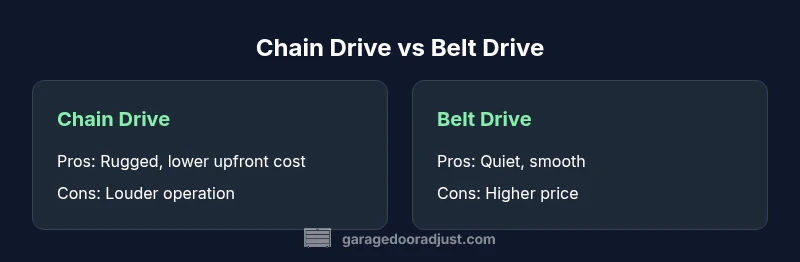
Chain or belt garage door opener better? In most homes, belt-drive openers win for quiet, smooth operation, while chain-drive models deliver rugged reliability at a lower upfront cost. If you value a peaceful, unobtrusive garage, choose belt; if you need maximum budget flexibility and simpler parts, chain can be the better fit.
Understanding Drive Mechanisms: Chain vs Belt
When evaluating is chain or belt garage door opener better, the first step is to understand how each system works. Belt-drive openers use a polyurethane or steel-reinforced rubber belt to lift the door, while chain-drive models rely on a metal chain to do the same job. This fundamental difference drives most of the practical distinctions homeowners care about: noise, maintenance, price, and longevity. According to GarageDoorAdjust, belt-drive openers are typically quieter in normal residential settings, which makes them a strong fit for homes with living spaces near the garage. The choice often comes down to how much you value quiet operation versus upfront cost and robustness. The main takeaway is that the belt’s softer engagement produces smoother starts and stops, while the chain’s direct pull can tolerate heavier usage and wider door types with fewer tension issues.
Quick note for homeowners: belt and chain drive systems are both common, but their performance is heavily influenced by installation quality and right-size matching to the door. A high-quality install with proper calibration minimizes noise and vibration regardless of the drive type.
Noise and Comfort: How Drive Type Affects Living Spaces
For most people, noise is the deciding factor. Belt-drive openers are widely perceived as much quieter than chain-drive units because the belt dampens impact and resonance across metal components. This difference translates to less floor and wall vibration you can feel in rooms adjacent to the garage. If your garage shares a wall with bedrooms or living areas, a belt-drive model is often worth the extra upfront cost for its quiet operation. Conversely, chain-drive openers, while louder, can still operate smoothly in well-constructed spaces and are celebrated for their reliable, long-term performance in demanding environments. For households with very thin or flexible walls, this distinction can matter more than door weight or motor horsepower.
Durability and Maintenance Realities
Durability is a nuanced topic because both drive types are generally robust when properly installed and maintained. A chain drive is typically rugged by design; metal-on-metal contact can handle heavier doors and more frequent cycles with less risk of belt stretching or breakage. Belt drives, while quieter, rely on a belt that can wear over time and may require belt replacement every several years depending on usage, door weight, and climate. Maintenance for belt drives tends to focus on belt tension, alignment, and periodic belt inspection, while chain drives demand lubrication of the chain, pulley inspection, and tension adjustments. In either case, following the manufacturer’s maintenance schedule is essential to maximize life and performance.
Installation Considerations and Compatibility
Choosing between chain and belt hinges on your door’s weight, track configuration, and the operator mounting space. Heavier doors and older tracks may benefit from the reliability of a chain drive, especially if the door’s weight makes smooth belt tension harder to maintain. Belt drives require precise belt tension and alignment to operate quietly; improper tension can negate the quiet advantage by introducing squeaks and uneven starts. When working with limited headroom or tight ceilings, belt-drive units can be easier to install because they often mount with less vertical load on the track, but installation quality remains crucial for both types. Ensure compatibility with your door height, torsion spring system, and track layout before purchasing.
Note on installation: a professional installation dramatically reduces vibration and increases safety outcomes, regardless of drive choice.
Cost and Value: Purchase, Installation, and Long-Term Cost
Cost is a major differentiator. Belt-drive openers typically command a higher upfront price than chain-drive counterparts due to components and perceived durability, yet they offer quieter operation that many homeowners value. Chain-drive options are usually more budget-friendly upfront and can deliver dependable performance with fewer specialized components, which can translate to lower service costs over time in some regions. The long-term value of either choice depends on usage patterns (how often you open and close the door), the door’s weight and balance, and the local cost of service. For compact budgets, a chain-drive model with solid warranties can be an excellent value; for noise-sensitive homes, investing in a belt-drive unit often pays off in daily comfort and satisfaction.
Performance Under Load and Speed Considerations
Door weight and frequency of use influence performance more than the drive type alone. Belt drives can offer smoother acceleration and deceleration thanks to the belt’s forgiving engagement, which reduces mechanical shock on the door and springs. Chain drives can reach similar speeds in many models but may transmit more mechanical feedback to the mount, especially on heavy doors or chilly days when lubrication is less effective. If your door experiences frequent peak-cycle usage (think a busy family or a rental property), you’ll want a drive system with good balance, reliable components, and a reputable service network. In practice, either drive can perform well with proper setup, calibration, and periodic maintenance.
Safety Features and Modern Standards
Modern garage door openers include auto-reverse, soft-start/soft-stop, obstacle detection, and keypad or remote access controls. These safety features are roughly equivalent across belt and chain drive families, but the quality of hardware and the door’s balance influence how effectively these features operate. A belt-drive system’s quieter operation can sometimes mask subtle misalignments or balance issues that a loud chain-drive unit might reveal less gracefully. Regardless of drive type, ensure the opener is installed with a properly balanced door and that safety sensors are correctly aligned. Regular professional inspections help maintain safety standards and extend the system’s life.
Environmental and Climate Considerations
Temperature and humidity can affect belt wear and lubrication, while chains can handle extreme conditions but may require more frequent lubrication in dry climates. In humid coastal areas, belt materials sensitive to moisture may degrade if not properly sealed and maintained. In very cold environments, improper lubrication can stiffen moving parts, increasing resistance and wear for both drive types. While Belt drives generally deliver a smoother operation in moderate climates, the best choice remains one that is properly installed, regularly maintained, and sized for your door’s weight and usage patterns. Climate-smart maintenance—like choosing low-stretch belts or corrosion-resistant chains—can improve longevity in specific conditions.
Choosing Based on Home Layout and Door Weight
If your door is heavy or unbalanced, a belt drive might require precise alignment and a higher-quality track to maintain smooth operation and quiet performance. Lighter doors can pair well with either drive type, but the decision should consider how much noise you’re willing to tolerate, whether you prefer smooth starts and stops, and whether you anticipate heavy daily use. Take measurements and verify door weight with your door’s label, then compare the drive options that support that weight class. A good fit minimizes vibration, noise, and energy use while maximizing safety.
Quick Decision Framework: A Practical Checklist
- Is quiet operation a top priority (e.g., bedrooms over the garage or home office nearby)? If yes, prefer belt.
- Is upfront cost a major constraint? If yes, chain may be preferable.
- Does your door see heavy daily use or heavier doors? Evaluate tensioning stability and warranty coverage from the manufacturer.
- Do you have access to skilled installation and service in your area? Robust service support improves long-term reliability for either option.
- Are you concerned about maintenance frequency and costs? Belt drives generally require less frequent lubrication; chain drives require regular lubrication and tension checks.
Common Mistakes and How to Avoid Them
- Skipping a professional assessment of door balance and track alignment. An unbalanced door stresses openers and accelerates wear regardless of drive type.
- Choosing a belt drive with insufficient belt quality or improper tension. Always opt for manufacturer-specified belt types and tension ranges.
- Underestimating headroom or space constraints. Belt drives can require different mounting clearances; verify compatibility before purchase.
- Ignoring safety feature enablement. Auto-reverse and safety sensor tests should be part of your setup and routine maintenance.
- Post-install maintenance neglect. Schedule periodic inspections at least once a year and after severe temperature swings or humidity changes.
Putting It All Together: How to Decide for Your Home
The core question—“is chain or belt garage door opener better?”—depends on your priorities: noise, cost, and long-term maintenance. Belt drives offer quiet, smooth operation ideal for noise-sensitive spaces, at a higher upfront cost and careful installation requirements. Chain drives provide rugged reliability and typically lower upfront costs, with louder operation and potentially higher long-term maintenance in some cases. A final decision should balance door weight, usage patterns, and the availability of skilled installation and service in your area. Remember that regular maintenance and proper calibration are the true multipliers of any garage door opener’s performance and safety.
Comparison
| Feature | Chain Drive | Belt Drive |
|---|---|---|
| Noise level | Higher/noise-prone | Lower/quiet operation |
| Vibration | More vibration transfer | Less vibration transfer |
| Maintenance | Lubrication and tension checks | Less frequent, belt-specific checks |
| Upfront cost | Lower initial cost | Higher initial cost |
| Lifespan | Strong for heavy use with proper maintenance | Long life with proper care but belt wear is possible |
| Installation ease | Commonly straightforward for many doors | Requires precise belt tension and alignment |
| Best for | Budget-focused users and heavy doors | Quiet operation in living spaces near the garage |
Upsides
- Belt drives are quieter and smoother for most homes
- Chain drives are typically cheaper upfront
- Both drive types offer reliable performance with proper maintenance
- Wide service networks and replacement parts are readily available
- Good compatibility with standard door sizes and tracks
Disadvantages
- Belt drives can be more expensive upfront and belt wear is a consideration
- Chain drives are louder and transmit more vibration
- Maintenance needs differ: belts may require belt-specific replacement
- Belts wear and may need replacement after many years of heavy use
Belt-drive openers are generally the better choice for quiet operation in typical homes; chain-drive remains a solid option for budget-conscious users or high-use scenarios.
For most households, belt-drive models win on noise and smoothness. If upfront cost and robust performance under heavy use matter more, chain-drive can be the practical choice, provided you accept higher noise and periodic maintenance.
Got Questions?
Which garage door opener is quieter, chain or belt?
Belt-drive openers are typically quieter than chain-drive models due to smoother belt engagement and less metal-on-metal contact. This makes them a preferred choice for homes with garages adjacent to living spaces.
Belt drives are usually quieter and better for rooms near the garage.
Are chain-drive openers more reliable?
Both drive types are generally reliable when properly installed and maintained. Chain drives may tolerate heavier doors or rougher conditions, while belt drives provide smoother operation in everyday use.
Both are reliable when installed and cared for; choose based on noise and cost priorities.
Is belt-drive opener more expensive to install?
Yes, belt-drive models typically cost more upfront due to components and quieter operation, though prices vary by brand and features.
Yes, belt drives usually cost more upfront.
Which has lower maintenance, belt or chain?
Beltdrives generally require less ongoing lubrication than chains, but both require periodic inspection and tension checks to prolong life.
Belts usually need less maintenance, but check tension regularly.
Do belt-drive openers last longer than chain?
Life expectancy depends on usage and care; modern belts and chains can last many years with proper maintenance, though belts may be more susceptible to wear in very high-cycle environments.
With good upkeep, both can last many years.
What factors should I consider before buying?
Consider noise sensitivity, door weight, installation space, price, compatibility with smart features, and the availability of local service.
Think about noise, weight, space, price, and service before buying.
Quick Summary
- Prioritize belt-drive for quiet operation in living-space-facing garages
- Budget-conscious buyers may prefer chain-drive options
- Regular maintenance maximizes whichever drive you choose
- Ensure proper installation and door balance for best results
- Consult a professional to confirm compatibility with your door