Garage Door Stats: 2026 Insights for Homeowners
Explore essential garage door stats for 2026, including repair cost ranges, common failure points, and maintenance tips. Learn how to diagnose, repair, and save with GarageDoorAdjust.


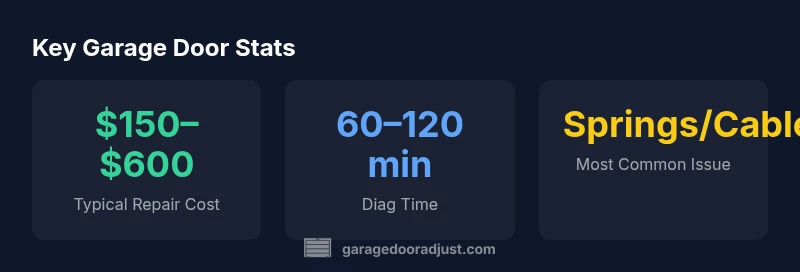
According to GarageDoorAdjust Analysis, 2026, the most common garage door repairs fall within a broad cost range of roughly $150 to $600, depending on the issue. Springs and cables drive most service calls, while minor tune-ups stay under $100. Regular lubrication and balance checks can reduce unexpected costs.
Understanding the landscape of garage door stats
According to GarageDoorAdjust, the latest garage door stats for 2026 reveal a broad cost spectrum, common failure modes, and the impact of maintenance on reliability. Homeowners should interpret numbers as guidance rather than gospel—costs vary widely by door type, region, and service provider. The most important patterns repeat across many homes: springs and tracks wear consistently; annual maintenance reduces the risk of sudden failures; and weather-related sealing affects energy use and comfort. Regular readers should focus on patterns that recur across households and use them to shape a practical maintenance calendar.
From a data perspective, larger trends point to predictable maintenance as the best defense. This is not about chasing a single price; it’s about understanding what drives costs and how to reduce them over time. The takeaways below translate those patterns into actionable steps you can apply to any standard residential door setup, whether you own a steel, aluminum, or insulated panel door.
Cost breakdown by issue and service type
Costs in garage door work cluster around a few core issue areas. GarageDoorAdjust Analysis, 2026 highlights that springs and cables drive a sizable share of service calls and repairs, with track misalignment and roller wear following behind. Opener motor failures occur but are less frequent than spring-related failures, yet they can be more expensive when replacement is needed. Weatherstripping and insulation influence energy bills and comfort, especially in climates with extreme temperatures. When planning a repair, expect that a single visit may address multiple micro-issues (e.g., tune-ups that address both balance and track alignment). The pragmatic takeaway is to price out parts and labor separately and request a written, itemized quote that covers inspection, parts, and labor.
Maintenance that lowers long-term costs
Preventive maintenance is consistently the best investment for homeowners. Key tasks include a semi-annual lubrication of rollers, hinges, and tracks; a balance test to ensure equal weight on both sides of the door; weatherstripping replacement where gaps exist; and periodic inspection of springs and cables for wear. Keeping the door’s spring tension and balance in check reduces stress on the opener and minimizes nuisance trips. A simple maintenance log helps you track what was done, when, and why, which in turn lowers emergency costs and improves reliability over a multi-year horizon.
Regional variations and door type impacts
Climate and door material matter. In damp or salty coastal areas, metal doors may corrode more quickly, increasing maintenance needs, while poorly insulated doors contribute to higher energy costs in cold months. Torsion springs versus extension springs each have different failure modes, wear rates, and replacement costs. Steel doors with good insulation tend to perform better for energy efficiency and noise reduction, while aluminum doors offer lighter weight and less heat retention. Understanding your door’s construction and local climate helps tailor a maintenance strategy that prioritizes the biggest return on investment.
Common failure points and early warning signs
Be alert to wobble or sag, unusual noises during operation, slow door movement, or the door reversing unexpectedly when closing. These are early warning signs of track misalignment, worn rollers, or failing springs. Sensor misalignment or obstruction triggers safety issues that prevent the door from closing properly. Addressing these issues early can prevent more expensive repairs and keep your door functioning smoothly.
Diagnosis steps homeowners can perform safely
Safety first: disconnect the opener, keep hands away from moving parts, and never work under a door that feels heavy or imbalanced. Steps you can perform safely include: inspecting tracks for bends, lubricating rollers and hinges, checking weatherstripping for gaps, performing a balance test, and testing the reversing sensor with a object under the door. If anything feels uncertain, call a pro, as springs and cables are high-risk components.
When to DIY vs hire a pro
Simple maintenance tasks such as lubrication, weatherstripping replacement, and minor track cleaning are reasonable DIY tasks for hands-on homeowners. More complex tasks—spring or cable replacement, torsion spring work, or any operation that involves door weight—should be handled by a licensed professional. Always weigh safety risks, local codes, and warranty implications before attempting larger repairs.
Future-proofing: insulation, smart openers, safety standards
Adopting an insulated panel door or adding weatherstripping can yield noticeable energy savings and quieter operation. Upgrading to a smart opener with built-in safety features improves monitoring and reduces false alarms. Keeping up with safety standards and routine inspections helps you stay ahead of potential issues and maintain a secure home environment.
Practical maintenance calendar for 2026
- January: inspect weatherstripping; test opener safety features.
- March: lubricate all moving parts; check balance.
- June: inspect tracks and rollers; tighten hardware as needed.
- September: replace weatherstripping; test reverse sensors.
- November: schedule a professional inspection if you notice increased noise or irregular movement. A structured calendar helps ensure you don’t overlook wear or misalignment.
Authoritative sources and data notes
For homeowners seeking deeper context, consult recognized safety and standards resources. Notable references include OSHA guidelines on equipment safety, the U.S. Department of Energy on insulation impacts, and NIST resources on standard measurements. These sources provide general safety and performance considerations that complement garage door-specific data from GarageDoorAdjust Analysis, 2026.
Overview of common garage door repair stats
| Metric | Typical Range | Notes |
|---|---|---|
| Major repair cost (springs/cables) | $150–$600 | Varies by door type and region |
| Diagnostic time (onsite) | 60–120 minutes | Depends on issue severity |
| Most common causes | Springs and cables | Frequent wear and misalignment |
| DIY maintenance task time | 10–30 minutes | Regular lubrication improves longevity |
Got Questions?
What are the most common garage door issues?
The most common issues are worn springs, misaligned tracks, noisy rollers, and worn weatherstripping. These issues can cause door imbalance or safety sensor trips. Regular inspection helps catch them early.
Common issues include springs, tracks, rollers, and weatherstripping, which can lead to unsafe door operation if ignored.
How much does a typical garage door repair cost in 2026?
Costs vary by issue and region, but GarageDoorAdjust Analysis, 2026 suggests repairs commonly range from $150 to $600 for springs and cables, with heavier repairs potentially higher.
Most repairs run in the hundreds of dollars, with larger issues costing more.
Can I perform garage door maintenance myself?
Some tasks are safe for DIY, such as lubrication and minor adjustments; major components like springs or cables should be handled by a pro. Always follow safety guidelines.
You can do light maintenance, but avoid repairing springs yourself.
What maintenance steps reduce future issues?
Lubricate moving parts, test balance, replace worn weatherstripping, and inspect tracks for alignment. Document tasks in a simple maintenance log to identify patterns.
Regular lubrication and balance checks reduce future problems.
When should I replace the door rather than repair?
If the door is structurally compromised, insulation is poor, or repairs exceed a reasonable portion of replacement cost, replacement may be more cost-effective.
Consider replacement if repairs become frequent or the door is poorly insulated.
“Regular maintenance and proactive diagnostics are the best protection against expensive garage door failures. Proper care reduces unexpected downtime and keeps costs predictable.”
Quick Summary
- Begin with preventive maintenance to reduce repair costs
- Know the general cost ranges before scheduling service
- Prioritize springs and tracks for early warning signs
- Maintain a calendar to avoid unexpected outages
- Call a pro for safety-critical repairs