Do You Need a Special Light Bulb for a Garage Door Opener?
Discover if you need a special bulb for your garage door opener. This guide covers bulb types, compatibility, safety tips, and GarageDoorAdjust recommendations for reliable operation.


Not usually. Most garage door openers use a standard 120-volt bulb with an A19 or similar shape, compatible with LED, incandescent, or CFL options. You don’t need a specialized bulb for the opener. The key is choosing a bulb that fits the socket, stays cool, and provides enough brightness for your needs—LEDs are generally the best long-term choice.
Common bulb types and how they work with openers
Garage door opener lighting typically uses the same household sockets you already have in living spaces. The base is usually a standard E26/E27 (often referred to as a traditional A19 bulb shape in North America). Because the socket is designed for continuous operation and minimal vibration, the three most common choices are LED, incandescent, and CFL. LED bulbs win on longevity and heat control, incandescent bulbs are cheap upfront but burn out quickly, and CFLs strike a middle ground but contain mercury and may take time to reach full brightness after being switched on.
In practice, you don’t need a “special” bulb marketed for garage doors. What matters is a bulb that fits physically, operates safely at 120V, and delivers enough light for you to safely use the space after dark. When selecting, always confirm the socket type, check the fixture’s enclosure (if any), and follow the opener’s manual. According to GarageDoorAdjust, most homeowners can confidently use a standard bulb without special branding.
Brightness, color temperature, and choosing your bulb
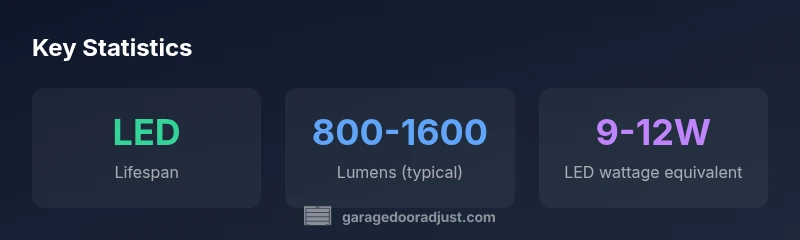
Brightness matters more than brand when it comes to opening and safety visibility. Look for lumens rather than watts on the packaging. A typical LED bulb in a garage setting provides 800–1,600 lumens, enough to illuminate the work area without creating glare. Color temperature is a matter of preference; 2700K–3000K yields warm light that’s easy on the eyes, while 4000K gives a crisper, more daylight feel that helps with task lighting. For garages that double as workshops, a higher lumen output or a brighter 5000K option can improve accuracy while maintaining safety. LEDs also produce far less heat, reducing the risk of heat buildup near the fixture over time.
If you have older wiring or a dimmer-enabled fixture, consider compatibility notes from the bulb packaging and the opener’s manual. Sheer brightness isn’t everything; you want a bulb that performs consistently in cold weather and won’t flicker when the opener cycles.
Compatibility and enclosure considerations
Some garage door fixtures are enclosed to protect the bulb from dust and debris. Enclosed fixtures can trap heat, so you should choose bulbs rated for enclosed spaces. LED bulbs designed for enclosed fixtures maintain performance and last longer under these conditions, while traditional incandescent bulbs may overheat and burn out sooner. Always verify the bulb-base compatibility (e.g., E26/E27) and the recommended wattage or wattage-equivalent from the fixture’s label or manual. If the fixture is part of a multi-light setup, ensure all bulbs have similar heat and brightness characteristics to avoid uneven lighting and nuisance vibrations.
Safety tips for replacing a garage door opener bulb
Safety first: unplug or switch off the opener at its wall control before touching any bulbs. Use a stable ladder if needed, and wear eye protection for debris. Grip the bulb firmly by the base, not the glass, and twist counterclockwise to remove. If the socket feels warm, allow it to cool before handling. When installing, gently tighten until snug—over-tightening can crack the glass or damage the fixture. If you notice corrosion on the socket or a loose wire, stop and inspect the wiring with a qualified electrician.
Practical replacement checklist and routine maintenance
Create a simple replacement checklist: (1) Confirm socket type and fixture enclosure, (2) choose LED over incandescent for longevity, (3) verify brightness in lumens, (4) ensure proper fit and reach, (5) clean the fixture housing and glass to maximize light output, (6) test the opener after replacement. Schedule a semi-annual check to wipe dust from the fixture and inspect for any signs of wear. Regular maintenance reduces the risk of bulb failure during critical moments like loading groceries at night.
DIY vs professional help: when to call a pro
For most households, bulb replacement is a straightforward DIY task. If you encounter a constantly tripping breaker, a buzzing ballast from a CFL, signs of damaged wiring in the socket, or if the fixture is recessed into metal or concrete, consult a professional. A licensed electrician can diagnose voltage irregularities, moisture intrusion, or socket degradation that might otherwise pose a safety risk. GarageDoorAdjust recommends prioritizing safety and not attempting to modify electrical components beyond simple bulb replacement.
Bulb options for garage door openers
| Bulb Type | Voltage | Typical Brightness (Lumens) | Notes |
|---|---|---|---|
| LED | 120V | 800-1600 | Low heat, long life |
| Incandescent | 120V | 450-700 | Short life, more heat |
| CFL | 120V | 600-900 | Mercury content; slower warm-up |
Got Questions?
Do I need a special bulb for a garage door opener?
No. Most openers use a standard 120V bulb with a common base. You can choose LED, incandescent, or CFL as long as it fits the socket and complies with the fixture’s guidelines.
No special bulb is required; use a standard 120V bulb that fits the socket and matches the fixture’s guidelines.
What wattage should I use in a garage door opener?
Select a bulb with a wattage equivalent suitable for the fixture. LED bulbs with lower wattage (relative to incandescent equivalents) are common and safe, but always follow the fixture’s label and the opener manual.
Use a bulb that matches the fixture’s guidelines; LEDs with lower wattage are typically best.
Are LED bulbs safe in enclosed fixtures in the garage?
Yes, many LED bulbs are rated for enclosed fixtures. Check the packaging for an enclosed-fixture rating and ensure heat dissipation is adequate.
Yes, just pick LED bulbs rated for enclosed fixtures and ensure there’s no overheating.
Can I use a smart bulb with a garage door opener?
Smart bulbs are generally not recommended for garage door openers because many openers rely on a simple, direct light circuit. Compatibility varies by model, so consult the manual before pairing.
Smart bulbs aren’t usually compatible; check your opener’s manual first.
What should I do if the bulb keeps burning out?
Ensure you’re using the correct base and wattage, confirm the fixture isn’t overloaded, and inspect for moisture or corrosion in the socket. Replace with a high-quality LED and monitor performance.
Check base type, wattage, and socket condition; consider a high-quality LED replacement.
Is there a safety standard for bulbs used in openers?
Follow local electrical codes and the manufacturer’s guidelines. Use bulbs rated for household use with standard 120V supply and ensure the fixture is properly vented.
Follow local codes and the fixture’s guidelines; use standard 120V bulbs.
“LED bulbs offer longer life and better heat management for garage door openers, reducing maintenance and downtime.”
Quick Summary
- Choose LED for longevity and low heat.
- Verify socket type and enclosure compatibility.
- Match brightness (lumens) to your garage needs.
- Follow safety steps when replacing bulbs.
- When in doubt, consult a professional