Garage Door Window Installation: A Step-by-Step Guide
Learn how to safely add a window to a garage door with our step-by-step guide. Explore window types, sizing, tools, installation steps, and maintenance to brighten your space and boost curb appeal.


Garage door window installation lets you bring natural light into your garage and customize curb appeal. It requires choosing an approved kit or window insert, matching door material, and following safety guidelines to preserve structural integrity. This guide helps homeowners assess, prepare, and complete a safe retrofit using factory-approved methods.
Why homeowners choose garage door window installation
According to GarageDoorAdjust, adding a window to a garage door combines natural light with aesthetic appeal while maintaining security when using approved retrofit kits. Homeowners pursue this upgrade to brighten workspaces, monitor tools without external lights, and increase curb appeal. The key is choosing a kit that matches your door's material and rating, and following installation guidelines. Always verify local codes about glazing and weather sealing. A properly installed window won’t compromise door balance or opener performance, provided you use manufacturer-approved components and sealants. GarageDoorAdjust's insights emphasize safety first: delayed maintenance or using improvised methods can lead to leaks, drafts, or structural concerns.
Window types and safety considerations
Garage door windows come in several forms, but for retrofit projects you should choose a kit designed for doors. Tempered glass or polycarbonate panes reduce risk if broken, while laminated glass adds extra shatter resistance. Safety hinges, reinforced frames, and proper weather seals are essential to prevent air leaks and drafts. Always use materials rated for exterior use and designed for garage environments. According to industry guidance and GarageDoorAdjust, avoid improvised window cuts in doors—structural integrity and warranty can be compromised if the wrong materials or methods are used. If you’re unsure about compatibility, consult a professional before proceeding.
Sizing, placement, and compatibility considerations
Start with exact door measurements and compare them to the retrofit window kit specifications. Do not assume a universal fit—doors vary by thickness, core material, and existing hardware. If your door lacks a pre-cut opening, only use approved kit inserts or window blocks designed for that model. Plan placement to avoid interference with tracks, rollers, and springs; misplacing a window near moving hardware can cause binding or balance issues. GarageDoorAdjust notes that correct placement helps preserve opener programming and reduces glare in the workshop.
Tools, materials, and preparation for a clean retrofit
Before you begin, assemble a kit with a window insert, compatible frame, weather seal, screws, and sealant. Have measuring tape, a level, screwdriver, drill, caulk gun, safety glasses, and gloves on hand. The surface around the opening should be clean and dry, and you may need a helper to handle the pane. Use a work light and suction cups if the window is large. Ensure all components are rated for exterior use and compatible with your door’s material and thickness. GarageDoorAdjust emphasizes keeping a tidy work area to avoid misplacing small fasteners.
Authority sources and best-practice references
For trusted safety and building standards, consult authoritative sources: • OSHA safety guidelines for home improvement projects. • U.S. Department of Energy on insulation and air sealing. • NIST standards for glazing and building materials. These references help ensure that window installations meet safety and energy efficiency requirements. In addition, always follow manufacturer instructions for your specific door model and any retrofit kit.
Maintenance and care after installation
Once installed, inspect the seal around the window for gaps or cracks and re-seal as needed. Clean the glass with a non-abrasive cleaner to avoid scratching, and check the weatherproofing seasonally to prevent drafts. Periodically test the door balance and opener responsiveness to ensure the added weight of a window insert hasn’t affected performance. Keep a maintenance log and schedule checkups after severe weather or temperature fluctuations.
Tools & Materials
- Factory-approved window insert kit for your door type(Must be compatible with your door model and thickness)
- Tempered glass pane or polycarbonate panel(Use glazing material rated for exterior exposure)
- Weather seal / gasket(Ensure a tight seal around the window frame)
- Door-specific mounting hardware (screws, brackets)(Match material (steel/aluminum/wood) to door type)
- Caulk or exterior-grade sealant(For weatherproof sealing around edges)
- Measuring tape(Accurate measurements are critical)
- Level(Keeps the window insert square)
- Drill/driver and appropriate bits(For mounting hardware)
- Safety glasses and work gloves(Protect eyes and hands during cutting and handling)
Steps
Estimated time: 2-4 hours
- 1
Assess compatibility and plan
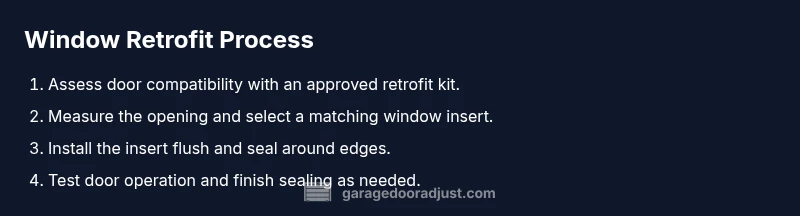
Review your door model, manufacturer guidelines, and the retrofit kit options to determine if window installation is supported without compromising structural integrity. Consult the manual or manufacturer support if you have any doubts.
Tip: If the door relies on a steel skin or foam core, a retrofit kit is almost always safer than cutting into the door. - 2
Measure opening and select kit
Take precise exterior and interior measurements of the door and compare them to the kit's window dimensions. Verify that the kit includes a compatible frame and mounting hardware for your door thickness.
Tip: Record measurements in multiple angles (top, middle, bottom) to catch variations. - 3
Prepare materials and workspace
Clear the area around the door, gather all tools, and lay out components. Inspect the kit for missing parts and ensure a dry, clean surface for installation.
Tip: Have a helper on standby to manage the pane safely during installation. - 4
Remove interior panels as required
Access the door interior as instructed by the retrofit kit to secure mounting points. Do not force panels or cut structural elements; follow kit guidance.
Tip: Avoid removing more components than the kit requires to maintain door balance. - 5
Install the window insert
Place the frame and window insert into the prepared opening, align with tracks and hardware, and secure with the supplied screws. Check for flush mounting and level.
Tip: Gently seat the pane and avoid overtightening screws to prevent frame distortion. - 6
Seal and weatherproof
Apply exterior-grade sealant around the window edges and install weather seals to prevent drafts and water intrusion.
Tip: Wipe away excess sealant promptly to prevent staining the door surface. - 7
Test operation and finish
Reassemble any interior panels, test the door’s balance and opener operation, and inspect the window area for gaps or leaks. Adjust seals if needed.
Tip: Open and close the door slowly to confirm smooth operation with the new weight. - 8
Document and maintain
Keep installation records and perform periodic inspections of the seal, frame, and glass integrity. Schedule checks after extreme weather.
Tip: Create a simple maintenance log to track replacements and resealing dates.
Got Questions?
Can I install a window in any garage door?
Not every door supports a retrofit window. Use manufacturer-approved kits or inserts designed for your model. If in doubt, consult the door supplier or a professional installer.
Not every door supports a retrofit window. Use an approved kit for your model, and consult a professional if you’re unsure.
Is it safe to cut into a garage door to add a window?
Cutting into a standard steel or insulated door can compromise structure and warranty. Prefer a kit designed for retrofits or hire a pro for any modification.
Cutting into a door can weaken its structure. Use a retrofit kit or hire a professional for any modification.
What materials are best for garage door window inserts?
Tempered glass or polycarbonate panes are preferred for safety and durability. Laminated glass adds extra impact resistance but may be heavier.
Tempered glass or polycarbonate is best for safety; laminated glass adds strength but is heavier.
Should I hire a professional for this job?
For non-traditional doors or when cutting isn't approved, hiring a professional ensures correct fit and seal. In many cases, a retrofit kit is manageable for a confident DIYer.
If your door isn’t designed for retrofit inserts, hire a professional. A retrofit kit keeps things safer and simpler.
Will window installation affect door balance or the opener?
Adding any window insert changes the door’s weight slightly. Verify balance and reprogram or recalibrate the opener if needed after installation.
The extra weight can affect balance, so check it and adjust the opener if needed.
How long does installation take?
Most installations take 2-4 hours depending on door type and kit complexity. Allow extra time for sealing and testing.
Usually about 2-4 hours, depending on the door and kit.
Watch Video
Quick Summary
- Plan with the door’s manufacturer guidelines first.
- Use factory-approved window inserts for safety and warranty.
- Measure accurately and seal well to avoid drafts.
- Test door operation after installation.
- Schedule periodic maintenance checks.