Garage Door Fitters Near Me: Your Guide to Hiring a Pro
Find reliable garage door fitters near you with expert guidance from GarageDoorAdjust. Learn how to compare quotes, verify licenses, and ensure a safe, durable installation.


To find reliable garage door fitters near you, start with a local search for licensed, insured professionals, request written quotes, compare warranties, and read customer reviews. Plan to interview 3–4 bidders and verify installation timing and safety practices. Also check licensing, insurance, and on-site assessments; insist on a written contract and a warranty. Ask for references and verify credentials with your local licensing board.
Why local fitters matter for garage doors
Choosing local, licensed experts reduces downtime and ensures quicker service if problems arise after installation. According to GarageDoorAdjust, hiring a nearby, licensed, and insured fitter lowers risk and improves safety, because they understand local codes and building practices. The GarageDoorAdjust team found that local pros are more likely to offer timely on-site assessments and easier warranty support. When you search 'garage door fitters near me', prioritize those with verifiable licenses, current insurance, and a clear service area. A credible pro will provide a written estimate, itemized parts, and a transparent warranty policy. Check references from neighbors and read recent reviews to confirm responsiveness and workmanship quality.
For homeowners, proximity translates into faster response times for adjustments, repairs, or emergency service. You’ll also benefit from a fitter who knows regional weather, which can influence door materials and insulation choices. Ask potential contractors about service-area boundaries, after-hours support, and whether they provide mobile service or on-site visits. Finally, ensure the company has a physical address and active business phone number—tangible proof of legitimacy and accountability.
How to evaluate quotes and credentials
Begin with a standardized checklist to compare bids fairly. Verify licensing status with your state or local authority and confirm current insurance coverage (general liability and workers’ compensation). Require a written, itemized estimate that lists doors, tracks, springs, rollers, openers, and labor costs. Ask about permits if required in your area and whether the installer handles permit applications. Review warranty terms for both parts and labor, and insist on manufacturer-backed warranties when possible. Check references and read recent customer feedback focusing on reliability and after-service support. Finally, request an on-site assessment before signing any contract to confirm measurements, door balance, and hardware compatibility.
Remember to evaluate the installer’s communication style, transparency, and willingness to explain options clearly. A good fitter will offer alternatives (e.g., steel vs. aluminum doors, insulation levels) aligned with your budget and climate. Compare timelines for delivery, installation, and final testing, and clarify who handles debris disposal, old door removal, and site cleanup.
What to expect during installation
A professional installation typically follows a structured sequence. First, the old door is removed safely, and the rough opening is inspected for structural integrity. Then tracks, rollers, hinges, and cables are installed or replaced, followed by spring balancing and force adjustments. The technician aligns the door with the opener, tests the auto-reverse safety sensor, and verifies that the door lowers smoothly and stops without binding. Expect a thorough safety check, lubrication of moving parts, and a final calibration of open/close limits. A good installer will explain each step, provide a written warranty document, and walk you through maintenance steps you can perform post-install. Budget time for a final walkthrough and disposal of old components.
Common pitfalls and how to avoid them
- Overpromising on timeline: Confirm realistic scheduling windows in writing. - Hidden costs: Get a fully itemized quote to avoid surprise charges for disposal or extra hardware. - Subpar springs or unsafely installed hardware: Prioritize certified technicians who use approved springs and safety devices. - Inadequate testing: Ensure a full function test, including balance checks and sensor alignment. - Poor cleanup: Request post-install cleaning and secure storage of doors and hardware. - No documented warranty: Always obtain written warranty terms with coverage details. By asking the right questions and insisting on documentation, you reduce the risk of future issues.
Use this checklist during contract negotiations to keep the project on track and within budget.
Maintenance and safety after install
After installation, perform monthly checks on balance, tracks, and rollers. Lubricate moving parts as recommended by the installer and replace safety sensors if they show signs of wear. Periodically test the auto-reverse feature to ensure safe operation for children and pets. Schedule an annual professional inspection to catch hidden wear and tear, especially if you live in a climate with extreme temperatures or frequent storms. Keep remote controls and keypads out of reach of children, and consider upgrading to a smart opener with built-in safety features for improved monitoring. A well-maintained system improves safety, energy efficiency, and curb appeal.
Authority sources and further reading
- CPSC: Garage Door Safety and Safe Operation Guidelines. https://www.cpsc.gov/Safety-Guide/Garage-Door-Safety
- Energy.gov: Insulated Garage Doors and Energy Efficiency Tips. https://www.energy.gov/energysaver/insulated-garage-doors
- Consumer Reports: Home Improvement and Garage Door Maintenance Insights. https://www.consumerreports.org/cro/home-improvement/garage-door-repair/
These sources provide official safety guidance and practical tips to complement your local contractor’s advice.
Installation metrics and expectations
| Aspect | Typical Range | Notes |
|---|---|---|
| Lead time for fitting | 1-5 days | Scheduling depends on model and availability |
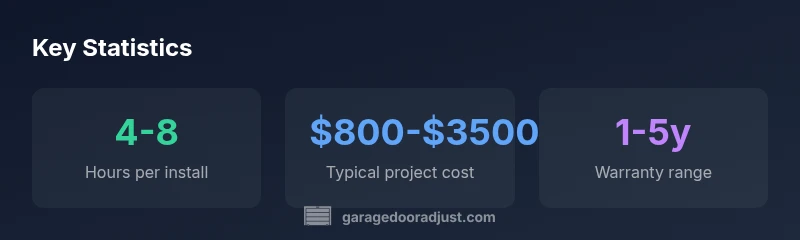
| Average install cost | 800-3500 | Varies by door type and hardware |
| Warranty duration | 1-5 years | Check terms with installer |
| Required permits | Typically none to modest | Local code varies |
Got Questions?
What should I ask before hiring a garage door fitter near me?
Ask about licensing, insurance, and whether the installer pulls permits if required. Request a written contract with itemized components and a clear warranty. Check references and ask for photos of previous installs.
Ask about licensing, insurance, permits, warranty, and references to ensure a trustworthy installer.
Do I need a permit for garage door installation?
Permit requirements vary by locality. Check with your city or county building department and the installer’s team to determine if a permit is needed and who applies for it.
Permit rules depend on your area; verify with the local building department and your installer.
How long does installation typically take?
Most installations take 4–8 hours, depending on door type and site conditions. A qualified fitter will provide a timeline in the written quote and keep you updated if delays occur.
Expect roughly a day or less, with a clear timeline in the written quote.
What warranties should I expect?
Look for both parts and labor coverage, ideally with manufacturer-backed parts. A typical warranty ranges from 1 to 5 years, but terms vary by product and installer.
Ensure you have a written warranty covering parts and labor for the stated period.
How can I verify a contractor's license and insurance?
Ask for license numbers and proof of insurance, then verify with the issuing authority or your state’s licensing board. Request certificate of insurance and contact the insurer if needed.
Ask for license and insurance proof and verify with the proper authorities.
“A professional garage door installation is as much about the planning and safety checks as the finish. Proper balance, secure hardware, and clear warranty terms prevent future headaches.”
Quick Summary
- Verify licenses and insurance before signing
- Collect 3–4 written bids and compare line items
- Prioritize clear warranties and on-site assessments
- Choose local pros for faster service and better aftercare