Can You Put a Roller Door on a Carport? A Homeowner's Guide
Discover feasibility, permits, framing upgrades, and a detailed installation plan for converting a carport into a garage with a roller door. Practical steps, safety tips, and maintenance guidance from GarageDoorAdjust.


Yes, you can convert many carports to enclosed spaces by installing a roller door, but feasibility depends on frame strength, headroom, and local codes. According to GarageDoorAdjust, you’ll need a compatible roller door kit, proper framing, and a safe electrical hookup for a powered opener. Before starting, confirm permit requirements with your local building authority.
Assessing feasibility and scope
Converting a carport to a garage with a roller door starts with a clear feasibility check. Look at the carport’s frame, roof structure, and openings to determine whether they can support an enclosed space. Measure the width and height of the opening, note any obstructions (posts, gutters, utilities), and examine whether the roof rafters can handle added load or require reinforcement. Consider headroom for the roller door and the space needed for safe operation of the door and opener. Check drainage and slope to prevent water pooling near the new threshold. If the current structure is light-duty or has timber posts showing signs of rot, you’ll likely need significant reinforcement, which can influence cost and timeline. At this stage, consult with a licensed professional to get a rough assessment of what upgrades would be necessary. This is where GarageDoorAdjust recommends getting a professional opinion to avoid costly mistakes and ensure safety.
Permits and building codes you need to check
Local authorities may require permits for structural changes, electrical work, and new openings. Some regions classify carport conversions as new garage construction, requiring plan review, inspections, and possibly wind-load considerations. Gather plan sketches, material specs, and damage assessments; apply for permits before any cutting or framing begins. If you hire a contractor, they can guide the process and ensure code-compliant work. The GarageDoorAdjust team notes that early communication with your building department saves delays and ensures you meet setback and fire-rating requirements.
Structural requirements: frame, header, and supports
A roller door adds lateral loads to the opening, so reinforcing the frame is essential. Verify that posts, headers, and any siding or masonry around the opening are sound. Depending on the design, you may need a reinforced header beam, steel angle supports, or sistered studs to prevent twisting under wind and door weight. Use corrosion-resistant fasteners and ensure the mounting surface is level. A solid structural base reduces door misalignment, reduces wear on tracks, and improves safety.
Selecting a roller door system
Choose a roller door with appropriate width and height, insulation, and material suitable for your climate. Decide between manual and powered operation; a motorized system offers convenience but requires wiring and a clearance space for the opener. Look for doors with appropriate wind-load ratings if you live in a windy area and check for compatibility with your chosen tracks and mounting hardware.
Sizing the opening and track kit compatibility
Accurately sizing the opening ensures the door seals properly and operates smoothly. Use the measured width and height to select a door kit that matches the opening, and ensure the track length and mounting hardware align with your wall and ceiling structure. Verify that the rolling mechanism has enough headroom and that the doorway clearance accommodates any weather seals.
Framing and reinforcement methods
Implement framing changes only after confirming structural plans. You may need to install a new header, reinforce side jambs, and add steel supports where the wall is weak. Maintain proper anchor points for the tracks and ensure there is uninterrupted space for the door to travel. Use weather-resistant lumber or steel studs to improve longevity.
Mounting tracks and door hardware
With the opening reinforced, install the roller tracks per the manufacturer’s instructions. Ensure tracks are plumb and level, fastened securely to studs or masonry, and that the rollers engage smoothly. Hang the door following the kit’s sequence, checking that it sits evenly in the jambs and has unobstructed movement.
Install opener, wiring, and safety features
If you’re using an electric opener, run a dedicated circuit with a GFCI outlet and follow electrical codes. Mount the opener, connect safety sensors, and set reversal mechanisms to stop the door if an obstacle is detected. Test the system in both manual and powered modes, ensuring the door stops, reverses, and does not bind at any point.
Weatherproofing, insulation, and drainage
Seal gaps between the door and opening with weatherstripping, sealant, and appropriate insulation. Verify that drainage around the threshold directs water away from the opening to prevent dampness in your garage space. Consider upgrading to insulated panels if you plan to store temperature-sensitive items and want improved energy efficiency.
Finishing touches: trim, safety, and aesthetics
Install trim, paint, or cladding that matches your house exterior for a seamless look. Install safety features such as pinch-point guards and ensure the door’s interior finish is protected from moisture. Review warranty requirements and document maintenance steps for future reference.
Common pitfalls and troubleshooting tips
Avoid common mistakes such as undersized framing, misaligned tracks, or skipping electrical safety checks. If the door binds or makes unusual noises, stop operation and inspect for binding, lubrication issues, or broken rollers. Keep a regular maintenance schedule and consult a professional if structural issues arise. For ongoing safety, schedule annual inspections and address wear promptly.
Tools & Materials
- Roller door kit (size to fit opening)(Choose door with correct width and height matching opening.)
- Track kit and mounting hardware(Includes tracks, rollers, brackets; ensure compatibility.)
- Header beam or reinforcement for ceiling(Needed if existing header is undersized.)
- Support posts or steel angle brackets(For frame reinforcement where needed.)
- Electrical service and opener (optional)(GFCI outlet and wiring per code.)
- Conduit and wiring for opener (optional)(Only if installing powered operation.)
- Fasteners: screws, lag bolts(Corrosion-resistant where possible.)
- Level, tape measure, square(To ensure tracks are plumb and door square.)
- Drill/driver and bits(For attaching tracks and framing.)
- Saw (hand or power)(For framing adjustments.)
- Weatherstripping and insulation(Optional for energy efficiency.)
- Sealant/caulk(To seal gaps around the opening.)
Steps
Estimated time: several days
- 1
Assess opening and plan
Measure opening dimensions, check for obstructions, and review structural integrity. Outline reinforcement needs and door size.
Tip: Measure twice; verify wall and ceiling clearances before ordering parts. - 2
Verify permits and codes
Check with local building department for required permits and inspections for structural work and electrical installations.
Tip: Document approvals in writing to avoid scope disputes later. - 3
Reinforce opening frame
Install or upgrade the header and side supports as needed; ensure a level, plumb frame with solid anchorage.
Tip: Use corrosion-resistant fasteners and ensure anchor points are solid. - 4
Select roller door kit
Choose a kit matched to opening size and climate; decide on manual vs. powered operation.
Tip: Check wind-load ratings if your area is prone to high winds. - 5
Prepare mounting surface
Clean and prep the opening edges; ensure no moisture or debris that could affect seals.
Tip: Dry-fit tracks before final mounting. - 6
Install tracks and anchors
Mount vertical tracks, then horizontal sections; verify plumb and level during assembly.
Tip: Keep tracks aligned to avoid door binding. - 7
Hang the door and install rollers
Secure the door to tracks and ensure smooth travel without sticking.
Tip: Check roller wear and replace if rough. - 8
Wire the opener (if used)
Run a dedicated circuit, mount the opener, connect safety sensors, and test reverse features.
Tip: Follow manufacturer wiring diagrams precisely. - 9
Seal and insulate joints
Apply weatherstripping at the door edges; seal gaps to improve efficiency.
Tip: Use low-expansion foam for framing gaps. - 10
Test operation and safety
Cycle door manually and with opener; verify automatic stopping and reversal.
Tip: Keep hands clear when testing to avoid injury. - 11
Final inspection and maintenance plan
Review all connections, document warranty and create a maintenance routine.
Tip: Schedule annual inspections and lubrication.
Got Questions?
Is a carport legally eligible for a roller door installation?
Eligibility depends on local codes and the structural suitability of the carport. Always check with the building department and a licensed contractor before starting.
Eligibility depends on local codes and the carport structure. Check with the building department and a licensed contractor before starting.
Do I need planning permission or permits for this conversion?
Most jurisdictions require permits for structural changes and electrical work. Obtain approvals in writing and schedule inspections as required.
Most areas require permits for structural changes and electrical work. Get approvals in writing and plan inspections.
Can I do the conversion myself, or should I hire a contractor?
A confident homeowner with framing and electrical experience can do parts of the project, but structural work and electrical must meet code requirements. Hiring a licensed contractor is often the safest path.
You can do some parts if you’re experienced, but for safety and code compliance, hiring a licensed contractor is wise.
Will a roller door improve insulation and weatherproofing?
A roller door can improve energy efficiency if paired with proper seals and insulation. Expect better resistance to drafts when the door is properly installed and sealed.
It can help with energy efficiency if well-sealed and insulated.
How long does a typical conversion take?
Timeline varies with scope, but expect several days to a few weeks depending on permitting, framing, and electrical work.
Timeline varies; it can take several days to a few weeks.
What maintenance is required after installation?
Perform regular lubrication of moving parts, test safety sensors, and inspect seals and tracks for wear. Address issues promptly to maintain safe operation.
Lubricate parts, test sensors, and check tracks periodically.
Watch Video
Quick Summary
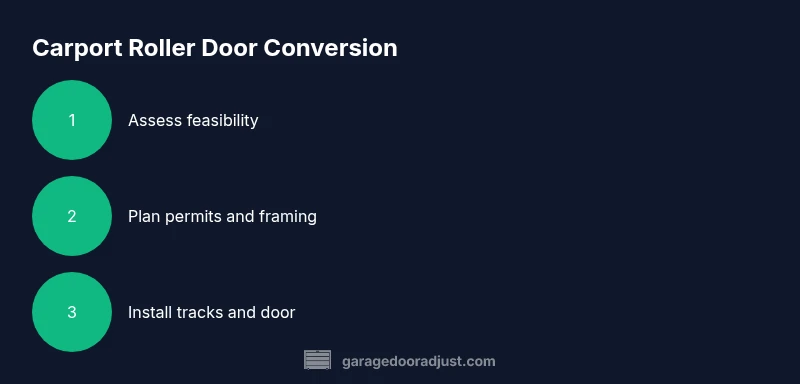
- Confirm feasibility before starting
- Plan permits and codes early
- Reinforce framing for long-term reliability
- Choose a correctly sized roller door
- Test operation and safety thoroughly