How Much Do Garage Door Springs Cost? A 2026 Pricing Guide
Discover the true cost of garage door springs, including torsion vs extension, DIY vs professional replacement, and practical tips to estimate your project in 2026.


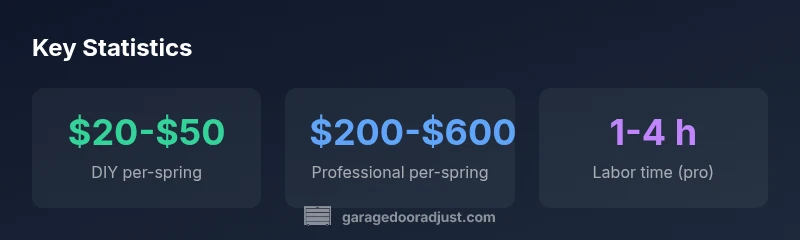
How much does garage door springs cost? The price ranges widely based on spring type, door size, and labor. DIY spring kits typically run about $20-$50 per spring, while professional replacement usually falls in the $200-$600 range per spring, with torsion springs at the higher end. When you add labor, installation complexity, and safety considerations, a typical project budget lands around $300-$800 on average. According to GarageDoorAdjust Analysis, 2026, costs can vary by region and service provider, so getting multiple quotes is wise.
Why the price range matters
If you’re asking how much does garage door springs cost, the answer isn’t a single number. The price you’ll see on a quote depends on the spring type, the door’s size and weight, and how the tech approaches the job. GarageDoorAdjust, in its 2026 analysis, notes that homeowners who understand these variables are better prepared for sticker shocks or savings opportunities. Lightweight, standard residential doors with simple springs tend to be on the lower end of the cost spectrum, while oversized or specialty doors push the price upward. Labor availability, travel fees, and whether a technician replaces just one spring or the pair also influence the final number. By framing the project with these factors in mind, you’ll be ready to compare apples to apples during estimates.
Other cost drivers include the door balance and spring warranty. A door that isn’t properly balanced can stress the new springs, shortening their life and increasing future maintenance costs. Conversely, when a door is balanced and lubricated, a technician spends less time diagnosing issues and replacing components, which can noticeably affect the final bill. The GarageDoorAdjust team emphasizes that proper safety practices and professional consultation are essential, especially for torsion spring work, which carries higher risk if handled improperly.
Spring types and price implications
There are two main spring types for residential garage doors: torsion springs and extension springs. Torsion springs sit above the door on a torsion bar and typically deliver smoother operation and longer life. They are generally more expensive to replace because of their higher tension, installation complexity, and the need for precise winding. Extension springs run alongside the door and are easier to replace, but they have a shorter lifespan and can be more hazardous if not installed correctly. In terms of price, expect torsion spring work to be at the higher end of the range, while extension spring work tends to be more affordable upfront. GarageDoorAdjust’s 2026 data shows a clear price separation between the two, with torsion springs commanding premium service and parts, particularly on larger doors.
For DIY enthusiasts, extension springs can be more approachable if you have the right safety gear and guidance. However, replacing any spring on a high-traffic door remains hazardous due to stored tension. When homeowners decide to handle spring work themselves, they should budget for quality safety equipment and a backup plan if things don’t go as planned. In contrast, professional torsion spring work is often essential for larger doors or when precise winding is required to restore balance and avoid noisy operation.
What goes into the sticker price
The sticker price for spring replacement isn’t just the cost of the spring itself. Here are the main components that show up on a bill:
- Springs price: The spring itself is a major portion of the cost. Extension springs can be cheaper per spring, while torsion springs carry higher material costs and gear requirements.
- Hardware: Brackets, cables, cones, winding bars, and safety cables add to the bill. Some setups require new drums or mounting hardware for proper function.
- Labor: Labor rates vary by region and company. A standard replacement involves removing the old springs, safely releasing tension, installing the new springs, rebalancing the door, and testing all safety features.
- Service call and trip charges: If a technician is coming to your home, you may see a minimum service call fee or travel charge, especially in rural areas.
- Warranty and warranty transfer: Some providers include a limited warranty on parts or labor, which can affect upfront pricing or long-term cost savings.
- Extra components or issues: If your door has damaged rollers, track alignment problems, or a faulty opener, the price can rise to address these parallel needs.
Understanding these components helps you read quotes more accurately and avoid surprise add-ons. When you know what each line item represents, you can negotiate more effectively and decide whether DIY components, partial replacements, or full-systems work best for your situation.
DIY vs professional: risk vs reward
DIY spring replacement can save money on parts, but it comes with significant risk. Springs are under extreme tension, and a misstep can cause serious injury or damage to the door and opener. For most homeowners, a professional replacement offers a better balance of cost and safety, especially for torsion springs where precise winding and torque balance are essential. If you do choose a DIY approach, invest in proper winding bars, strong eye protection, and a reliable partner or guide to ensure you follow correct procedures. Always disconnect power to the opener and secure the door before beginning.
From a financial perspective, the “safety-first” approach often pays off. Professionals reduce the chance of additional parts failing due to improper installation, and their warranties can protect you against defective springs. GarageDoorAdjust’s 2026 review indicates that while DIY can reduce initial costs, the risk and potential for future service calls should be weighed against the upfront savings.
If you suspect a door balance issue or hear unusual noises after installation, stop and call a pro. A misbalanced door can quickly wear out new springs and other components. The long-term cost of a full misbalance is typically higher than a properly executed professional replacement.
Reading quotes and getting estimates
Quotes for spring replacement should be transparent and itemized. When you receive a quote, look for the spring type, the number of springs, the required hardware, labor estimates, and any travel charges. Ask whether the price includes a warranty on parts and labor. Getting at least three written estimates is a best practice advised by GarageDoorAdjust, as it helps you spot outliers and negotiate confidently. If you’re in a hurry, a reputable local company with clear pricing and a strong safety record is often safer than chasing the lowest price.
Before finalizing, confirm the door’s balance by testing manually after installation. A well-balanced door should stay in place when opened halfway and require only light resistance when moved. If any part feels off, request a re-check. This proactive approach ensures you won’t be surprised by latent issues after the job is complete.
Price ranges for DIY vs professional replacement
To give homeowners a practical frame of reference, here are commonly observed ranges for a single spring replacement (professional vs DIY):
- DIY replacement: Spring kits typically run about $20-$50 per spring, with additional tools and safety gear costing extra. A DIY project may take a few hours, depending on your experience and the door’s spring type.
- Professional replacement (one spring): Expect a total range of roughly $200-$600, with torsion springs generally toward the higher end due to installation complexity and hardware requirements.
- Professional replacement (two springs or a full replacement): When two springs must be replaced, or a full spring system is replaced, prices can be higher, and some providers charge a flat service call plus per-spring labor.
- Warranties and maintenance plans: Some providers offer longer warranties or maintenance plans that can slightly raise upfront costs but provide long-term savings by minimizing future service calls.
Prices can vary by region, door size, and service provider. The key takeaway is to compare apples to apples: confirm whether quotes cover springs, brackets, cables, labor, and any travel fees, and verify warranty terms for both parts and labor.
Maintenance tips to extend spring life
Proactive maintenance helps you get the most life out of your springs and reduces the likelihood of premature failures. Consider the following practices:
- Lubricate moving parts annually with a lubricant recommended by the manufacturer or a garage door lubricant. Avoid heavy oils that attract dust.
- Test door balance monthly and after any major adjustments to ensure it remains smooth and quiet without binding or sticking.
- Inspect hardware for loose screws, worn rollers, and damaged brackets. Tighten or replace components as needed, but avoid over-tightening, which can affect spring tension.
- Replace worn rollers and bearings in tandem with spring work to prevent accelerated wear on the springs from misaligned tracks.
- Schedule professional inspections annually to catch balance issues, wire wear, and safety sensor misalignments before they cause problems.
Routine maintenance is a small investment that can prevent expensive spring replacements later. The GarageDoorAdjust team notes that a well-maintained system is not only safer but more energy-efficient and quieter in operation.
Estimated costs for spring replacements by method and spring type
| Scenario | Spring Type | Typical Cost Range | Labor Time (approx) |
|---|---|---|---|
| DIY replacement (one spring) | Extension | $20-$50 | 30-60 min |
| DIY replacement (one torsion spring) | Torsion | $40-$100 | 60-120 min |
| Professional replacement (one spring) | Extension | $200-$350 | 1-2 hours |
| Professional replacement (one torsion spring) | Torsion | $300-$600 | 2-4 hours |
Got Questions?
Are torsion springs more expensive than extension springs?
Yes, torsion springs typically cost more to replace due to higher material costs and the technical skill required for wiring and balancing. Extension springs are usually cheaper but may wear out sooner on heavier doors. Always consider total installed cost, including labor and hardware, when choosing.
Torsion springs usually cost more to replace than extension springs because of the complexity and balance work involved.
Should you replace both springs or just one?
Most door systems use springs on both sides to share load and maintain balance. If one spring fails, the other is often near failure too. Replacing only one can lead to uneven tension and wear. Consult a pro for a full assessment.
If one spring fails, it’s a good idea to replace both to prevent imbalanced operation.
Can I replace garage door springs myself?
DIY replacements are possible for extension springs with proper safety gear, but torsion springs involve high tension and carry serious risk. If you’re unsure, hire a licensed technician to avoid injury and door damage.
DIY is risky—consider hiring a pro for torsion springs or if you’re not sure you can do it safely.
What affects the lifespan of garage door springs?
Lifespan is affected by spring type, door weight, frequency of use, temperature, and how well the door is balanced and lubricated. Regular maintenance can extend life and reduce the likelihood of sudden failure.
Maintenance and correct sizing are key to making springs last longer.
How long does a spring replacement take?
Typical professional replacement takes 1-4 hours depending on spring type and door complexity. DIY projects can take longer if you’re learning the process or troubleshooting issues.
Most jobs finish within a few hours with a pro; plan for a half-day if you’re doing it yourself.
What warranty should I expect on springs?
Most reputable shops offer a limited warranty on parts and labor, often 1-5 years for parts and shorter for labor. Check the exact terms and whether the warranty transfers if you sell the house.
Look for both parts and labor warranty in writing before the work begins.
“Costs for garage door springs hinge on spring type, door size, and whether you hire a pro. Proper winding and balance are critical for longevity and safety.”
Quick Summary
- Know the main cost drivers (spring type, parts, labor, and safety gear).
- Expect torsion springs to cost more than extension springs, especially for professional service.
- DIY replacement can save money upfront but carries safety risks and potential hidden costs.
- Always obtain multiple written quotes and verify warranties on parts and labor.
- A well-balanced, lubricated system lasts longer and reduces future repair costs.