How Much Does a Residential Garage Door Cost?
Discover a practical, data-driven estimate of residential garage door costs, covering door prices, installation fees, regional variations, and budgeting tips for homeowners.


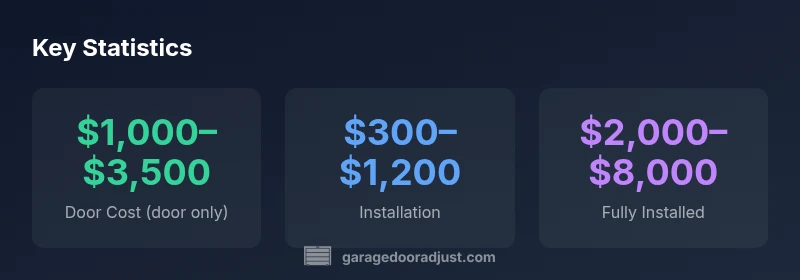
Residential garage doors typically cost between the door price and installation. For the door itself, expect roughly $1,000 to $3,500 for standard materials, with higher-end wood or composite doors reaching $4,000–$7,000. Installation adds about $300–$1,200, depending on removal of existing hardware, sizing, and local labor rates. In total, a fully installed residential garage door system generally runs about $2,000–$8,000.
Cost Components: Door Price, Labor, and Additional Fees
When homeowners ask how much does a residential garage door cost, the answer depends on several components. Understanding the total cost starts with separating the major components: the door itself, the installation labor, and any additional fees or accessories. The door price covers the shell, panels, insulation, and hardware. Labor accounts for removal of the old door (if applicable), garage floor prep, panel alignment, springs setup, and opener compatibility. Additional fees may include permit costs in your locality, disposal of old material, and optional upgrades such as smart openers or weather sealing. For most homeowners, the most impactful variables are door material and insulation, followed by labor, then add-ons. When budgeting, plan for a broad price band to reflect variance in local labor rates and door choices.
Door Material and Insulation: What Drives the Price
Door material has a large impact on cost and durability. Door material costs vary by steel, aluminum, composite, and wood, with insulation level affecting energy efficiency. Higher insulation levels add to material and fabrication costs. The number of sections and whether the door is pre-painted or factory-finished also shift the price. Finishes like wood-grain textures or decorative hardware add value but also increase price. A mid-range steel door with moderate insulation typically offers a good balance of price, durability, and energy savings.
Size and Configuration: Width, Height, and Sections
Standard residential doors are typically 8 to 9 feet wide and 7 feet tall; atypical dimensions or custom openings require more materials and longer fabrication. The number of sections (usually 2-6) and the presence of high-lift tracks or heavy-duty springs influence labor time and parts cost. Custom sizes may require on-site trimming and adjustments to the track system, increasing both cost and complexity. Door color and panel styling also affect price, especially for doors with wood-grain textures or decorative hardware.
Opener and Accessories: Remote, Keypad, Smart Features
Selecting an opener and related accessories can significantly affect the total installed price. Traditional belt- or chain-drive openers are cheaper than newer hydraulic or battery-backed models. Keypads, remotes, security features, and smart-home integration add to the price. If you already own a compatible opener, you may reduce costs by reusing parts. If not, consider bundled packages that include the garage door, opener, safety sensors, and weather seals for a lower combined price per component.
Installation Realities: Prep Work and Timeline
Installation times vary with door size, opening condition, and whether a sectional track system requires alignment. A typical install takes 3–6 hours for a standard door when the site is ready and no structural repairs are needed. Preparatory work—like removing an existing door, clearing the installation space, and ensuring wall framing is square—can extend the project. Skilled technicians sometimes perform simultaneous adjustments to balance, alignment, and sensor calibration to ensure safe operation.
Regional Variations and Permitting
Costs can vary by region due to local labor rates, permitting requirements, and disposal charges. Urban areas may have higher labor costs but faster scheduling, while rural regions may offer lower quotes with longer wait times. Some jurisdictions require safety inspections or permits for new garage doors or structural changes, which adds administrative costs. Always check your local codes and ask about permit handling as part of your quote.
Budgeting Strategies: Quotes, Packages, and Financing
Get at least 3 written quotes that itemize door price, installation, and each accessory. Compare like-for-like packages, especially when bundled with openers, weather sealing, and insulation upgrades. Ask about financing options or promotional discounts, and consider longer-term value like energy savings and maintenance needs. A cost-conscious buyer often chooses a mid-range door with moderate insulation and a reputable installer offering a solid warranty.
Cost vs Value: Long-Term Energy and Maintenance
While initial price is important, consider the long-term value of a well-insulated, properly balanced door. Insulation reduces heat exchange in attached garages, which can lower energy costs, especially in extreme climates. A door with quality springs and balanced tracks tends to last longer and require fewer repairs, reducing maintenance costs over time. Value also includes security features and warranty terms, which protect against unexpected expenses.
How to Get Accurate Estimates: Questions for Pros
To obtain precise estimates, prepare your measurements (width, height, number of sections), document any existing issues (rusted tracks, misalignment), and note desired features (insulation, smart opener, weather seals). Ask installers to provide a complete quote with door cost, labor, disposal, and any permit fees. Request references and verify credentials, insurance, and warranty coverage. A thoughtful questions list helps ensure apples-to-apples comparisons and a reliable projection of total installed cost.
Typical price ranges by door type
| Door Type | Door Cost (door only) | Installed Price (typical) |
|---|---|---|
| Steel | $1,000–$2,500 | $1,500–$3,800 |
| Aluminum | $1,200–$2,800 | $1,700–$4,000 |
| Wood | $2,000–$5,000 | $3,000–$7,000 |
Got Questions?
What factors most influence the cost of a residential garage door?
Door material, insulation level, size, and hardware choices drive most of the price. Labor and removal of an old door can add significantly, and optional upgrades increase totals.
Door materials and insulation are the big cost drivers; expect labor to add a meaningful portion too.
Is it cheaper to replace just the door or the entire system?
If the opener is older or unreliable, upgrading the whole system can be cost-effective in the long run. If the opener is still solid, swapping only the door may save money.
If your opener is fine, replace only the door to save, otherwise consider a bundled upgrade.
Do insulated doors save money over time?
Yes. Insulation reduces heat transfer, which can lower energy costs in attached garages, especially in extreme climates.
Insulated doors help with energy bills over time.
What’s a typical installation cost range?
Labor generally adds about $300–$1,200, depending on complexity, site conditions, and local rates.
Expect roughly a few hundred to over a thousand dollars for installation.
How long does installation usually take?
Most installations take 3–6 hours for a standard door, assuming prep work is minimal.
Most installs take a half to a full workday.
“A new garage door is more than a door—it’s an energy, security, and maintenance decision. Plan for the total installed price, not just the door itself.”
Quick Summary
- Budget for both door and installation costs.
- Material + insulation are the main price drivers.
- Obtain 3+ quotes to compare total installed price.
- Ask about permits, disposal, and warranty upfront.
- Consider mid-range doors with solid insulation for best value.