Genie vs Chamberlain Garage Door Opener: Which Is Better?
A thorough side-by-side comparison of Genie and Chamberlain garage door openers, evaluating reliability, smart features, installation, price, and value for homeowners. Learn which opener fits your budget and home setup with expert guidance from GarageDoorAdjust.


In the Genie vs Chamberlain showdown, Chamberlain generally offers stronger reliability and broader smart-home compatibility, while Genie delivers solid performance at a lower upfront cost. For households prioritizing app control and long-term value, Chamberlain is usually the better pick; if you’re on a tighter budget and want quick setup, Genie remains a competitive option.
Market Context and What This Comparison Covers
When homeowners ask, is genie or chamberlain garage door opener better, the answer isn’t one-size-fits-all. This guide compares Genie and Chamberlain models across core dimensions that impact real-world use: reliability, smart-home integration, installation effort, maintenance needs, price ranges, and service support. According to GarageDoorAdjust, the best choice often depends on how you use your opener, the age of your garage system, and your willingness to invest in future-proof features. We’ll break down the differences with practical scenarios to help you pick the right fit for your home, budget, and tech ecosystem.
The comparison also accounts for warranty terms, availability of spare parts, and typical service experiences from homeowners. By focusing on the essentials—durability, compatibility, and value—you’ll gain a clear understanding of which brand tends to perform best in most households without getting lost in marketing fluff.
If you currently own a Genie or Chamberlain and are considering an upgrade, this article highlights what typically improves with newer generations and which upfront investments pay off the most over time.
Key Differences at a Glance
The Genie vs Chamberlain question boils down to several practical differentiators that matter during purchase and long after installation:
- Reliability and warranty coverage
- Smart home compatibility and app ecosystems
- Installation practicality and maintenance needs
- Price range and long-term value
- Customer support and parts availability
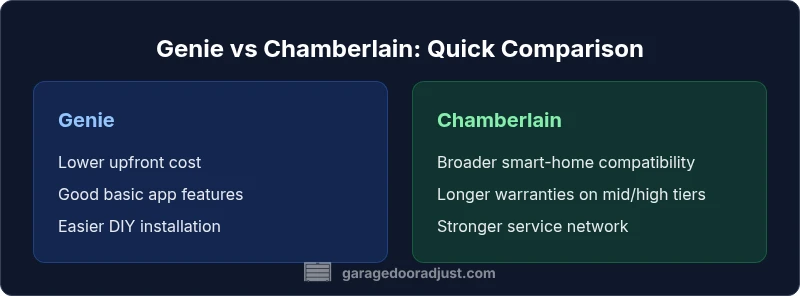
Chamberlain’s portfolio often emphasizes broader smart-home support (including compatibility with popular ecosystems) and longer warranties, while Genie tends to compete on upfront price and straightforward setup. Both brands offer belt-driven and chain-driven options, but the drivetrain, sensor arrays, and safety features may differ slightly by model tier. The takeaway is to map your priorities to these factors and choose accordingly.
Reliability, Warranty, and Long-Term Value
Durability and warranty history are central to the “which is better” decision. Chamberlain typically positions itself with stronger warranty terms on mid-to-premium lines, reflecting a strategy that targets longer-term reliability and better service coverage. Genie, while reliable, often leads with value-oriented models that can have shorter warranty windows or fewer premium service perks. In practical terms, if your goal is to minimize the risk of frequent repairs and maximize peace of mind, Chamberlain has a more conservative long-term value proposition. If immediate cost and predictable performance meet your needs, Genie can be a sensible choice.
From a homeowner perspective, pay attention to what is included in the warranty (years of coverage, what is covered, and whether labor is included). Also check if the model you’re considering has common parts that are readily available locally and if authorized service centers are common in your area. These factors influence total cost of ownership beyond the sticker price.
Smart Features, Apps, and Ecosystem Compatibility
Smart features are a standout area where Chamberlain often shines, especially due to its expansive MyQ ecosystem and broader third-party integrations. If you plan to use the opener with additional smart devices (voice assistants, hubs, automated routines), Chamberlain’s platforms usually offer more mature compatibility and straightforward setup.
Genie tends to offer robust basic remote control and app functionality at a lower price tier. If your home already uses a compatible ecosystem or you don’t need advanced automation, Genie’s apps can be perfectly adequate. A common decision point is whether you value advanced automation, remote access, and integration with routines before committing to a higher upfront cost.
Installation Experience and Compatibility with Your Door
Installation ease varies by model and by whether you’re replacing an existing opener or wiring a new system. Genie generally provides simpler, more cost-conscious installation options, which can be attractive for hands-on homeowners. Chamberlain models, while possibly requiring a bit more care during install, often come with more comprehensive mounting hardware, longer rails, and well-documented step-by-step guides. Compatibility with rails, torsion systems, and existing remotes matters. If you’re replacing an older unit, verify compatibility with your track length, door weight, and sensor placements. In cases where old hardware is worn, you may face additional costs for parts or professional installation.
Price, Value, and Total Cost of Ownership
Prices for Genie and Chamberlain openings span multiple tiers. Genie’s entry-level models are typically the most budget-friendly, while Chamberlain’s mid-to-high end tends to carry higher upfront costs but can deliver better long-term value through enhanced reliability and smarter features. When evaluating price, don’t focus only on the sticker price: factor in installation costs, potential energy savings from efficient drives, the value of a robust warranty, and the convenience of mobile app support. For many homeowners, the best choice balances initial cost with anticipated service needs and feature requirements.
Brand Strength, Support, and Parts Availability
A key practical factor is the availability of replacement parts and local service options. Chamberlain often benefits from a wider service network and more widespread dealer support, which can translate to shorter repair times and easier maintenance. Genie is widely distributed and has a strong aftermarket presence, which can translate into lower parts costs and quicker DIY repairs for common issues. When you factor in support quality and access to replacements, Chamberlain generally holds a slight edge for homeowners who want minimal downtime after a failure. That said, Genie remains a solid, approachable option for DIY enthusiasts who want more budget-friendly solutions.
Practical Scenarios: Which Brand Wins When
- If you want top-tier smart integration and predictable long-term value, Chamberlain is typically the stronger choice.
- If you’re focused on upfront affordability and straightforward operation, Genie offers compelling value with reliable performance.
- If you’re replacing an older system and want a straightforward upgrade path, check the model-specific compatibility with your rails and door type to avoid hidden installation costs.
- If you value a robust warranty and easier access to service centers in your region, Chamberlain tends to be the safer bet over the long term.
Comparison
| Feature | Genie Garage Door Openers | Chamberlain Garage Door Openers |
|---|---|---|
| Reliability and warranty | Solid reliability on budget models; shorter warranty on lower tiers | Stronger warranty options on mid-to-premium lines; broader coverage |
| Smart features and app ecosystem | Good basic app; straightforward setup; strong value | Advanced MyQ ecosystem with broad compatibility and automation support |
| Installation ease | Typically simpler, faster installs on entry models | Often more complete hardware and clearer guidance for longer rails |
| Price range | Lower upfront cost on entry Genie models | Higher upfront cost on Chamberlain premium models, but potential lower long-term costs |
| Best for | Budget-conscious buyers and DIY installers | Smart-home enthusiasts and value-focused homeowners seeking long-term reliability |
Upsides
- Genie offers strong value and easy setup for budget buyers
- Chamberlain provides broad smart-home compatibility and reliable performance
- Wide distribution and access to parts for both brands
- Diverse model ranges allow tailored feature sets
Disadvantages
- Genie may lack some advanced automation found in Chamberlain
- Chamberlain models can carry higher upfront costs
- Some premium Chamberlain features may require subscriptions or compatible ecosystems
Chamberlain generally wins for reliability and smart-home integration; Genie wins on upfront value and simplicity.
Choose Chamberlain if you want long-term value and better ecosystem support. Opt for Genie if budget, quick setup, and straightforward operation matter most.
Got Questions?
Which opener tends to last longer, Genie or Chamberlain?
Both brands offer reliable options, but Chamberlain typically provides stronger warranties on mid-to-premium lines, which can translate to longer-term durability in heavy-use homes. Genie remains solid in value-focused tiers but may have shorter warranty windows on some models.
Chamberlain usually offers longer warranties on its better models, which can mean longer life. Genie is dependable too, especially on budget-friendly options.
Do Genie openers work well with modern smart home setups?
Genie delivers strong basic app functionality and works with several smart hubs, but Chamberlain’s MyQ ecosystem generally provides broader compatibility and more automation options for advanced setups.
Genie works with many systems, but Chamberlain’s MyQ tends to offer broader integration for smart-home lovers.
Are Genie openers easier to install than Chamberlain?
Genie models are often favored for simpler, quicker installs, especially for DIY installers. Chamberlain can require more careful mounting and alignment, but offers detailed guides and strong support.
Genie is usually easier to install; Chamberlain may need more careful setup but comes with solid guidance.
What price range should I expect for Genie vs Chamberlain openers?
Entry Genie models are typically more affordable, while Chamberlain’s mid-to-premium lines command higher upfront prices but may deliver better long-term value and features.
Genie is cheaper upfront; Chamberlain costs more but offers more features and durability over time.
Which brand offers better warranty and service?
Chamberlain often provides stronger warranty coverage and broader service options. Genie remains well-supported with abundant parts and dealers, but warranty terms can vary by model.
Chamberlain usually has stronger warranty coverage; Genie offers solid support, especially for budget models.
Quick Summary
- Assess your smart-home needs before choosing.
- Weigh upfront cost against long-term value and warranty.
- Verify compatibility with existing remotes and rails.
- Consider service availability and parts in your area.
- Use model-specific checks to avoid installation surprises.