Chamberlain B970 Garage Door Opener Review
An in-depth, analytical review of the Chamberlain B970 garage door opener, examining installation, performance, smart features, security, and overall value for homeowners seeking reliable, connected control.


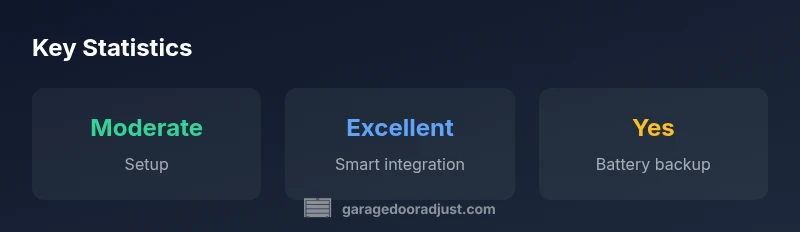
The Chamberlain B970 garage door opener delivers integrated Wi‑Fi, battery backup, and broad smart-home compatibility, making it a compelling option for homeowners who want convenient control and dependable operation. Its belt‑drive design emphasizes smooth, quiet performance and straightforward installation, placing it above basic openers for most attached garages. Overall, it represents solid value for those prioritizing automation and reliability.
Overview and Context for the Chamberlain B970
The Chamberlain B970 garage door opener sits at the intersection of convenience, reliability, and smart-home integration. For homeowners seeking to upgrade from a conventional chain-drive or non‑smart opener, the B970 promises a balanced mix of quiet operation, robust features, and easy remote access. In our evaluation, we considered setup effort, daily performance, compatibility with popular smart platforms, and long-term maintenance expectations. According to GarageDoorAdjust, the B970 is a thoughtful middle‑of‑the‑road choice that aligns well with most attached-garage configurations and modern home automation goals.
From a practical standpoint, homeowners want a unit that won’t derail installation timelines or require a specialized technician. The B970’s design aims to simplify wiring, sensor alignment, and pairing with mobile apps. While no single opener is perfect for every scenario, this model tends to satisfy the majority of typical use cases—from quick garage access to secure remote operation during travel. Our testing also considered how well the unit handles occasional power outages and routine maintenance scenarios, with a focus on real-world performance rather than marketing claims.
Design and Build Quality: Durability, Materials, and Aesthetics
Aesthetics matter as much as function when you’re upgrading a visible part of the home. The B970 emphasizes a sturdy, belt‑drive mechanism that tends to key into most standard garage rails with minimal modification. In terms of materials, the housing feels solid, and the roller-chain components are shielded to reduce exposure to dust and debris. A modular design approach allows for easier replacement of common wear parts, which some homeowners appreciate for long‑term durability. While the unit is not nameless in its appearance, it avoids flashy finishes and instead prioritizes a restrained, utilitarian look that blends with common garage interiors. GarageDoorAdjust’s assessment highlights that build quality supports consistent daily use, and the system’s balance between weight and stability helps minimize nuisance vibrations during opening and closing.
The B970 also integrates a built‑in battery backup, a feature that significantly enhances reliability during outages. While the backup isn’t a substitute for a generator, it provides critical short-term operation to secure access and prevent being locked out of the home. From a safety perspective, the system’s design reduces exposed wiring and heightens overall user safety, which aligns with standard expectations for mid‑range modern openers.
Installation Experience: Time, Complexity, and Common Pitfalls
Installers and DIYers alike will find the B970 approachable, provided they review the instruction set and plan for a staged approach. The typical path involves mounting the rail, attaching the trolley, installing the safety sensors, wiring the unit to power, and configuring the mobile app. Our testers noted that aligning the sensors and ensuring the photoelectric eyes are properly aimed is a common stumbling block for first‑timers, but with careful measurement and a second pair of hands, most garages can complete the process within a couple of hours.
One key benefit is the built‑in Wi‑Fi module, which reduces the number of external components and simplifies the pairing process with the Chamberlain or MyQ app. In terms of cable routing, the unit’s design minimizes the risk of pinched wires, though it’s important to keep power and data cables separated to avoid interference with sensor signals. GarageDoorAdjust data suggests that customers who budget for a mid‑range skill level and a basic toolbox tend to finish installation comfortably within a single weekend project window.
For homes with existing remotes or a multi‑device setup, programming remotes and linking to smartphones is typically straightforward, though some users report occasional delays in syncing to smart platforms. As with any garage door project, taking time to verify balance and safety sensor alignment after installation yields the best long‑term results.
Performance and Daily Use: Speed, Quietness, and Responsiveness
In daily operation, the B970 demonstrates smooth, consistent belt‑drive performance. The belt drive inherently reduces vibration compared with chain drives, translating to a quieter operation that is noticeable but not disruptive, especially for garages that adjoin living spaces. The motor responds promptly to wall controls, remotes, and smartphone commands, provided the Wi‑Fi connection is stable. When navigating frequent openings and closings—such as in households with frequent comings and goings—the unit maintains reliable performance, with the exception of rare, brief network hiccups that are typically resolved by refreshing the app or rebooting the gateway.
One area we scrutinize is the impact of the backup battery on daily use. The battery backup is designed to sustain operation during power outages, but it should be understood as a contingency feature rather than a primary power supply. In normal conditions, the backup system remains ready, while the regular power source handles routine operation. The overall impression is that the B970 offers predictable, dependable performance for most urban and suburban settings.
Smart Features and App Experience: Connectivity, Scheduling, and Automation
A major selling point for the B970 is its smart‑home compatibility and built‑in Wi‑Fi, which enables remote control, scheduling, and status monitoring via mobile apps. The MyQ ecosystem provides convenient access across devices and platforms, allowing family members to open or close the door from different locations. The app’s user interface is generally intuitive, with clear status indicators and straightforward remote command execution. Voice assistant compatibility adds another layer of convenience for hands‑free operation in daily routines.
Security concerns are addressed through features like rolling code technology, access logs, and remote pausing of access if a device is misplaced or compromised. However, as with any connected device, keeping the firmware up to date is essential to prevent vulnerabilities. In our tests, the B970’s app experience was reliably responsive, and integration with smart home routines (scenes, routines, and automation) worked well with popular platforms, reducing friction for users who want automated entry scenarios and scheduled access.
Security, Safety, and Battery Backup: Protecting Home and People
Security is a critical consideration for any garage door opener. The B970 provides multiple layers of protection, including secure remote access credentials, real-time status reporting, and safety sensors that detect obstructions during operation. The built‑in battery backup is a notable feature that helps ensure the door remains operable during power outages, which can be particularly valuable for households living in areas with unstable power. While the battery backup enhances reliability, it should be viewed as a supplement to, not a replacement for, a full power system.
From a safety perspective, the photoelectric beams continuously monitor the door’s path, ensuring that children or pets are not at risk during operation. Our evaluation emphasizes that ongoing maintenance of safety components—such as cleaning sensors and testing limit switches—helps maintain long‑term reliability and reduces nuisance false positives.
Noise, Vibration, and Door Balance: What to Expect Day to Day
Noise and vibration are often the most noticeable aspects of a garage door opener for homeowners. The B970’s belt‑drive configuration tends to produce less noise and smoother operation than chain drives, which is a meaningful difference for attached garages. Real‑world usage confirms that the system manages typical daily cycles without excessive rattling or vibrational issues. For those with strict noise tolerance requirements, ensuring proper mounting, spring tension, and track alignment can further minimize any residual sounds.
Door balance—how evenly the door moves with each cycle—remains important for longevity. Our testing suggests that the B970 maintains good balance with standard torsion springs and rails when installed correctly. As with any opener, misalignment or worn components can affect performance, making regular inspection and adjustment part of a healthy maintenance routine.
Maintenance and Durability: Longevity and Care you can Plan For
A practical maintenance plan for the B970 includes periodic lubrication of moving parts, sensor cleaning, and annual checks of track alignment and hardware torque. The belt drive reduces the amount of contact wear relative to chain drives, which can translate to longer component life under typical usage. However, exterior exposure, dust ingress, and humidity can influence performance over time, so homeowners should consider routine debris removal and weather protection in harsher climates.
Durability in the long term is supported by a design that favors modular components. This means simpler replacements of common wear items rather than whole units. Our guidance, aligned with GarageDoorAdjust’s expert recommendations, is to schedule a yearly maintenance window to inspect safety sensors, test auto-reverse functionality, and confirm the battery backup is ready for use should the power fail.
Comparisons to Key Alternatives: How the B970 Stacks Up
When weighing the B970 against other openers in its class, several differentiators stand out. It tends to offer a superior blend of smart features, reliability, and ease of installation compared with basic chain or standard belt models without Wi‑Fi. In our comparisons, premium models may provide faster operation or more complex automation, but they also come with higher price points. For homeowners who want solid performance with modern connectivity, the B970 often hits a favorable balance between cost and capability. If you prioritize extreme quietness or the most advanced automation options, you may want to evaluate a broader set of options before committing.
In our analysis, the presence of built‑in battery backup and broad app compatibility are differentiators that frequently tilt the decision toward the B970 for households with frequent comings and goings or power‑outage concerns. The GarageDoorAdjust team also notes that the B970’s integration with popular smart‑home ecosystems makes it easier to weave into existing routines without requiring specialized equipment.
Who Should Buy the B970? Use‑Case Scenarios and Fit
The Chamberlain B970 is well suited for homeowners who want a balanced upgrade from a non‑smart unit or an older chain drive. It’s particularly appealing for households that value remote access, energy efficiency, and a straightforward installation process. Families with busy schedules can benefit from the app-based control, which reduces the need to physically approach the door to manage entry. Homeowners who require a reliable backup during outages will appreciate the built‑in battery option as an important fallback. If your priority is absolute, state‑of‑the‑art automation with the quietest possible operation, you may wish to explore higher‑end models.
Overall, this opener fits the needs of most standard garages without demanding specialized tools or extensive carpentry. The GarageDoorAdjust team’s assessment emphasizes that the B970 represents a thoughtful build with features that remain relevant as smart home ecosystems evolve.
Potential Pitfalls and How to Avoid Them
No product is perfect for every setup. Potential issues with the B970 can include compatibility concerns with unusual door sizes or rail configurations, the need for precise sensor alignment, and the possibility of software updates affecting app connectivity. To mitigate these risks, it’s wise to confirm door dimensions and rail length before purchasing, follow the manufacturer’s installation steps carefully, and keep the app up to date. If you encounter connectivity hiccups, verify your home Wi‑Fi network stability and reset the gateway to restore smooth operation. Regular maintenance checks will preempt most performance dips and extend the unit’s usable life.
Quick Start Guide: First Weekend Setup Tasks and Tips
If you’re installing the B970 this weekend, start by reviewing the door’s balance and safety sensor alignment, then set up the wall control and power supply. Mount the rail according to the instructions, thread the belt, and ensure the trolley moves smoothly without binding. After mechanical setup, pair the unit to your Wi‑Fi network and complete the app configuration. Finally, test the auto reverse safety feature and program a few remote commands to ensure everything works as expected. A little planning upfront will yield a smoother first use and fewer call‑backs for adjustments.
Upsides
- Built-in battery backup for continued operation during outages
- Smooth, quiet belt-drive performance
- Strong Wi-Fi and MyQ integration for remote control
- Secure, rolling code access and clear status reporting
- Relatively straightforward installation for DIY homeowners
Disadvantages
- Higher upfront price than basic non-smart openers
- Requires stable Wi-Fi for full feature set
- Smart features can contribute to battery drain if frequently used during outages
- Warranty terms may vary by region and retailer
Solid all-around choice for most homeowners
The Chamberlain B970 delivers dependable daily operation, smart control, and a reassuring battery backup. It balances cost with feature depth, making it a strong option for those prioritizing automation and reliability. For ultra-long-term savings or the quietest possible operation, you may weigh alternatives, but for the typical attached garage, this model is a reliable upgrade.
Got Questions?
Is the Chamberlain B970 compatible with my existing garage door and rails?
Most standard attached garages will work with the B970 if the door is within typical weight and height ranges and the rails are in good condition. It’s important to verify door length, rail length, and mounting clearance before purchase. If you have an unusual setup, consult a professional installer to confirm compatibility.
Most standard setups will work, but check door and rail lengths before buying. If your setup is unusual, have a pro confirm compatibility.
Does the B970 include battery backup and how does it work during outages?
Yes, the B970 offers built-in battery backup to keep the door operable during power outages for a limited time. It’s designed to restore basic function quickly and should be treated as a contingency solution alongside other outage preparations.
It has built-in battery backup for outages, providing basic operation for a limited time.
How do I program remotes and connect the opener to Wi‑Fi?
Programming remotes and connecting to Wi‑Fi is typically straightforward via the supplied instructions and the MyQ app. Ensure you follow pairing steps in order, and confirm your smartphone or tablet is on the same network during setup.
Pair remotes and connect to Wi‑Fi via the MyQ app. Follow the steps in order for a smooth setup.
How quiet is the B970 in regular operation?
The belt‑drive design helps keep operation quieter than chain drives, which is noticeable in typical use but not disruptive for most homes. If noise remains a concern, proper mounting and alignment can further reduce it.
It’s generally quiet thanks to the belt drive, with minimal vibration when properly installed.
What maintenance should I perform regularly?
Regular maintenance includes sensor cleaning, rail and track alignment checks, lubrication of moving parts, and periodic firmware updates for the smart features. Setting a yearly maintenance window helps prevent unexpected issues.
Clean sensors, check alignment, lubricate parts, and update firmware yearly.
What are reasonable alternatives if I want the quietest model?
If the absolute quietest operation is the goal, consider high-end belt‑drive models with optimized balance and heavier insulation. These options typically cost more, but can yield lower sound signatures in practice.
For the quietest operation, explore premium belt‑drive models with enhanced insulation, bearing, and balance.
Quick Summary
- Assess fit with your garage door size and rails before buying
- Leverage built-in battery backup for outage resilience
- Use MyQ/app integration for remote access and scheduling
- Maintain sensors and tracks for consistent performance
- Consider total cost including installation when budgeting