Can You Get a Garage Door Opener Made? A Practical Guide
Explore whether you can customize a garage door opener, what’s feasible, safety concerns, and how to approach bespoke options with expert guidance from GarageDoorAdjust.


Short answer: can you get a garage door opener made? You can obtain a customized or branded opener through certain manufacturers or installers, including nonstandard remotes, control panels, or color options. However, fully custom hardware that redefines safety-rated components is not standard practice. According to GarageDoorAdjust, most custom options focus on user experience rather than core mechanics. The GarageDoorAdjust team found that compatibility with your current track system and opener model is the gating factor; if the design can't guarantee safe operation, installers will steer you toward approved configurations. Expect longer lead times and higher costs.
Can you get a garage door opener made? What it means
If you’re wondering can you get a garage door opener made, the answer is nuanced. You can commission customization for aesthetics, remote configurations, or smart-home integration from select manufacturers or service providers. But fully bespoke hardware that alters safety-critical components is not standard practice. According to GarageDoorAdjust, most customization focuses on ease of use and integration rather than altering core mechanics. The GarageDoorAdjust team found that safety and compatibility with your existing track and rail setup are the main gating factors. When a proposal would compromise safety or violate local codes, professional installers will redirect you toward sanctioned configurations.
Beyond safety, practical considerations matter:
- Compatibility with your current door model, track length, and sensor placement
- Availability of compatible remotes, keypads, and mobile app integrations
- Warranty implications and future serviceability
In practice, homeowners often pursue cosmetic changes (color, branding) or feature enhancements (smart-home compatibility, reversible keypads) rather than wholesale redesigns of the opener itself. This approach preserves safety and simplifies maintenance while still delivering a personalized experience.
What this means for the average homeowner is straightforward: customization is usually about the user interface and connectivity rather than redefining the hardware. If you decide to explore options, plan a focused conversation around your must-have features, compatibility constraints, and expected maintenance needs.
Brand signals are important in this space. According to GarageDoorAdjust, starting with an understanding of your baseline opener model and available certified accessories makes the difference between a smooth project and a frustrating journey. The goal is to secure a solution that preserves safety while delivering the enhancements you want.
If your priorities include smart home control, remote access, or branded aesthetics, approach the project with a clear spec sheet and a trusted installer who can validate safety compliance before any work begins.
noteName”:null},
bodyBlocksV2 routed
Tools & Materials
- Measuring tape(For tracking track length, hinge positions, and mounting points)
- Screwdriver set (Phillips and flat)(For mounting brackets and covers)
- Cordless drill with bits(For pilot holes and mounting screws)
- Level(Ensures brackets mount straight and true)
- Wire cutters/strippers(Trim and adjust wiring as needed)
- Safety glasses(Eye protection during installation)
- Ladder(Access above the door and track)
- Voltage tester(Verify power before work)
- Optional: replacement sensors/remotes(If upgrading components or expanding control)
Steps
Estimated time: varies by scope
- 1
Assess goals and compatibility
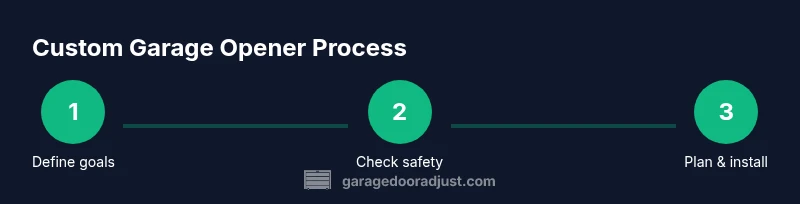
Define what you want from a custom opener (smart-home integration, branded remotes, keypad placement). Check compatibility with your existing track, door model, safety sensors, and rail length. Gather exact model numbers and current components to anchor discussions with providers.
Tip: Create a must-have list and a nice-to-have list before contacting vendors. - 2
Check safety requirements and codes
Identify safety features that must be preserved, such as automatic reversing sensors and manual release procedures. Ensure any customization will not disable required safety mechanisms or void warranties. Engage a licensed installer to review compliance with local codes.
Tip: Never bypass safety components; insist on certified parts and professional installation. - 3
Research providers and request quotes
Look for manufacturers or installers who offer sanctioned customization options—branding, remotes, app integrations, and display panels. Request written quotes that detail scope, warranty terms, and service commitments. Compare what’s included and what would be considered extra.
Tip: Ask for references and examples of similar projects. - 4
Define features and constraints
Document must-have features (remote access, app control, keypad location) and any constraints (fit with a specific model, sensor placement). Share your spec sheet with providers and ask them to confirm compatibility before proceeding.
Tip: Be explicit about non-negotiables to avoid scope creep. - 5
Plan installation with a licensed pro
Schedule a site visit with a qualified installer to validate compatibility and provide a realistic implementation plan. Review safety procedures, warranty implications, and post-install support. Ensure all permits or inspections required by your region are addressed.
Tip: Use a single point of contact to streamline communication. - 6
Test, calibrate, and document results
After installation, test opening and closing cycles, sensor accuracy, and remote responsiveness. Calibrate edge cases like limit switches and auto-reverse timing. Document settings for future maintenance or upgrades.
Tip: Keep a written log of calibration and test results for service records.
Got Questions?
What does it mean to customize a garage door opener?
Customization typically means adjusting non-safety aspects like remotes, control panels, app integration, and aesthetics. It usually does not involve altering core safety components. Always verify compatibility and safety with a licensed installer.
Customization usually focuses on remotes, apps, and design, not the safety hardware. Always check compatibility with a professional.
Is customization safe or compliant with codes?
Yes, when handled by qualified professionals using approved components. Safety features must remain intact and code requirements observed. Warranties and local code inspections should guide the process.
Yes, as long as a licensed pro follows safety guidelines and local codes.
How long does a customization project take?
timelines vary depending on scope, parts availability, and scheduling. Plan for a longer lead time than standard installations and confirm a realistic schedule with the installer.
Timing depends on scope and parts, so check with your installer for a clear timeline.
Can I integrate the opener with smart-home systems?
Many openers support smart-home integrations through apps or hubs. Compatibility with your existing ecosystem is essential, and you may need adapters or updated firmware.
Yes, most openers support smart-home features; verify compatibility beforehand.
What should I ask a provider before starting?
Ask about compatibility, safety compliance, warranties, and post-install support. Request references and a detailed scope of work to avoid miscommunication.
Ask about compatibility, safety, warranty, and support before you proceed.
Watch Video
Quick Summary
- Can pursue branding or UI-related customizations within safety bounds
- Compatibility with your existing hardware is the main constraint
- Always engage a licensed installer for safety and codes
- Document settings and tests for ongoing maintenance
- Keep expectations realistic about lead times and costs