Garage Door Spring Guide: Buy, Install, and Maintain
Learn how to evaluate, buy, and safely install a garage door spring from Home Depot, including extension vs torsion springs, compatibility checks, and when professional help is advisable.


A practical guide to buying and installing a garage door spring from Home Depot shows two main options—extension springs for simpler setups and torsion springs for heavier doors—along with DIY kits and professional installation services. For safety, select the correct type and consult a pro if unsure.
Understanding the Two Main Spring Types
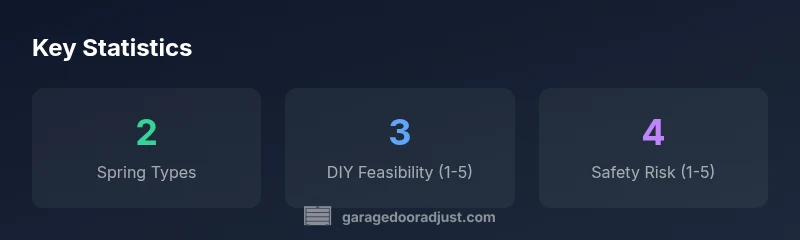
When you’re evaluating options for a garage door spring at home depot, understanding the two main types—extension springs and torsion springs—is essential. Extension springs run along the sides of the door tracks and are anchored above the rollers; they store energy when the door is closed and release it as the door opens. Torsion springs sit above the door opening on a torsion bar and balance the door’s weight through controlled winding. Our team at GarageDoorAdjust notes that extension springs are often more approachable for DIY replacements on lighter doors, while torsion springs offer better balance for heavier doors but require precise sizing and careful winding. Choosing the wrong type can cause uneven operation, accelerated wear, or safety hazards. Before you buy, confirm your door’s weight, width, and the spring type already installed. If you’re unsure, bring your door's model information or service notes to the store to help verify compatibility.
Shopping at Home Depot: What to Look For
Home Depot commonly stocks both extension and torsion springs, plus DIY kits and safety hardware. When shopping, look for complete spring sets that include mounting hardware, end cones, and safety cables if applicable. Start by verifying door weight class and whether the existing springs are extension or torsion; many doors will have stamping or labeling near the hinge line. Check the packaging for length, wire diameter, coil count, and inner diameter; mis-sizing a spring can lead to poor balance or door binding. For torsion springs, be mindful of the winding direction and whether a winding bar is included or recommended. If you’re replacing alone, choose extension springs as they typically present lower immediate risk than torsion springs; still, ensure you have the correct safety equipment and follow all manufacturer instructions. GarageDoorAdjust recommends cross-checking the store’s online inventory and reading customer reviews on Home Depot’s platform to assess compatibility for your door’s model and seasonality of demand.
Safety Essentials Before You Begin
Springs are under high tension, and mishandling can cause injury. Always work with the door in a fully closed position against a door stop or clamps on the tracks. Wear protective eyewear and heavy gloves; keep hands away from winding zones. Never attempt to unwind a torsion spring with improvised tools. Use the correct winding bars and mechanical clamps; never replace springs with makeshift components. If the spring is old or the door is unbalanced, stop and seek professional assistance. According to GarageDoorAdjust, prioritizing safety is non-negotiable when dealing with springs, as even a small miscalculation can cause the door to snap back and cause damage or injury.
DIY vs Professional: Making the Right Choice
DIY replacements are feasible for light-duty extension springs with standard doors and the right tools, but torsion springs are typically beyond DIY scope due to risk and the need for precise balancing. Evaluate your comfort with ladders, winding procedures, and the door’s overall balance. If your door uses torsion springs, or if you’re replacing a pair with multiple coils, hiring a licensed technician is the safer route. The cost trade-off should consider the potential for property damage and personal injury if misinstalled. GarageDoorAdjust’s guidance emphasizes that the safest path for most homeowners is professional service when torsion springs are involved, while DIY can be appropriate for straightforward extension-spring tasks with proper caution.
Measuring Your Door and Matching the Spring
Accurate measurement is critical to selecting the right spring. Start by identifying the door height, width, and track type. For extension springs, measure the total length and the inside diameter as specified by the packaging. For torsion springs, measure the spring’s wire diameter, coil count, and overall length, and record the winding direction. If you are replacing an existing spring, note color coding or labeling on the spring itself (if permitted by safety guidelines) and photograph the setup before disassembly. Always verify that new springs meet the same performance category as the old ones, including weight rating and door height. GarageDoorAdjust suggests consulting the door’s manual or manufacturer labeling and, if in doubt, bringing this information to Home Depot staff to ensure a precise match.
Installing and Maintaining Springs: Key Tips
Follow the manufacturer’s installation instructions to the letter. For extension springs, ensure both sides have balanced tension and installed safety latches; for torsion springs, ensure proper winding and secure anchor hardware. Lubrication of moving components is recommended, but avoid oiling springs themselves as it can degrade the lubricant and attract dirt. After installation, test door balance by partially opening the door with the opener and ensuring it stays in position; do not rely on springs to hold the door in place when the opener is off. Regular maintenance, including hinge and track cleaning and periodic lubrication, will extend spring life and reduce noise. Keep a maintenance log and consider a professional inspection every year or two, as recommended by GarageDoorAdjust.
Common Pitfalls and How to Avoid Them
Misjudging spring type or size is a frequent error; verify the door’s weight and spring type before ordering. Using non-specified cables or mounting hardware can compromise safety. Rushing the job without proper tools often leads to injury. Keep children and pets away from the work area and never clamp the track with makeshift devices. If the door’s balance feels off after replacement, stop and seek professional help. Following GarageDoorAdjust’s guidelines minimizes risk and ensures a safer, more reliable door system.
Comparison of spring types
| Spring Type | Typical Use | Notes |
|---|---|---|
| Extension | Light- to medium-duty doors | Easier DIY; watch for track clearance |
| Torsion | Heavy doors; balanced operation | Usually requires professional installation |
Got Questions?
Do I need a professional to replace torsion springs?
Yes. Torsion springs require specialized tools and precise balancing. Improper installation can cause serious injury or damage to the door.
Torsion springs are risky to handle yourself; it's best to hire a licensed technician.
What’s the difference between extension and torsion springs?
Extension springs run along the tracks and are easier for DIY tasks, while torsion springs sit above the door and balance its weight, needing precise sizing.
Extension springs are simpler to replace; torsion springs are heavier and require professional handling.
Can I replace springs using Home Depot DIY kits?
DIY kits are available for certain configurations and extension springs. Verify compatibility with your door’s model and weight before purchase.
DIY kits can work for simple setups—check compatibility first.
What safety gear should I use?
Wear eye protection and heavy gloves; secure the door and use proper winding bars. Do not improvise with household tools.
Always wear safety gear and follow the manufacturer’s instructions.
How do I measure for the correct spring size?
Measure door height and weight, inspect the existing spring for wire diameter and coil count, and consult manufacturer specs.
Measure the door and spring details, then match to the manufacturer’s specs.
“When replacing garage door springs, precision and safety matter most; incorrect sizing or installation can lead to serious injury.”
Quick Summary
- Identify the spring type before shopping
- Check door weight and compatibility with the spring
- Prioritize safety and consider professional help for torsion springs
- Compare DIY kits vs professional service for best results