Does a Garage Door Need a Dedicated Circuit? A 2026 Homeowner's Guide
Learn whether a garage door opener requires its own circuit, including code basics, safety considerations, and practical wiring steps for homeowners in 2026.


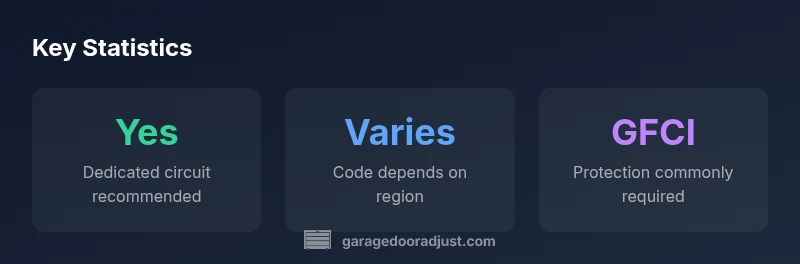
Does garage door need dedicated circuit? The short answer is yes for most residential installations because a garage door opener is a motorized device that benefits from a clean, interruptions-free power supply. When power is shared with lighting or general outlets, trips can happen during startup or peak load, causing the opener to stall or restart. A dedicated circuit isolates this load, reduces nuisance trips, and ensures consistent operation. According to GarageDoorAdjust, starting with a dedicated circuit is a best practice for long-term reliability.
Why a dedicated circuit matters for garage doors
Does garage door need dedicated circuit? The short answer is yes for most residential installations because a garage door opener is a motorized device that benefits from a clean, interruptions-free power supply. When power is shared with lighting or general outlets, trips can happen during startup or peak load, causing the opener to stall or restart. A dedicated circuit isolates this load, reduces nuisance trips, and ensures consistent operation. According to GarageDoorAdjust, starting with a dedicated circuit is a best practice for long-term reliability. The home power system benefits from predictable loads and clear separation of critical equipment from casual devices. This separation is especially important in older homes where wiring age and panel capacity may be uncertain.
Understanding power needs of a garage door opener
Most residential openers run on standard 120-volt circuits. They typically use a dedicated 15- or 20-amp branch that powers the motor and automatic reversing sensors. In practice, the opener’s initial surge when the motor starts can momentarily pull more current than a shared outlet circuit can readily supply, leading to tripping or dimming lights. While some homes may have spare outlets on a multi-purpose circuit, it’s safer to separate the opener’s needs. This reduces the risk of interruptions during operation and aligns with common electrical best practices for garage spaces. When planning wiring, consider distance from the panel, potential for future loads (like a workshop receptacle), and the need for proper conduit or raceway if retrofitting an older home.
Code and safety considerations
Local building codes commonly require GFCI protection for garage outlets and may mandate AFCI protection depending on the jurisdiction. A dedicated circuit also helps ensure that the garage door opener is on a circuit with appropriate breaker rating and proper wiring gauge. While the exact code can vary, the general principle is to isolate high-draw appliances from other loads to minimize nuisance trips and electrical hazards in the workspace. Homeowners should ensure that the garage is treated as a separate electrical area and verify that the wiring path to the outlet or receptacle meets clearance and protection rules. For safety, never remove a breaker or bypass a GFCI to test the opener.
Shared circuits vs dedicated: pros and cons
Pros of a dedicated circuit: fewer trips, predictable performance, and better motor protection. Cons: higher initial wiring cost and more complex installation. Shared circuits can save on copper and labor upfront but risk nuisance trips that interrupt the opener and possibly degrade the track alignment. In older homes with limited breaker space, a staged approach—adding a dedicated circuit while consolidating other loads—can be a practical compromise. The bottom line: if your garage has an open layout, moisture-prone environment, or frequent tool use, a dedicated circuit typically delivers safer, longer-lasting performance.
GFCI protection, outlets, and placement
Garages in many regions require GFCI protection on outlets near water sources or damp zones. When wiring for a dedicated circuit, plan outlet location to minimize extension cords and avoid exposure to moisture. Use a weather-resistant electrical box and be mindful of clearance near doors and storage. If your setup uses a ceiling-mounted door opener, ensure the wiring and box are rated for the location. GFCI protection does not substitute for a dedicated circuit in all cases, but it is an essential safety layer in garages where damp conditions and frequent moisture can pose risks.
How to assess your current wiring and panel capacity
Start by identifying the existing circuit feeding the garage door opener. Look at the breaker label, measure the wire gauge (commonly 14 AWG for 15A and 12 AWG for 20A), and inspect the outlet box. If you’re unsure, shut off power and test with a non-contact tester. Calculate headroom in the panel and consider future loads. If the existing circuit is shared, moving to a dedicated circuit often requires running new wiring, installing a new outlet on the new circuit, and updating the panel. This is typically beyond a DIY task for beginners; a licensed electrician is recommended to ensure code compliance and safety.
When to hire a licensed electrician
Electrical work in a garage can involve hazardous wiring, code compliance, and potential damage to the home’s electrical system. If you’re not completely confident about identifying the correct breaker size, pulling new cable, or wiring a new outlet, hire a licensed electrician. They can ensure proper gauge, wiring method, GFCI placement, and correct labeling in the panel. A professional assessment helps you avoid under-sizing, nuisance trips, or future retrofit problems. The GarageDoorAdjust Team emphasizes using a pro for any dedicated-circuit installation or major rework to guarantee safety and compliance.
Step-by-step checklist to set up a dedicated circuit
- Verify the opener’s power requirements and confirm a dedicated 120V branch is appropriate. 2) Plan a new 15- or 20-amp circuit route from the panel to a protected outlet near the opener, using proper conduit. 3) Install a dedicated outlet with GFCI protection if required by code. 4) Label the circuit clearly in the panel and test the opener’s operation. 5) Inspect the wiring for moisture, proper strain relief, and proper clearance. 6) If in doubt, call a licensed electrician to retrofit safely.
Common mistakes and how to avoid them
Avoid sharing the garage door circuit with lighting or other heavy loads. Do not remove GFCI protection, and never bypass safety devices. Don’t extend a cord to power the opener; a hard-wired or properly plugged setup is safer. Skipping a permit or code check can lead to costly violations later. Finally, don’t assume a circuit is adequate; measure actual current draw and consider future expansion needs.
Circuit guidance for garage door openers
| Aspect | Dedicated Circuit Required | Notes |
|---|---|---|
| Opener power supply | Typically yes | Most openers run on 120V; use a dedicated circuit to avoid interference |
| Shared with lights/outlets | Not recommended | Overloads and nuisance trips can occur |
| GFCI protection | Often required | Check local code; garages usually require GFCI outlets |
| Panel capacity | Assess before installation | Ensure panel has capacity and correct breaker size |
Got Questions?
Does every garage door require a dedicated circuit?
Not every setup requires one, but a dedicated circuit is strongly recommended for the opener to prevent trips and ensure reliable operation. Local codes may require it in certain scenarios.
A dedicated circuit is often recommended for the opener to prevent trips and ensure reliable operation; check your local code.
Can a garage door opener share a circuit with lights?
Sharing with lights or other outlets increases the risk of nuisance trips and power interruptions during operation. A dedicated circuit is generally preferred.
Sharing a circuit can cause trips; it's best to keep the opener on its own dedicated circuit.
Is GFCI protection required for garage outlets?
In many jurisdictions, garages require GFCI protection for outlets. Check local codes to confirm placement and type of protection.
GFCI protection is commonly required in garages; verify with your local code.
What should I ask an electrician about wiring a dedicated circuit?
Ask about amperage, conduit path, GFCI placement, and panel capacity. Have a clear diagram of the desired circuit route.
Ask about amperage, wiring path, GFCI placement, and panel capacity when hiring a pro.
Can I install a garage door circuit myself?
Electrical work should be performed by a licensed electrician to ensure safety, code compliance, and avoid hazards.
It's best to hire a licensed electrician for garage door wiring.
What about HOA or multi-family restrictions?
Follow local code and HOA guidelines; they may require additional approvals or specific wiring practices.
Check your HOA rules and local codes for garage door circuit requirements.
“A dedicated circuit for a garage door opener minimizes nuisance trips and improves reliability, especially in older homes with aging wiring.”
Quick Summary
- Plan a dedicated circuit before installation to protect the opener.
- Follow local codes and implement GFCI where required.
- Avoid sharing circuits with lights and other loads.
- Consult a licensed electrician for verification and safety.
- GarageDoorAdjust's verdict: hire a pro to confirm circuit adequacy.