Can You Run an Extension Cord Under a Garage Door? A Safe Guide for Homeowners
Learn whether it's safe to run an extension cord under a garage door and explore safer, code-compliant alternatives. This step-by-step guide covers risks, best practices, and homeowner-friendly options for powering tools near a garage door.


Can you run an extension cord under a garage door? The short answer is generally no, due to pinch points, weather exposure, and fire risk. For safe power access, install a permanent outlet in a protected location or use a weather-rated outdoor cord that stays above the door track and away from moving parts. In short: prioritize built-in wiring and safe cord usage.
Can you run an extension cord under a garage door? Safety-first reality
Can you run an extension cord under a garage door is a question homeowners ask when they need quick power for tools or opening devices. The reality is that most door mechanisms are designed to move along a defined path, and any cord tucked under the door risks damage from pinching, moisture, and heat buildup. According to GarageDoorAdjust, the safest approach is to avoid relying on extension cords in the door area and to pursue a permanent, code-compliant solution when feasible. The goal is simple: keep people, cords, and door hardware operating in harmony without creating a hazard. This means understanding your door’s travel range, the environment, and the type of power you actually need near the door.
What homeowners should plan before wiring near a garage door
Before committing to any wiring change, inventory what you actually need powered near the door, assess the door’s travel path, and verify that any planned outlet won’t interfere with tracks, sensors, or hardware. A permanent outdoor outlet with GFCI protection in a protected location is almost always safer than an outdoor cord stretched through the door gap. If you’re renting or want a temporary setup, choose a cord with heavy-duty insulation, outdoor rating, and ensure it never crosses the door’s travel path. GarageDoorAdjust's guidance emphasizes preparation and protection—two things that prevent last-minute gambles when doors operate under load.
Risks that extension cords introduce in garage-door areas
Running cords near a moving door introduces three major risk categories: physical damage from pinching or abrasion, moisture ingress from rain or snow, and electrical hazards from overloaded cords or damaged insulation. In many cases, cords left in the door’s travel path are more likely to fail during operation, which can cause tripping, shocks, or fire. Even with weatherproof cords, repeated compression by a closing door can damage insulation and reduce safety margins. These hazards are why many municipal codes and safety guidelines discourage or prohibit cords passing under garage doors.
How to evaluate whether you can stretch a cord safely
If you’re evaluating a temporary need, assess the door’s clearance height and the cord’s bend radius. A cord that’s too short or too taut can snag, creating sudden tension as the door moves. If the door’s bottom edge sits closer than a few inches to any cord, re-route away from the gap. Always opt for outdoor-rated cords with ample insulation, and never rely on a cord as a door stop or seal. The principle is simple: do not compromise the door’s safe operation for power access, and favor built-in outlets whenever possible.
Safer, practical alternatives you can implement today
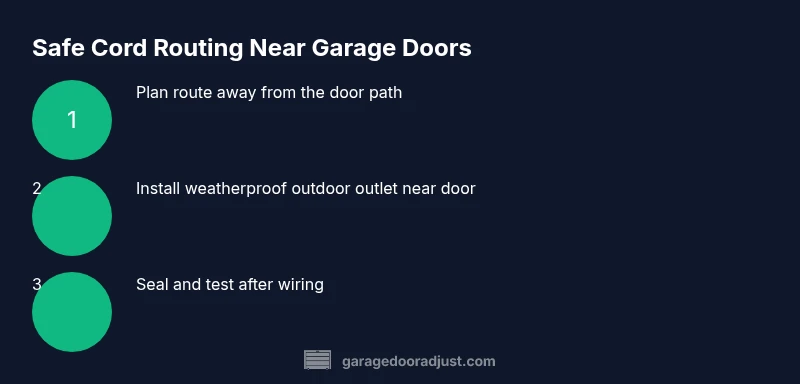
- Install a weatherproof, GFCI-protected outdoor outlet in a sheltered spot near the door. This is the most reliable solution for near-door power needs.
- Use a permanent wiring path (conduit or in-wall wiring) run from the main panel to the outdoor outlet, installed by a qualified electrician if needed.
- If you must power a portable tool near the door, consider battery-powered or cordless options to reduce exposure to the door area.
A step-by-step mindset for homeowners
Think like a safety auditor: identify all moving parts, test for moisture exposure, and verify that any power source won’t impede door function. Document the route and keep a clear space around the track. Finally, test under control conditions—open and close the door slowly to confirm there’s no cord pinch or interference. This structured approach minimizes surprises and keeps your garage door reliable.
Authority sources and further reading
For authoritative guidance, consult the following sources on electrical safety, outdoor outlets, and garage door standards. These resources help translate safety principles into practical actions for homeowners:
- U.S. Consumer Product Safety Commission (CPSC) – extension cord safety guidelines (cpsc.gov)
- National Fire Protection Association (NFPA) – electrical safety and outdoor wiring standards (nfpa.org)
- Extension service from a land-grant university (extension.edu or extension.wildcard.edu) for regional wiring considerations
Common myths debunked
Myth: An outdoor-rated cord can be crammed under the door as a quick fix. Reality: Repeated door movement can damage the cord and void warranties. Myth: Weatherproof cords are foolproof. Reality: Cords degrade with sun, moisture, and abrasion. Myth: A cord is a substitute for a permanent outlet. Reality: A properly installed outdoor outlet provides safer, code-compliant power near the door.
Tools & Materials
- GFCI outdoor outlet(Weatherproof box and cover; rated for outdoor use)
- Weatherproof junction box or outlet box(Mounted where allowed, with proper cover)
- Outdoor-rated conduit or PTFE-rated wiring(Path shielding from moisture and physical damage)
- Voltage tester / multimeter(Verify power off and test circuits after work)
- Weatherproof conduit connectors and clamps(Secure wiring securely to structure)
- Screwdrivers (flathead and Phillips)(General assembly and boxes)
- Drill and bits(Make holes for conduit or mounting screws)
- Wire strippers and electrical tape(Prepare conductors and seal joints)
- Caulk or sealant(Seal around outlet/box for weatherproofing)
Steps
Estimated time: 2-4 hours (excluding complex electrical work; longer if permits or licensed electrician is required)
- 1
Plan the safest path and determine the need
Assess the exact location of the garage door, the door’s travel path, and the surface where you’ll install an outlet. Decide whether a permanent outdoor outlet is feasible or if a temporary solution is absolutely necessary. A careful plan reduces the chance of interference with door mechanics.
Tip: Document the door travel path and measure clearance to ensure a safe route for wiring. - 2
Turn off power at the panel and test the circuit
Switch off the circuit that will be altered or extended, then use a voltage tester to confirm there is no live current in the wires you’ll work with. This step prevents shocks and ensures a safe working environment.
Tip: Lockout/tagout the panel if others might restore power while you’re working. - 3
Decide between permanent outlet vs. controlled cord usage
If you’re not comfortable with electrical work, hire a licensed electrician to install a weatherproof outdoor outlet. A properly installed outlet is safer and complies with electrical codes, reducing fire and shock risks.
Tip: Temporary cords are for short-term needs only and should never be used as a substitute for permanent wiring. - 4
Install a weatherproof outdoor outlet in a protected location
Mount a weatherproof box with a gasketed cover in a sheltered area adjacent to the door, away from moving parts. Install a GFCI outlet to provide protection against shock in wet outdoor environments.
Tip: Use a box that allows a gasketed cover and a flush-mount install for durability. - 5
Run conduit and properly anchor wiring
Route wiring through conduit or a protected path to keep it shielded from moisture and wear. Secure the conduit with clamps and avoid routing along areas that may be stepped on or dragged.
Tip: Keep bends gradual to minimize wear and avoid sharp kinks in the wiring. - 6
Seal and test the installation
Seal all penetration points with appropriate sealant to keep moisture out. Restore power and test the outlet with a tester to confirm ground fault protection and proper polarity.
Tip: Test under typical conditions (rain, humidity) to verify resilience. - 7
Document, maintain, and monitor
Record the wiring path, outlet location, and maintenance plan. Inspect the installation at least annually for wear, moisture intrusion, or damage and replace components as needed.
Tip: Set a calendar reminder for annual checks and after severe weather.
Got Questions?
Is it legal to run cords under a garage door?
In many areas, running cords under a garage door is discouraged or prohibited due to safety and building-code concerns. A permanent, protected outlet is typically recommended. Check local codes and consider a licensed electrician for compliance.
In most places, it's not recommended to run cords under a garage door. A safe, code-compliant outlet installation is preferred.
What are the best alternatives to extension cords near the door?
The safer alternatives are a dedicated outdoor outlet with GFCI protection, installed in a sheltered location, or wiring run from the main panel to a weatherproof outdoor outlet. Cord usage near moving parts should be avoided.
Use a dedicated outdoor outlet or a proper wiring path installed by a professional.
Can I temporarily use an extension cord near the door if I keep it away from the door’s path?
Temporary use is sometimes acceptable for short-term tasks, but it carries risk. Do not run cords through the door gap, and limit use to outdoor-rated cords with minimal exposure to weather. Permanent solutions are preferred for safety and reliability.
Temporary use can be risky; use only outdoors-rated cords and avoid door gaps.
What gauge extension cord is appropriate for outdoor use near a garage door?
Outdoor-use cords come in various gauges. The key is to choose an appropriately rated cord for the load and distance, and always use one rated for outdoor use. For anything beyond light tools, a fixed outdoor outlet is safer.
Choose an outdoor-rated cord with an appropriate gauge for your load and distance, but prefer a fixed outlet for safety.
What kind of outlet should I install near a garage door?
Install a weatherproof outdoor GFCI outlet in a protected location near the door. This provides safe, code-compliant power and reduces shock risk in damp environments.
Install a weatherproof GFCI outdoor outlet near the door for safety.
What happens if I ignore these precautions and run cords incorrectly?
Ignoring safe practices can lead to electrical shocks, fire hazards, or door malfunction. Replacing damaged cords and correcting the installation promptly reduces risk, and consulting a professional is advised for complex layouts.
Improper wiring can cause shocks, fires, or door failures. Fix it promptly and consult a pro if unsure.
Are there any door or garage safety standards I should consult?
Yes. Look for standards related to outdoor wiring, GFCI protection, and garage door safety from recognized authorities. Always verify compatibility with local codes and the NEC when applicable.
Check local codes and safety standards for outdoor wiring near doors.
Is a professional licensed electrician required for permanent wiring near the door?
For permanent wiring near a garage door, many jurisdictions prefer or require licensed electrical work to ensure code compliance and safety. If you lack experience, hire a professional.
A licensed electrician is typically recommended for permanent wiring near a door.
Watch Video
Quick Summary
- Install a proper outdoor outlet rather than relying on cords under the door.
- Use weatherproof, GFCI-protected outlets for exterior power.
- Never route cords through door gaps or headers.
- Consider hiring a licensed electrician for permanent wiring.