How to Fix a Crooked Garage Door: A Homeowner's Troubleshooting Guide
Urgent guide to diagnose and fix a crooked garage door. Learn safe checks, a clear diagnostic flow, and when to call a pro to prevent damage.


Most often, a crooked garage door is caused by misaligned tracks or a bent panel. Start with simple checks: confirm the track is plumb, inspect rollers for wear, and tighten loose hinge bolts. If the door still sits unevenly after reseating and lubricating moving parts, stop and call a professional to avoid safety hazards and further damage.
Why a garage door is crooked
According to GarageDoorAdjust, a garage door that sits crooked is a common issue that signals misalignment or wear in the moving parts. In many homes, shifting foundations, temperature swings, or heavy use can nudge tracks, rollers, and hinges out of true, slowly tilting one side. The symptom is not just cosmetic—crooked doors stress the opener, cables, and springs, increasing both noise and safety risks. Start by observing the door from multiple angles while it travels, noting where the misalignment occurs (top, bottom, or a side edge). This will guide you to the likely culprit and the safest next steps. While DIY fixes can address simple misalignment, never force a door when springs are under tension; always disconnect the opener before inspecting or adjusting hardware. The GarageDoorAdjust team emphasizes a cautious, methodical approach to avoid injury and additional damage.
Quick checks you can do safely
- Make sure the garage door is disconnected from the opener before you touch any moving parts. This eliminates the risk of the door dropping unexpectedly.
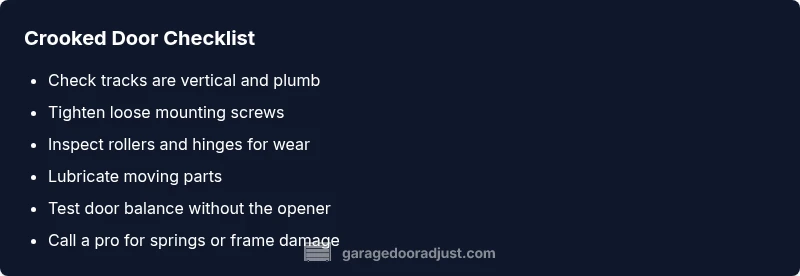
- Check that tracks are vertical and plumb using a level. If you see a lean, gently adjust track screws in the brackets to bring it back to true, but avoid bending the track.
- Inspect rollers and hinges for wear or looseness. Tighten loose mounting screws and replace any worn rollers to restore smooth travel.
- Look for a bent panel or warped door section. If a single section is visibly warped, that can pull the door off alignment; avoid trying to straighten panels yourself.
- Lubricate rollers, hinges, and track contact points with a light grease or silicone spray. This reduces friction that can mask underlying alignment problems.
- Check weatherstripping at the bottom; a damaged seal can affect how the door seats in the frame, contributing to crookedness. If weatherstripping is damaged, replace it.
- If the door remains crooked after these steps, stop and seek professional help. Do not tamper with torsion springs or cables without proper training.
Common culprits explained
Crooked doors often stem from track misalignment, worn rollers, or loose hardware. A sagging or shifted jamb can also tilt the entire door. Weather-related warping of the door skin or panels is less common but can occur with extreme temperature swings. A door that sits crooked at rest (not just when opening) is a strong sign that alignment or structural support needs correction. Regular maintenance, including visual inspections and lubrication, helps prevent gradual misalignment. The GarageDoorAdjust approach recommends addressing simple hardware issues first and escalating to professional service when springs, cables, or the frame show signs of damage.
Diagnostic steps you can follow
This section translates quick checks into a repeatable diagnostic flow you can perform safely. Start with the simplest checks and progress to more involved tests only if you feel confident and the door remains unsafe or unbalanced.
- Step 1: Visual assessment at rest and during operation. Note whether misalignment is equal on both sides or localized to one area.
- Step 2: Confirm track plumb and level. Use shims sparingly to correct minor deviations, but avoid bending tracks back into shape.
- Step 3: Inspect all hardware—bolts, brackets, and hinges. Tighten any loose components. Replace worn rollers if there is excessive play.
- Step 4: Test door balance (without opener). Lift the door to about halfway: if it stays put or springs back quickly, balance is likely off and may require spring adjustment by a pro.
- Step 5: Re-test with the opener disconnected. If the door remains crooked, you may have a frame or panel issue that requires professional evaluation. Remember: springs and cables are high-risk components.
- Step 6: Document findings and plan next steps. If you cannot restore true alignment with basic fixes, schedule a pro visit. GarageDoorAdjust analysis shows most crooked-door issues improve with proper track alignment and hardware tightening.
When to hire a pro and what to expect
If any sign of frame damage, warped jamb, bent panel, or frayed cables is present, stop attempting DIY repairs and call a professional. A trained technician will inspect track alignment, bracket integrity, roller wear, and spring tension with professional-grade tools. Expect a safety check, a precise alignment plan, and a clear cost estimate before any work begins. The goal is not just to straighten the door temporarily but to restore reliable, safe operation for years to come. In all cases, never attempt to adjust torsion springs unless you have the proper training and equipment. The GarageDoorAdjust team recommends scheduling a pro evaluation when there is any doubt about safety or structural integrity.
Steps
Estimated time: 60-120 minutes
- 1
Check safety and prep
Disconnect the opener and lower the door to a secure position. Clear the area and gather tools. This initial safety step prevents unexpected movement and injuries as you inspect components.
Tip: Wear eye protection and keep hands clear of moving parts. - 2
Inspect and tighten hardware
Carefully inspect all mounting screws in tracks and brackets. Tighten loose screws by hand and then with a driver. Do not overtighten, which can strip threads or crack brackets.
Tip: Use a magnetic screwdriver to avoid dropping screws into the track. - 3
Check track alignment
Stand in front of the door and ensure both tracks are vertical and parallel. If a track is visibly off, loosen its brackets slightly, reposition, then retighten. Recheck with a level.
Tip: Small adjustments can correct most misalignment without replacing parts. - 4
Inspect rollers and hinges
Look for flat spots, cracks, or excessive wear on rollers. Replace worn rollers and ensure hinges are secure. Clean dust and debris from the track and rollers to restore smooth travel.
Tip: Never force a stuck roller; replace rather than force-fit. - 5
Test door balance
With the opener disconnected, lift the door halfway and release. If it stays put, the balance may be off and hardware adjustments are needed. If it slams shut or rises quickly, springs may be over/under-tensioned.
Tip: Do not attempt to adjust springs unless trained. - 6
Re-test with opener
Reconnect the opener and perform a gentle test. If crookedness persists, it's likely structural (frame/panel) or spring-related, requiring a professional evaluation.
Tip: Document which steps helped and which didn’t for the technician.
Diagnosis: Garage door is crooked
Possible Causes
- highTrack misalignment or binding rollers
- mediumBent panel or warped door section
- highSagging or loose mounting hardware
- lowFrame or hinge wear causing uneven travel
Fixes
- easyTighten mounting bolts and ensure tracks are plumb; adjust track alignment using a level and clamps
- easyRealign or replace misaligned rollers; lubricate and reseat door
- hardIf panel is bent or frame warped, replace or professionally repair
- hardIf torsion springs or cables show wear, call a pro immediately
Got Questions?
Why does my garage door sit crooked even when the opener is off?
A crooked door when the opener is off usually points to track misalignment, a bent panel, or a loose hinge. Inspect tracks and hardware first, then check for warping in the door frame. If the problem persists, seek professional help to avoid safety risks.
A crooked door when the opener is off is typically due to misaligned tracks or a damaged panel. Start with tracks and hardware, and consider professional help if it won’t fix.
Can I fix a crooked door myself safely?
You can safely perform basic checks like tightening hardware and cleaning tracks. Do not attempt to adjust springs or cables, and disconnect the opener before you start. If you’re unsure at any step, contact a professional.
You can handle simple checks, but avoid springs and cables. If unsure, call a pro.
Is a crooked door dangerous to operate?
Yes, a crooked door can slip from its tracks or cause uneven wear on the opener and spring system, creating safety risks. Stop using the door if you notice instability and consult a professional.
Crooked doors can be dangerous; stop using the door if it feels unstable and get a professional check.
What should I inspect before calling a pro?
Note track alignment, visible damage to panels, loose hardware, and any signs of warping. Photograph the issue and list what you’ve tried. This helps the technician diagnose faster.
Take photos of the misalignment, list what you checked, and note any repairs you tried.
How often should I lubricate tracks and rollers?
Lubricate tracks and rollers during routine maintenance or if you notice sticking or unusual noise. Use lightweight garage-door lubricant and avoid excess lubrication that can attract dust.
Lubricate once during routine maintenance or when you hear sticking noises.
When should I replace torsion springs?
Torsion springs should be replaced by a trained technician. If you hear grinding, notice gaps in the spring, or the door struggles to lift, seek professional service immediately.
Spring replacement is a job for a pro. Don’t try it yourself if you’re not trained.
Watch Video
Quick Summary
- Tackle track and hardware alignment first
- Do not adjust springs—call a pro if needed
- Balance tests reveal whether a fix is effective
- Document steps to aid professional help
- Regular maintenance prevents future crookedness