How to Diagnose, Repair, and Install a Precision Garage Door
Learn how to diagnose, repair, and install a precision garage door with a step-by-step guide, essential tools, safety tips, and maintenance checks. Designed for homeowners seeking reliable, safe performance and long-lasting operation.


By following this guide, you will diagnose, repair, and install a precision garage door safely and effectively. You’ll verify door balance, test safety sensors, inspect tracks, and identify common wear across springs and cables. Prepare with the listed tools, work methodically, and prioritize safety—then re-test the door’s movement and stopping points before use.
Safety first when working with a precision garage door
Working with a precision garage door involves heavy moving parts and high-tension springs. Before you touch anything, power down the system and secure the door. According to GarageDoorAdjust, safety should come first: unplug the opener, disconnect the door from the rail using the release cord, and place locking pliers on the track to prevent accidental movement. Wear protective eyewear and gloves, keep children and pets away, and work in a well-lit area. If you encounter a door that is hard to move by hand, stop and reassess—forced movement can cause injury or trigger a dangerous release. After securing the door, test the balance with the door in a closed position; a door that drops quickly or feels heavy when lifted indicates excessive tension or worn springs that require professional attention. This block provides the foundation for any repair or maintenance task and ensures you can continue safely to the diagnostic steps that follow.
Tools and materials you need for a precision door project
Before you begin, assemble the essential tools and materials. The list below covers primary items you’ll use, with optional additions for convenience. Essential tools: locking pliers to secure the door, a sturdy ladder, a 1/2-inch drive ratchet and socket, an open-end wrench set, a torque wrench if you have one, and a flashlight with fresh batteries. Optional but helpful: rubber mallet for gentle adjustments, a level for alignment checks, and a cordless drill with appropriate bits. For materials, have replacement springs or cables only if you are trained and certain about the specifications of your system — incorrect parts can fail catastrophically. Keep a clean workspace with rags, a container for small parts, and a reference manual or notes from your installation or service session. Safety tip: never attempt spring replacement without the correct equipment and training.
How to diagnose common issues: balance, tracks, and sensors
Begin with the door closed. Disconnect the opener but keep the door attached to maintain balance cues. Lift the door manually; it should stay in place without dropping or rising quickly. If it falls when you release it, spring tension may be off or damaged. Use a level across the door's horizontal edges to check whether the tracks are plumb; a misaligned track can cause binding and accelerate wear on rollers. Inspect rollers for wear—cracked or missing wheels, flat spots, or loose mounting screws indicate replacement needs. For sensors, close the door and test the safety reverse by placing an object in the door’s path and ensuring it reverses smoothly. If the door doesn’t reverse or the sensor LED is off, the safety system warrants adjustment or replacement. Remember: these checks help you decide whether a repair is safe to perform or if a professional should be called.
Maintenance routines to extend lifespan
To keep a precision garage door performing reliably, implement a regular maintenance routine. Wipe down exposed tracks to remove dust and debris, then lubricate the roller bearings, hinges, and pivot points with a light silicone-based spray or a manufacturer-recommended lubricant. Inspect weather stripping for cracks and seal gaps around the door, replacing it if needed to improve energy efficiency and reduce drafts. Check fasteners for tightness and tighten as required, watching for stripped screws that could loosen over time. Periodically test the door’s balance and safety features as part of your monthly routine, and keep a log of any unusual noises or changes in movement. A consistent schedule minimizes surprises and extends the life of tracks, rollers, and torsion components.
When to call a professional for a precision garage door
Some tasks are beyond DIY scope, especially high-tension springs, torsion bars, or sectional door replacements. If you hear grinding, notice unusual trembling, or see obvious wear in springs or cables, stop and seek professional help promptly. A professional technician can safely release spring tension, replace worn components, and calibrate the door’s balance without risking personal injury or property damage. If your door requires repeated adjustments or the opener struggles to respond to remote commands, it may indicate a failing control system or sensor array that needs a trained technician. Remember, proactive maintenance and timely professional evaluation reduce the risk of sudden failure and costly damage.
Troubleshooting checklist you can print for quick reference
- Disconnect the power before work begins
- Confirm door balance with manual lifting in the closed position
- Inspect tracks for misalignment or obstruction and adjust gently
- Check and test safety sensors after any adjustment
- Lubricate moving parts and test operation
- Re-torque hardware and verify cable integrity periodically This one-page checklist helps you stay on track during maintenance sessions and ensures you don’t miss a critical safety step.
Quick-start diagnostic flow: from safe to secure
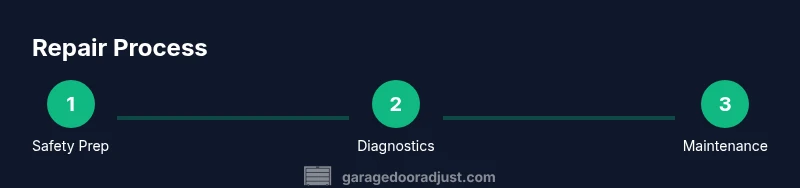
Start with safety, then assess balance, tracks, and sensors. If issues persist after basic maintenance, compare symptoms to a parts guide and decide whether parts need replacement. Keeping a maintenance log makes future repairs easier, and documenting the steps you took helps when you contact a professional later.
Tools & Materials
- Locking pliers(To secure the door on tracks during adjustments)
- Sturdy ladder(Stable base, level feet)
- Open-end wrench set(Assorted sizes for fasteners)
- Socket set (1/2 inch drive)(For bolts and fasteners)
- Flashlight with fresh batteries(Inspect dim areas of the track and springs)
- Level(Check track plumb and door alignment)
- Rubber mallet (optional)(Gentle adjustments without damage)
- Cordless drill with bits(If you need to remove or install screws)
- Torque wrench (optional)(Avoid overtightening fasteners)
- Lubricant (silicone-based)(Light spray for hinges, rollers, and tracks)
- Replacement weather stripping (optional)(Seal gaps for energy efficiency)
Steps
Estimated time: 60-120 minutes
- 1
Power down and secure the door
Disconnect the opener from power, set the manual release, and secure the door with locking pliers. This prevents accidental movement while you work.
Tip: Verify the door is fully supported before touching springs. - 2
Check balance and manual lift
With the door closed, lift it halfway and release. It should stay put. If it drops or rises, balance needs adjustment or springs may be worn.
Tip: Keep hands clear of the spring area while testing. - 3
Inspect tracks and rollers
Visually inspect for bends, gaps, and debris. Clean tracks, tighten screws, and replace worn rollers.
Tip: Do not force misaligned components; realign gradually. - 4
Test safety sensors and reverser
With the door closing, interrupt the path with an object to ensure the door reverses. If not, adjust or replace sensors.
Tip: Ensure the sensor lamps are visible and functioning. - 5
Lubricate and reassemble
Lubricate moving parts lightly and reassemble any removed components. Reconnect power only after checks are complete.
Tip: Avoid oil-based lubricants on plastic parts. - 6
Document results and plan maintenance
Record what you did, parts used, and when to recheck. Schedule preventive maintenance to prevent future issues.
Tip: Create a simple calendar reminder for semiannual checks.
Got Questions?
What is a precision garage door?
A precision garage door emphasizes accurate alignment and smooth operation achieved through balanced springs, precise tracks, and aligned sensors. It aims for reliable, controlled movement and long-term stability.
A precision garage door is designed for accurate alignment and smooth operation, with balanced springs, tracks, and sensors working together.
How do I test if my door is balanced?
With the door closed, lift it halfway and release. If it stays in place, balance is good. If it drifts, spring tension or balance components may require attention.
Test balance by lifting the door halfway and releasing; it should stay put.
Can I adjust the springs myself?
Spring adjustment carries serious risk of injury. It should be performed only by trained professionals with proper safety equipment and procedures.
Spring adjustments are dangerous and should be done by a pro.
How often should I lubricate moving parts?
Lubricate every 6 months for metal components; more often with heavy use. Use silicone-based lubricant and avoid oil-based products on seals.
Lubricate about twice a year, more if you use the door a lot.
Is replacement cheaper than repair for an old door?
If the door structure is sound but components wear slowly, repairs are cost-effective. If rails or springs show extensive wear, replacement may be wiser long-term.
Sometimes repairing saves money, but extensive wear often calls for replacement.
Watch Video
Quick Summary
- Prioritize safety before starting any repair.
- Balance, tracks, and sensors are common failure points.
- Use proper tools and correct parts only.
- Test safety features after each adjustment.
- Know when to call a professional for high-tension repairs.