Garage Door Windows vs No Windows: An Analytical Guide
Compare garage door windows vs no windows to balance daylight, insulation, security, and curb appeal. An analytical homeowner guide weighing style, energy use, and maintenance with practical, actionable recommendations.


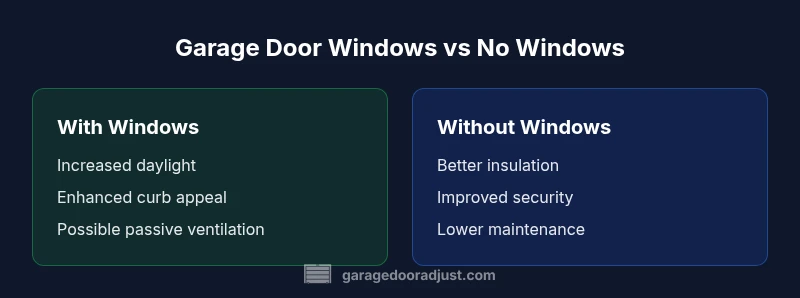
When choosing between garage door windows vs no windows, the decision hinges on daylight, privacy, and curb appeal versus insulation, security, and maintenance. Windowed doors deliver natural light and a modern look but may raise energy costs and cleaning needs. Solid panels maximize insulation and security with a cleaner exterior; hybrids offer compromise. The best option depends on climate, home design, and budget.
Daylight and Aesthetics: Do you want visible windows?
Daylight availability is a powerful driver in choosing between garage door windows vs no windows. Windows in garage doors flood the space with natural light, reduce the need for artificial lighting during the day, and can enhance the transition from home to driveway. They also offer curb appeal, allowing interior light to peek through and creating attractive exterior silhouettes. According to GarageDoorAdjust, daylight has a meaningful impact on how homeowners perceive space and value. If your garage doubles as a workshop, studio, or home gym, windowed designs can transform the experience by improving visibility and reducing the reliance on artificial lighting. However, more glass means more opportunities for glare and privacy considerations—curb-view from the street and inside views into the garage must be balanced. Hybrid configurations, like small side windows or frosted glazing, can soften glare while preserving some daylight. In the end, garage door windows vs no windows becomes a question of how much daylight you want to invite into the space and how much you’re willing to trade for energy efficiency and maintenance.
From an architectural perspective, glass can echo other window treatments on the home, tying the facade together. It also invites opportunities for decorative grids, tinting, or tinted glass, which can help control glare and heat while preserving style. For homeowners prioritizing daylight, aesthetics, and a modern look, windowed doors provide compelling benefits. If privacy, thermal performance, and security are top priorities, consider solid panels or high-performance window options with laminated or tempered glass. The choice is context-dependent and should align with your daily routines and climate.
Brand context note: The GarageDoorAdjust team emphasizes balancing functional daylight with climate-related energy considerations to avoid over-relying on natural light at the expense of comfort and operating costs.
wordCountInBlock":0
Insulation, Energy, and Weather Performance
The energy implications of garage door windows vs no windows are substantial, especially in extreme climates or homes with larger garage spaces adjacent to living areas. Glass inherently conducts heat differently than solid panels, which means windowed doors can introduce more heat gain in summer and heat loss in winter if not properly glazed and sealed. Modern window technology—double or triple glazing, low-emissivity coatings, and laminated glass—can mitigate some of these effects, but the overall insulation quality still tends to lag behind solid doors when other factors are equal. GarageDoorAdjust analysis highlights that the insulation impact depends heavily on glazing quality, frame materials, and installation accuracy. If you prioritize energy efficiency, you might favor solid doors or windowed doors with high-performance glazing and well-sealed frames.
In terms of weather resistance, glass panes require careful sealing to prevent drafts and moisture intrusion. Poorly sealed edges can undermine indoor comfort and lead to higher heating or cooling costs. Conversely, well-designed windowed doors with robust weatherstripping, thermal breaks, and appropriate glazing can provide a balanced outcome—allowing daylight without dramatic energy penalties. Consider your local climate, sun exposure, and the orientation of the door when evaluating the trade-offs. If you live in a climate with hot summers and cold winters, window performance will be a deciding factor, and you should specify glazing features that optimize comfort. For milder climates, daylit spaces and brighter interiors may outweigh slightly higher energy usage.
wordCountInBlock":0
Security and Privacy Considerations
Choosing between garage door windows vs no windows also implicates security and privacy. Glass panels can create a potential entry point if the glass is not tempered or laminated, and a motivated intruder might exploit any weak seal or frame vulnerability. Therefore, if you opt for windowed doors, select laminated or tempered glass and ensure the frame design includes reinforced sashes and multi-point locking systems. The risk is not merely related to break-ins; it extends to prying eyes and perceived vulnerability from outside. Window grids and privacy glass can mitigate visibility into the garage while preserving daylight.
On the privacy front, solid doors naturally offer better obstruction from street-level viewing, which can be a selling point in dense urban neighborhoods. If you like windows for daylight but want security, a hybrid approach—small fixed windows or obscured glass—can provide both daylight and privacy without exposing the interior. GarageDoorAdjust recommends considering the surrounding landscape, such as fencing and hedges, to enhance privacy without sacrificing natural light. In all cases, a security-first mindset reduces long-term risk and helps you choose the right glazing and frame materials for your home.
wordCountInBlock":0
Maintenance, Cleaning, and Long-Term Durability
Maintenance is a meaningful differentiator between garage door windows vs no windows. Glass panels require periodic cleaning to remove dust, dirt, and streaks, which can accumulate with environmental exposure. Seals around glazing must be inspected and maintained to prevent air leaks and moisture intrusion. Weatherstripping should be checked for wear, and hinges or tracks on operable window panels should be lubricated as needed to ensure smooth operation. In contrast, solid panel doors generally demand less ongoing maintenance, with far fewer sightlines for dust and grime and fewer seals to monitor.
Durability is also a factor; textured or laminated glass can resist impact better than plain glass but might still require replacement if damaged. When you anticipate the potential for impacts from road debris or heavy weather, configure window options with safety-rated glazing and robust frames. Regular inspections—ideally annually—will help you catch issues early and extend the life of the door. The maintenance burden of windowed doors should be weighed against the daily daylight benefits and aesthetic gains when deciding between garage door windows vs no windows for your home.
wordCountInBlock":0
Cost Considerations and Value over Time
From a pure cost perspective, garage door windows vs no windows often involves higher upfront costs for glass, glazing, and possibly custom framing. The long-term costs can include periodic glass cleaning, seal replacement, and potential repair if a pane is damaged. However, many homeowners justify these expenses with improved daylighting, better exterior appearance, and the possibility of higher resale value in certain markets. When evaluating costs, consider the total cost of ownership rather than just the initial purchase price. GarageDoorAdjust notes that choosing energy-efficient glazing and quality sealing can offset some ongoing expenses by reducing heating and cooling needs. If your objective is a budget-friendly build with straightforward maintenance, solid panels may be the most economical path, while windowed doors suit those prioritizing light and style.
wordCountInBlock":0
Ventilation, Moisture, and Indoor Air Quality
Natural ventilation is a practical benefit of operable windows in a garage door. If you rely on ventilation to manage humidity from car use, laundry, or workshop activities, windowed doors can offer a passive airflow option that solid panels cannot. However, you should avoid relying solely on glass openings for ventilation if your climate experiences high humidity or temperature swings that could lead to condensation. In such cases, pairing windowed doors with mechanical ventilation or exhaust systems ensures air quality remains comfortable and safe. For spaces adjacent to living areas, the extra daylight can also reduce the need for artificial lighting during the day, improving indoor comfort. The daylight from windows can contribute to perceived freshness and openness, but ensure you balance this with moisture management and energy use in your specific environment.
wordCountInBlock":0
Styles, Customization, and Hybrid Options
There are many ways to tailor garage door windows to match your home’s architecture. Window styles range from fixed panes with grids to operable flanking panels, often with options for tinted, frosted, or low-E coatings. Decorative grids help preserve a classic look while still enabling natural light. If you want the benefits of daylight without full exposure, consider hybrid options like small windows placed high on the door, narrow vertical panes, or frosted glass that limits visibility while delivering light. Some homeowners opt for insulated glass units (IGUs) with reflective coatings to reduce heat gain. Hybrid configurations—windows combined with solid panels—offer a practical compromise for homeowners who want a balance of aesthetics, energy performance, and privacy. In short, garage door windows vs no windows doesn’t have to be all-or-nothing; it can be tuned to your design goals and climate.
wordCountInBlock":0
Decision Framework: How to Choose for Your Home
To decide between garage door windows vs no windows, start with a simple framework:
- Climate and Orientation: How much sun does the door receive, and how severe are seasonal temperature changes?
- Use Case: Do you value daylight for a workshop, or is privacy and insulation more important?
- Maintenance Willingness: Are you prepared for cleaning and seal checks, or do you prefer low-maintenance options?
- Budget and resale: Do you prioritize initial cost or long-term value and curb appeal?
- Hybrid Possibilities: Are small or obscured windows an option to enjoy daylight while maintaining privacy? By scoring each criterion against your home and daily routines, you can determine whether garage door windows vs no windows is the better fit for your house. The key is to align design choices with practical needs and climate realities, while considering the long-term implications for energy, security, and upkeep.
wordCountInBlock":0
Comparison
| Feature | Garage Door with Windows | Garage Door without Windows |
|---|---|---|
| Light Transmission | High natural light | Minimal to none |
| Privacy | Lower privacy; visibility from outside | Higher privacy |
| Insulation impact | Potentially lower insulation unless well sealed | Higher insulation integrity |
| Security considerations | Glass can be a vulnerability; use laminated glass | Solid panel offers enhanced security |
| Maintenance | Glass cleaning and seal checks | Less maintenance, occasional cleaning |
| Aesthetics/curb appeal | Modern look with daylight; customizable grids | Clean, uniform appearance |
| Ventilation options | Operable windows allow passive ventilation | No direct ventilation through door |
| Replacement cost | Higher upfront cost due to glass and frame | Lower upfront cost |
Upsides
- Increases daylight and interior visibility
- Enhances curb appeal and design flexibility
- Offers potential for better resale appeal in some markets
- Hybrid options allow daylight with privacy and energy control
Disadvantages
- Potential energy loss due to glass exposure
- Higher maintenance from cleaning and seal checks
- Increased risk of breakage requiring glazing repair
- Higher upfront costs and potentially more complex installation
Windowed doors suit daylight-focused, design-conscious homes in moderate climates; solid panels are better for insulation and security in harsher climates.
Choose windowed doors if you value natural light and curb appeal, with proper glazing and seals. For strong insulation, security, and low maintenance, solid panels are typically the safer choice, especially in extreme weather.
Got Questions?
Do garage door windows significantly affect energy efficiency?
Windows can affect energy efficiency through heat transfer, especially if glazing and seals are not high quality. Upgrading glazing and sealing can mitigate some of these effects. Consider your climate and insulation needs when evaluating.
Yes, glazing quality and sealing matter for energy efficiency; upgrading to better glass and seals can help balance daylight with comfort.
Are windowed garage doors more secure than solid panel doors?
Windowed doors can be secure if you use laminated or tempered glass and robust frames. Glass adds a potential entry point if not properly reinforced, so security-focused choices should include strong locking hardware and well-sealed edges.
Windowed doors can be secure with proper glass and hardware, but solid panels often offer a simpler security profile.
What maintenance is required for glass windows on a garage door?
Regular cleaning of glass, inspection of seals, and periodic checks of weatherstripping and hardware are recommended. Address any cracks or seal failures promptly to prevent moisture intrusion.
Glass doors need occasional cleaning and seal checks; keep hardware lubricated for longevity.
Can I convert a solid door to include windows?
Yes, but it requires professional assessment of structural compatibility, reinforcement if needed, and proper installation to maintain performance and warranty.
You can add windows, but you’ll want a pro to ensure the door stays solid and insulated.
What styles of window options are available?
Options include fixed panes with grids, operable small windows, and decorative frosted or tinted glass. Shape choices vary by manufacturer and local codes.
There are many window styles—from fixed grids to operable panes—to match your home.
How do windowed doors affect property value?
In many markets, windowed doors increase curb appeal and perceived value, especially when the windows are high-quality and well-integrated. In others, poor energy performance could offset those benefits.
Windows can boost curb appeal and value if they’re well-made and energy-efficient; otherwise, the impact may be mixed.
Quick Summary
- Assess climate before choosing window type
- Weigh daylight benefits against energy costs
- Consider privacy and security implications
- Plan maintenance for glass panels and seals
- Explore hybrid options for a balanced approach