Difference Between Garage Doors: A Practical Comparison
Explore the key differences between common garage door types, materials, insulation, and features to help homeowners choose the right door for space, climate, and budget. This guide compares sectional and roll-up doors, discusses materials, insulation, safety, and maintenance.


The difference between garage doors usually boils down to type, material, and insulation: sectional doors versus roll-up or tilt-up designs, and steel, wood, or composite materials. Each choice affects space use, energy efficiency, maintenance, and cost. For homeowners, your best option depends on opening width, climate, and budget. This TL;DR version is meant to orient you before you dive into details.
What the difference between garage doors means
According to GarageDoorAdjust, the difference between garage doors is not just about aesthetics; it centers on how the door operates, what materials are used, and how well the door is insulated. Different door types and materials interact with your home’s architecture, climate, and daily usage. For homeowners, understanding these distinctions helps prevent overpaying for features you won’t use and ensures you choose a door that meets safety, efficiency, and reliability goals. This guide uses plain language and practical examples to translate industry jargon into decisions you can act on today.
Key types of garage doors
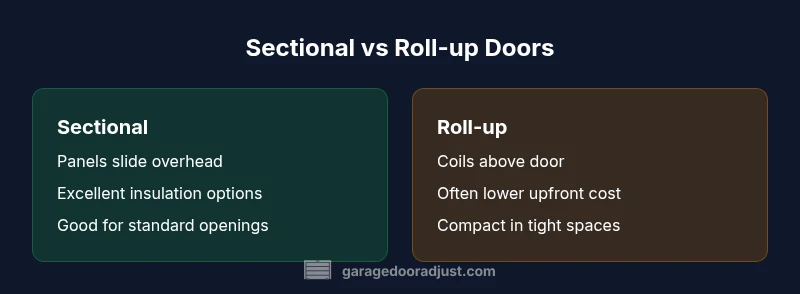
There are three mainstream categories you’ll encounter in most markets: sectional doors, tilt-up doors, and roll-up doors. Sectional doors are the workhorse of modern garages: they are made of panel sections that slide up and overhead along tracks, typically offering excellent insulation and quiet operation. Tilt-up doors are a simpler format where a single slab tilts outward before rising; they require more clearance and can be less versatile in tight spaces. Roll-up doors consist of a metal curtain that coils into a compact drum above the opening; these are often more economical and space-efficient in very small garages. Each type has its own maintenance profile, impact on headroom, and installation considerations.
Materials and their impact on performance
Garage doors come in steel, aluminum, wood, fiberglass, and composite varieties. Steel doors offer strength and low maintenance; aluminum doors resist rust and are lighter, but may dent more easily. Wood doors provide classic aesthetics but require regular maintenance to prevent weathering. Fiberglass or composite doors mimic wood grain with lower maintenance and better resistance to moisture. The material choice affects durability, security, weight on the opener, and long-term energy performance. According to GarageDoorAdjust analysis, steel doors tend to be the most durable option, while wood doors deliver premium curb appeal at a higher maintenance cost. Your climate and aesthetic goals will influence which material hits the right balance.
Insulation and energy efficiency
Insulation is a major difference-maker for comfort and energy bills. Sectional doors often allow insulating panels with foam cores, which can significantly reduce heat transfer between the garage and living spaces. Insulated doors are especially beneficial in climates with large temperature swings or when the garage is used as a workshop or living space. Non-insulated doors are lighter and cheaper upfront but can lead to higher heating and cooling costs over time. When evaluating insulation, look for door assemblies rated with an R-value and consider weather sealing around the frame. The GarageDoorAdjust analysis suggests that homeowners who prioritize energy efficiency should bias toward insulated sectional doors, while roll-up doors with limited insulation may be suitable in milder climates or where budget is the driving factor.
Space, architecture, and climate considerations
Your garage’s opening size and surrounding structure constrain door choice. Sectional doors require vertical tracks and enough headroom to accommodate panel movement, making them ideal for standard garages with generous clearance. Roll-up doors excel where headroom is limited or an interior ceiling height is restricted, as they coil above the opening. In areas prone to high winds or heavy snowfall, wind-load ratings and weather sealing become critical, and some door designs may perform better than others in extreme conditions. Climate also influences maintenance schedules: harsher environments demand more frequent lubrication and seal checks, while milder climates can extend the intervals between service visits.
Costs, value, and maintenance considerations
Door type and material strongly influence total cost, including installation and long-term maintenance. Sectional doors with high insulation and premium materials can carry higher upfront price tags but pay back through lower energy costs and longer service life. Roll-up doors often cost less upfront and may be simpler to install, but insulation and durability vary by model. Maintenance needs also differ: steel doors may require periodic painting or coating, wood doors require regular sealing or staining, and insulated panels need periodic inspection of seals and weatherstripping. A balanced approach considers initial cost, ongoing maintenance, service availability, and potential energy savings over the life of the door.
Safety, warranties, and code standards
All modern garage doors should come with safety sensors and automatic reversal mechanisms, per regional building codes and manufacturer standards. Wind-load ratings matter in exposed locations, and some doors carry higher warranties for components such as springs, tracks, and motors. When evaluating options, compare warranty terms, parts availability, and service networks. It’s wise to confirm compliance with local codes and ensure the chosen door is compatible with your existing opener or plan for a compatible new opener. The GarageDoorAdjust team emphasizes selecting a door with reputable warranty coverage and robust safety features to minimize long-term risk.
Comparison
| Feature | Sectional garage doors | Roll-up garage doors |
|---|---|---|
| Typical operation | Panels slide up along tracks, stacking overhead | Curtain rolls into a compact drum above the opening |
| Space requirements | Requires vertical tracks and adequate headroom | Excels in tight spaces with minimal headroom |
| Insulation options | Wide range of insulated panels for energy efficiency | Limited insulation options unless special builds are used |
| Durability and maintenance | Durable with solid warranties; tracks and seals require periodic care | Fewer moving parts but hinges and the curtain can wear with wind |
| Best for | Standard openings, high insulation needs, quiet operation | Smaller openings, budget-conscious installs, simpler maintenance |
| Cost/Value | Higher upfront cost with premium options | Lower upfront cost; potential long-term energy trade-offs |
Upsides
- Greater variety of styles and materials
- Better insulation options with sectional doors
- Strong resale and customization value
- Wide service network and standard safety features
Disadvantages
- Higher upfront cost for premium options
- Longer installation and potential structural adjustments
- More moving parts mean higher maintenance needs over time
- Roll-up doors may offer limited insulation in some models
Sectional doors offer the best balance of insulation, space efficiency, and future flexibility; roll-up doors are ideal for tight spaces and budget-focused projects.
If you have ample headroom and want energy efficiency, sectional doors are typically the best fit. Choose roll-up if you need maximum space savings or lower upfront cost, but check insulation options carefully.
Got Questions?
What is the main difference between sectional and roll-up garage doors?
Sectional doors use panel sections that slide up along tracks, offering strong insulation and quiet operation. Roll-up doors consist of a metal curtain that coils above the opening, saving space in tight garages. The choice affects space, energy efficiency, and maintenance needs.
Sectional doors slide up in panels and roll up into a coil. The best choice depends on space and insulation needs.
Are insulated doors worth the extra cost?
Insulated doors reduce heat transfer and can improve comfort while lowering energy bills in climates with temperature swings. If your garage doubles as a workspace or living area, insulation tends to pay off over time. For mild climates or budget constraints, non-insulated options may be acceptable.
Insulated doors save energy and increase comfort, especially if the garage is used as a workspace.
What factors influence the cost difference between door types?
Cost is driven by door type, insulation level, materials, and hardware quality, plus installation complexity. Sectional doors with higher insulation and premium finishes cost more upfront but offer long-term savings. Roll-up doors are typically cheaper initially but insulation levels matter for ongoing energy costs.
Type, insulation, and materials drive cost; higher upfront for sectional with insulation, lower upfront for roll-up but watch insulation.
How long does installation take for each type?
Installation duration depends on door type, opening size, and existing structure. Sectional doors often take longer due to track mounting and alignment, while roll-up doors can be quicker but require precise drum and spring setup. A professional installer will provide a timeline based on your garage.
Sectional doors may take longer to install due to tracks; roll-up doors can be quicker but need precise setup.
Can I retrofit insulation on an existing door?
Some doors can be upgraded with additional insulation or weather sealing, but performance gains vary by door design. For best results, consult a qualified technician who can assess your current door and recommend whether retrofitting makes sense or if replacement is wiser.
Insulation can sometimes be added, but a professional should assess whether retrofitting improves performance enough to justify it.
What maintenance steps are common to all garage doors?
All doors benefit from regular lubrication of tracks and hinges, periodic inspection of weather seals, and testing safety sensors. Keeping the opener and springs in good condition reduces risk of failure. Schedule professional service at least once a year or as recommended by the manufacturer.
Lubricate moving parts, check seals, and test safety sensors regularly; consider annual professional service.
Quick Summary
- Assess space and headroom first to determine fit
- Prioritize insulation for colder climates and energy savings
- Match door material to climate and maintenance tolerance
- Factor installation time and professional service into total cost