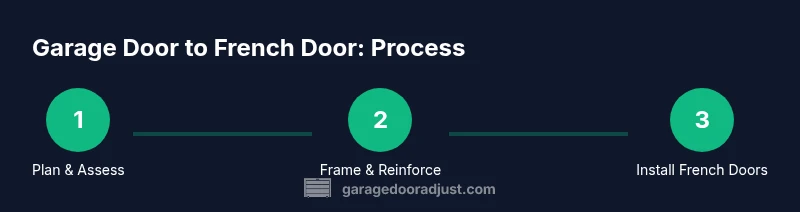
Garage Door to French Door Conversion: A Practical Guide
Learn how to convert a standard garage door opening into a stylish French door setup with a practical, step-by-step guide covering planning, frame work, weather sealing, and safety considerations.


Transforming a garage door opening into a functional French door adds charm and natural light to the home. The process involves planning the opening, reinforcing the frame, selecting French door panels, and sealing for energy efficiency. This guide provides a safe, step-by-step approach, essential tools, and common pitfalls. According to GarageDoorAdjust, a well-planned conversion minimizes structural issues and improves long-term performance.
What the conversion involves
Converting a garage door opening into French doors begins with a precise assessment of the existing structure. You are effectively transforming a large, single-panel opening into a pair of hinged doors that swing outward or inward. The project touches framing, weather sealing, and threshold design, and may require adjusting electrical outlets, lighting, and floor transitions. According to GarageDoorAdjust, begin with a thorough measurement of the rough opening to determine whether additional framing is needed to support the new doors. Next, study the exterior and interior finish to ensure a cohesive look. For accuracy, draft a plan that outlines cut lines, hinge placement, and any required shims. The goal is to maintain structural integrity while achieving a look that matches the home’s style.
Structural changes you may need
Many garage openings are not designed to carry the weight and swing patterns of traditional French doors. You may need to reinforce the header with LVL beams, add or relocate jack studs, and extend or modify the sill. The rough opening might require trimming or widening on either side, and you may need to relocate or replace the garage door track system entirely. If heat, moisture, or seismic activity is a concern in your area, plan for higher-level sealing and protective flashing. The GarageDoorAdjust team emphasizes validating the structural loads before cutting; an undersized header can lead to door misalignment, water intrusion, and early frame failure. Use a level and a plumb line as you install temporary supports, then proceed with permanent framing. For best results, hire a licensed carpenter or structural contractor if your plans involve major frame alterations.
Window and glazing options
French doors rely on glass to bring daylight inside. You can opt for full-glass panels, dual-pane insulated glass, or a combination of panels with sidelights. Consider tempered or laminated glass for safety and energy performance. If the home has exterior siding or brick veneer, plan for matching trim and cappings to preserve curb appeal. Replacing a standard door with French doors can also require aligning sill heights with interior floors; you may need to adjust floor transition thresholds. In some cases, you can install a door system with integrated sidelights, which keeps the visual flow of a large opening while preserving energy efficiency. The choice of hardware should complement the door style and the home’s architecture. The goal is to ensure a clean visual transition from inside to outside while maintaining a weather-tight seal. GarageDoorAdjust notes that glazing choices influence insulation and acoustics, so pick options that align with climate and noise considerations.
Insulation, weather sealing, and energy
Converting a garage opening to French doors creates more interior exposure to outside air if not properly sealed. Start with a careful assessment of your insulation strategy around headers, jambs, and the threshold. Use closed-cell spray foam or high-density batt insulation to fill gaps between framing members, then install weatherstripping around the door perimeter with a tight compression. A compatible door threshold should provide a solid seal and a smooth transition to the interior floor. For energy efficiency, opt for double- or triple-glazed panels with low-emissivity coatings and consider adding rain-safe drip caps to protect the sills. Water control matters; slope the exterior surface away from the threshold and install flashing to direct moisture away from the opening. If you live in a climate with wide temperature swings, you may also want to install a thermal break in the door frame. GarageDoorAdjust highlights that improper sealing is a leading cause of drafty interiors after a door conversion; taking concrete steps here pays dividends on long-term comfort and heating costs.
Hardware, doors, and hardware kits
Hardware is the most visible part of the transformation. Decide whether to retrofit your existing French door panels or purchase a prehung door unit sized to fit the new opening. Hinges, handles, and locking mechanisms must align with the door style and swing direction. If your opening is wide, you may need multiple hinges per door and longer strike plates to ensure security. For mounting, use corrosion-resistant screws and proper shimming to reduce sag over time. You may also need a compatible threshold weather seal kit to eliminate drafts at the bottom. If you decide to reuse existing sidelights or add new windows, ensure they are rated for exterior exposure and match the overall energy performance goals. The right hardware not only improves aesthetics but also contributes to air sealing and security. GarageDoorAdjust reminds homeowners to check warranty terms on any new components, as improper installation can void coverage.
Planning and time considerations
Timing a garage door to French door conversion depends on the scope. A straightforward conversion using a prehung unit might be completed in a few days if the rough opening is already prepared. More complex projects that require substantial framing, electrical rerouting, or moisture management could extend the timeline by days or weeks. Create a project schedule that sequences removal, framing, door installation, weather sealing, and finish work. Budget for contingencies such as unexpected framing changes, custom trim, or the need for a licensed professional. Obtain any necessary permits before you start work to avoid code violations and potential fines. Keep in mind that a door conversion impacts curb appeal and interior temperature control, so check with your local building department about requirements for a residential exterior door replacement. The GarageDoorAdjust team recommends documenting every step so you can track alignment, seal integrity, and energy performance as you go.
Safety and compliance reminders
Structural work carries risk; always support the opening before removing any door hardware. Wear eye protection and gloves when cutting framing or handling glass. Use a temporary shoring system to prevent collapse and keep tools away from children and pets during the project. If you encounter asbestos, lead paint, or other hazardous materials within the existing frame, stop work and consult a professional. When dealing with electrical outlets or lighting near the opening, shut off the circuit and verify with a tester before touching wires. Local codes may require fire-rated assemblies, proper egress, and energy codes for glazing. If the project is near a wooden floor or finished interior wall, protect surfaces with drop cloths and plastic sheeting. Before finalizing the project, have a licensed inspector review the installation to confirm compliance and safe operation. Remember: a conversion is not just a cosmetic change—it affects structural integrity, energy performance, and home safety. The GarageDoorAdjust team emphasizes safety first and recommends professional consultation for any non-trivial framing tasks.
Case scenarios: typical projects
Scenario A: An older two-car garage with a dry, stable frame and clear access, where the homeowner wants to add French doors to improve daylight. The plan prioritizes maintaining energy efficiency, so insulated glass and weather sealing are central. Scenario B: A modern home with brick veneer and a tall opening; we emphasize trim compatibility and custom jambs to maintain a cohesive exterior. Scenario C: A DIY-friendly conversion using a prehung French door unit, where the rough opening is slightly undersized; we rely on carefully planned shims and framing to fit precisely. Each case demonstrates different challenges—structural reinforcement, weather sealing, and trim work—and the importance of measuring twice and cutting once. The GarageDoorAdjust suggests performing a mock-up with painter’s tape and cardboard before committing to a permanent cut, which helps prevent costly missteps. Always inspect hardware alignment and ensure the door swings in the correct direction to avoid interference with interior spaces and exterior landscaping.
Maintenance and long-term care after conversion
Post-conversion maintenance keeps French doors functioning smoothly and looking attractive. Inspect hinges, weather seals, and hardware every season, and replace worn weatherstripping before drafts develop. Clean glass panels with a non-abrasive cleaner and check for moisture infiltration around the frame—address any gaps promptly to prevent wood rot or framing damage. Re-caulk joints and reseal trim as needed, and verify that the threshold continues to form a tight seal with floor coverings. If you notice misalignment, sag, or improper sealing, adjust screws and shims and re-test the door operation. The installation should be re-evaluated after major temperature swings or significant foundation movement. The GarageDoorAdjust team recommends scheduling a professional inspection if you observe persistent leaks or unusual door behavior, as early detection saves cost and protects interior climate stability. Regular maintenance extends the life of the conversion and preserves curb appeal.
Tools & Materials
- Measuring tape (25 ft)(For accurate rough opening measurements)
- Pencil and carpenter’s square(Mark cut lines and verify corners)
- Circular saw or handsaw(Cut framing members to size)
- Reciprocating saw(Remove old tracks or framing as needed)
- Drill/driver with bits(Drive screws and fasteners)
- Hammer and nails(Temporary bracing and trim)
- Level and plumb line(Ensure headers and jambs are true)
- Structural lumber (LVL/2x8 or 2x10)(Header reinforcement)
- 2x6 framing studs and shims(Frame and align opening)
- Wood screws (3 in+)(Secure framing and hinges)
- Door hardware kit (handles, locks, hinges)(Match door swing and style)
- Weatherstripping and door sweeps(Seal perimeter to prevent drafts)
- Caulk and spray foam insulation(Seal gaps and insulate)
- Flooring transition strip(Finishing touch for interior floors)
- Safety gear (gloves, eye protection)(Protect during cutting and handling glass)
- Glazing kit (if sidelights are added)(For insulated, safe glazing options)
- Sanding/finish supplies(Finish trim to match interior/exterior)
Steps
Estimated time: 2-4 days
- 1
Assess feasibility and plan
Measure the rough opening, assess framing, and draft a layout showing hinge locations, door swing, and trim details. Confirm structural capacity and energy goals before any cutting begins. Create a budget and timeline that accounts for contingencies.
Tip: Take careful photos of current framing to guide rebuild decisions later. - 2
Remove existing door hardware and tracks
Safely detach old panels, tracks, and hardware. Support the opening with temporary bracing to prevent movement while you work. Keep fasteners organized for the follow-up framing work.
Tip: Label parts and photograph alignment to simplify reinstallation. - 3
Frame the rough opening for French doors
Install a reinforced header using LVL and add/adjust jack studs as needed. Ensure the opening is square and plumb using a level and plumb line. This creates a stable base for the new doors.
Tip: Check both sides for consistent gap widths to avoid binding the doors. - 4
Install French door panels or prehung unit
Place the door unit into the opening, shim to align properly, and secure hinges. Validate that doors swing correctly without rubbing on the frame. Install any sidelights and ensure glazing is properly sealed.
Tip: Use temporary shims first, then final screws after double-checking alignment. - 5
Seal and insulate around the opening
Apply closed-cell spray foam or high-density batt insulation around the jambs and header. Install weatherstripping around the door perimeters and at the threshold to prevent drafts.
Tip: Seal all exterior joints to prevent moisture intrusion. - 6
Install threshold, trim, and finish hardware
Fit the threshold, install interior and exterior trim, and mount handles and locks. Verify the door seals smoothly against the frame and that the threshold aligns with interior flooring.
Tip: Test door operation after each trim install to catch alignment issues early. - 7
Check energy performance and weather seals
Test for drafts with a simple candle or smoke test at the edges. Adjust weatherstripping or re-caulk any gaps. Validate that glazing continues to meet energy goals.
Tip: Revisit seals after first few cold/hot cycles to ensure long-term performance. - 8
Permits and final inspection
If required by your jurisdiction, obtain the necessary permits and schedule an inspection to verify code compliance and safe operation.
Tip: Document changes and keep receipts for future warranty or resale needs. - 9
Final walkthrough and maintenance plan
Perform a complete operation check, clean up debris, and establish a maintenance routine for hinges, seals, and glass.
Tip: Set reminders for seasonal maintenance to prevent leaks or sag.
Got Questions?
Is a full structural renovation required to convert a garage door opening to French doors?
Often, yes. A proper conversion may require reinforcing the header, adding or relocating studs, and ensuring the opening remains square. If the existing frame is not rated to carry the new loads, a structural professional should assess and design the improvements.
In many cases, restoring the opening requires reinforcing the header and studs. A professional should confirm the exact needs.
Will converting the opening affect insulation and energy efficiency?
Yes. Glass and door seals influence heat transfer. Selecting insulated glass and premium weather sealing helps maintain comfort and reduces drafts.
Energy effects come from the glazing and seals, so choose insulated options and tight weather seals.
Do I need permits for this type of conversion?
Permit requirements vary by locality. Check with your city or county building department to determine whether structural work, glazing, or exterior alterations require approval.
Local rules vary; confirm with the building department before starting.
How long does the project typically take?
Time depends on scope. A simple prehung unit can be done in a few days; more complex framing and weather work can extend the schedule.
It varies, but plan for several days to a week depending on complexity.
Can a DIYer handle this conversion?
Experienced DIYers with carpentry and glazing skills can manage simpler conversions. Major structural changes or unfamiliar glazing work warrant a licensed contractor.
If you know framing and glazing well, it’s doable; otherwise, hire a pro.
What are common mistakes to avoid?
Avoid underestimating header support, neglecting proper weather sealing, and misaligning jambs which causes leaks or doors that rub.
Common errors are inadequate framing, poor seals, and misalignment.
Watch Video
Quick Summary
- Plan thoroughly before any cutting or framing.
- Reinforce the opening to preserve structural integrity.
- Prioritize energy-efficient glazing and proper weather sealing.
- Use high-quality hardware to ensure long-term durability.
- Consult a professional for major framing or code issues.