10x9 Garage Doors: Install, Size & Maintain Guide for Homes
Guide to 10x9 garage doors: sizing, installation steps, materials, insulation, and maintenance tips for homeowners. Learn from GarageDoorAdjust.


This quick answer helps you verify fit and complete a safe install of a 10x9 garage door. According to GarageDoorAdjust, confirm space for tracks and opener, choose the right panel material and insulation, and gather the essential tools. Follow these steps to ensure safe operation and durable performance. This is designed for homeowners learning basic DIY guidelines.
Why 10x9 Garage Doors Matter
A 10x9 garage door is a common fit for many two-car garages and some workshop spaces. It offers a balance between headroom, ceiling clearance, and panel design that works well with standard torsion spring systems. According to GarageDoorAdjust, compatibility with your opener and the track system is crucial, and proper sizing prevents binding and misalignment. When the door is well-chosen for your space, you gain improved insulation, quieter operation, and better curb appeal. This section explains how to evaluate space, headroom, and mounting points, so you can decide whether a 10x9 door is the right choice for your home.
Key Considerations When Selecting a 10x9 Door
Material options include steel, aluminum, and fiberglass, each with trade-offs in durability, weight, and maintenance. Insulation levels affect energy efficiency and comfort, especially if your garage doubles as a workspace. Track and spring configurations influence safety and ease of operation. Choose a door with a reputable torsion spring system and compliant safety sensors. Also verify the compatibility of the opener with a 10x9 door and ensure proper weather sealing to minimize drafts and moisture.
Sizing and Fit: Will a 10x9 Door Work for Your Space?
Measuring for a 10x9 door involves horizontal and vertical clearances, headroom for tracks, and space for the opener rail. You should account for ceiling height, wall framing, and any obstructions. GarageDoorAdjust's guidelines emphasize measuring twice and referencing the door kit's warranty and installation manual to confirm fit. This diligence helps prevent costly reorder cycles or rework after installation begins.
Materials and Insulation Options for 10x9 Doors
Steel doors offer durability with a lower maintenance profile, while aluminum reduces weight but may dent more easily. Fiberglass can mimic wood aesthetics without the warping risk. Insulated panels improve temperature control and noise reduction, making a 10x9 door feel more like a living space than a garage. When selecting materials, consider climate, humidity, and the door’s intended use (workshop, gym, or vehicle storage).
Safety and Maintenance Basics
Regular inspection of tracks, rollers, rollers, and weather seals keeps a 10x9 door operating smoothly. Lubricate moving parts with a light silicone-based lubricant and replace worn weather stripping to maintain an airtight seal. Always disconnect power before servicing any components and keep children and pets clear of the working area during maintenance. Safety testing should include a manual door balance check and auto-reverse sensor test.
Common Installation Pitfalls and How to Avoid Them
Common mistakes include mismeasuring headroom, improper track alignment, and choosing the wrong spring tension. Plan a staged installation with a partner to handle heavy components safely. Double-check hardware compatibility with your chosen opener model and ensure the spring system matches the door weight. When in doubt, pause and consult a professional to avoid injuries.
Upgrading an Old Door: What You Should Know
If you’re replacing an older door, verify the existing header height, anchors, and compatibility with your current opener. A retrofit may require new tracks or bracing to adapt to the home’s framing. Consider upgrading insulation and weather sealing to maximize energy savings and reduce external noise.
Tools & Materials
- Tape measure(Measure width, height, and headroom; record twice for accuracy.)
- Combination square or level(Check plumb and square during framing and tracks.)
- Cordless drill/driver(Drive screws, install track brackets, and mounting plates.)
- Socket set and wrenches(Tighten bolts on hinges, brackets, and hinges.)
- Pry bar(Gently remove old door components without damaging framing.)
- Pliers and adjustable wrench(Grip, adjust springs, and secure hardware.)
- Safety glasses and gloves(Personal protection during heavy lifting and cutting.)
- Ladder or tall step ladder(Access high tracks and header safely.)
- Clamps or Vise-Grip(Hold components in place during alignment.)
- Weatherstripping and sealant(Seal gaps to improve energy efficiency.)
- Caulking gun and silicone sealant(Create a weather-tight seal around the door frame.)
- Hammer or mallet(Light taps for adjustments and panel alignment.)
Steps
Estimated time: 3-6 hours (varies by kit and experience)
- 1
Prepare the workspace
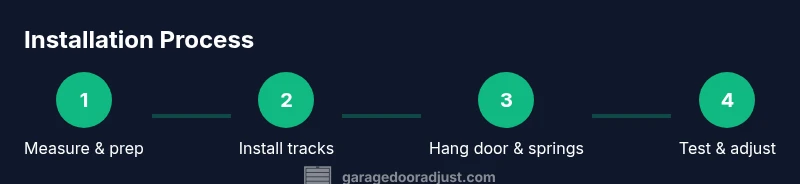
Clear the garage, lay a protective ground cover, and ensure the door path is free of obstructions. Mark stud lines and confirm electrical outlet availability for any opener wiring. Safety first: disconnect power to the existing system before touching components.
Tip: Have a partner ready to help lift heavy sections and manage cables. - 2
Measure and verify space
Measure the opening width and height, headroom, and side room for tracks. Compare with the door kit specifications to ensure compatibility. Recheck measurements before cutting or drilling.
Tip: Measure twice, drill once to avoid costly changes. - 3
Install tracks and frame brackets
Mount vertical tracks to the frame, then secure horizontal tracks along the ceiling line. Align with the door framing and ensure tracks are plumb and square before tightening.
Tip: Use shims if the floor or wall is out of level. - 4
Hang the door panels and braces
Position panels onto the tracks, attaching hinges and bracing as required by the kit. Ensure each panel is level and slides smoothly along the tracks.
Tip: Keep panels supported during placement to avoid bending. - 5
Install springs and cables
Attach torsion or extension springs following the kit instructions, then connect cables to the door sections. Ensure spring tension matches the door weight and safety cable requirements.
Tip: Do not attempt to adjust springs without a helper and a proper spring winding bar. - 6
Mount the opener and safety sensors
Install the operator rail, mount the opener securely to the ceiling, and connect sensors at the bottom corners of the door opening. Program the opener and test auto-reverse safety features.
Tip: Keep away from parked cars and pets during testing. - 7
Test, balance, and tune
Manually test door balance, then cycle the door using the opener and sensor settings. Adjust track alignment and spring tension as needed for smooth operation.
Tip: If the door binds or drops quickly, stop and reassess the spring alignment.
Got Questions?
What is a standard 10x9 garage door?
A 10x9 door is ten feet wide and nine feet tall, commonly used for two-car garages. Availability varies by region and panel design.
A 10 by 9 door means it’s ten feet wide and nine feet tall, a common size for many two-car garages.
Can I install a 10x9 door myself?
DIY installation is possible for experienced homeowners with the right kit and tools. However, precise alignment and spring setup are critical for safety, so consider professional help if you’re unsure.
You can install it yourself if you’re confident with measurements and springs, but safety is key—don’t hesitate to call a pro if needed.
Do 10x9 doors require a professional opener?
Most 10x9 doors are compatible with standard residential openers, but check the opener’s rated weight and track alignment. Some high-torque openers offer smoother operation for heavier doors.
Most openers work, but verify weight compatibility and track setup with your model.
What maintenance is recommended for a 10x9 door?
Regularly inspect tracks, rollers, weather seals, and springs. Lubricate moving parts, test safety features, and re-seal gaps to maintain efficiency.
Check tracks and seals often, lubricate parts, and test safety features regularly.
What safety precautions are essential during installation?
Wear protective gear, disconnect power, and never loosen springs without proper equipment. Have a second person to assist with lifting heavy panels.
Wear safety gear, keep others clear, and get a helper for heavy parts.
How does insulation affect performance?
Insulation reduces heat transfer and noise. Choose insulated panels if the garage is used as a workspace or is attached to living space.
Insulation makes the garage more comfortable and energy-efficient.
Watch Video
Quick Summary
- Measure space accurately before purchasing.
- Choose insulation and material suited to your climate.
- Follow safety steps and use the correct spring system.
- Test and adjust after installation for safe operation.