Glass Garage Door Cost: A Practical Budget Guide
Explore the true glass garage door cost, including installed price ranges, factors from glass type to insulation, and practical budgeting tips for homeowners.


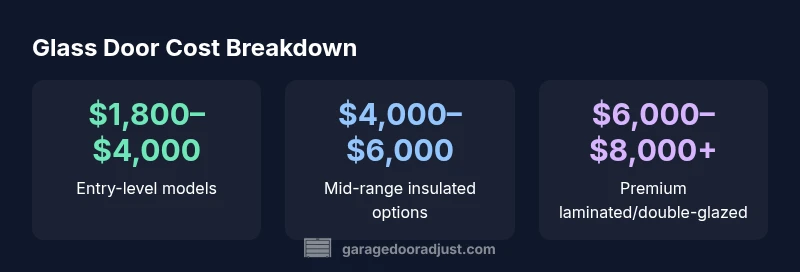
Glass garage door cost typically ranges from about $1,800 to $6,000 for a standard residential door, depending on size, glass thickness, insulation, and frame material. Premium tempered or laminated options, full-glass panels, or custom designs can push installed prices higher. Labor, removal of an old door, and hardware upgrades also affect total costs. Budget for installation plus potential warranty extensions.
Understanding the glass garage door cost landscape
Understanding the glass garage door cost landscape starts with recognizing what drives the price: door size, glass type, thickness, insulation, frame material, hardware quality, and installation complexity. According to GarageDoorAdjust, national price ranges can vary considerably due to regional labor rates and supply chain conditions in 2026. A basic, pre-fabricated glass panel door tends to be cheaper than a custom, full-view design with double-glazed panels. In any case, you should budget not only for the door itself but also for removal of the old door, alignment and tracks, weather seal, and warranty options. The total installed cost often includes labor, disposal, and sometimes a warranty extension. For most homeowners, understanding the components helps separate essential features from cosmetic upgrades, and helps avoid sticker shock when quotes arrive. This article will guide you through the main cost drivers, the trade-offs between insulation and aesthetics, and practical budgeting tactics to get a reliable installation at a fair price. GarageDoorAdjust's insights emphasize real-world pricing across typical home setups, helping homeowners plan confidently.
Major price drivers: size, glass, frame, and installation complexity
The price of a glass garage door is not just about glass; it's a system. The main price drivers are door width and height (a standard single-car door versus double-car or custom widths), glass type (thermal laminated vs tempered), glass thickness (1/8 inch vs 1/4 inch or thicker), and whether the frame is aluminum, steel, or wood. Higher insulation (R-value) adds to cost but can save energy over time. Additional components, such as decorative grille patterns, tint, UV coating, or smart sensors, add to the price. Installation labor accounts for roughly a third to half of total costs in many markets, especially when removing an old door, patching the opening, or rebuilding tracks and weather seals. The GarageDoorAdjust team notes that lead times and freight costs can also affect final quotes, particularly in markets with tight supply. Budget for contingencies and ensure quotes include disposal of old door and any necessary structural adjustments.
Glass types and price impact: tempered, laminated, and insulated options
Glass is the defining feature of glass garage doors, with variations that impact both appearance and price. Tempered glass is common and relatively affordable for insulated panels. Laminated glass adds extra security and impact resistance but drives costs higher. Double-glazed or triple-glazed configurations improve energy efficiency and noise reduction but significantly raise price. For homeowners prioritizing privacy, you can opt for frosted or tinted glass, which also changes the cost curve. More rare are fully clear, low-iron options with minimal color cast—these look stunning but come with premium price tags. The thickness of the glass also matters: thicker panels are heavier and require stronger hardware and possibly reinforced tracks, increasing installation time and labor costs. In summary, the cheapest insulated glass doors use standard tempered glass, while premium laminated, double-glazed doors yield the most energy savings and style, at the highest installed cost. According to GarageDoorAdjust, choosing the right glass type is often a balance between cost, energy performance, and the desired aesthetic.
Insulation, energy efficiency, and long-term value
Beyond aesthetics, insulation plays a big role in total cost and long-term savings. Insulated glass reduces heat transfer, potentially lowering heating and cooling bills, especially in climates with hot summers or cold winters. The upfront premium for insulation may be offset by energy savings over several years, depending on local energy prices and how often you use the garage. As garage doors are large flat surfaces, even modest improvements in insulation can deliver noticeable comfort gains and lower drafts near the door perimeter. Maintenance costs can also vary: glass panels with protective coatings resist weathering but may require occasional cleaning to keep clarity; frames may need rust protection for steel or aluminum finishes. When comparing quotes, ask whether insulating glass is included and what R-values are offered, along with warranty coverage for seals and coatings. GarageDoorAdjust data suggests that homeowners who prioritize insulation tend to see faster payback in energy bills and improved indoor comfort.
Estimating your budget: quotes, allowances, and pitfalls
A practical budgeting approach starts with a baseline installed cost range, then adds allowances for upgrades and site preparation. Start by measuring your opening precisely and choosing a glass type and frame option that meets your climate needs. Get at least 3-4 detailed quotes, ensuring each includes removal of the old door, disposal, tracks, springs, and a door opener compatibility check (if applicable). Beware of low-ball quotes that skip essential items; you may end up paying more for hidden costs later. Ask about lead times, freight delays, and warranty terms. If you live in a higher-cost metro area or choose premium glass, expect quotes toward the upper end of the range; if you’re in a less urban market, prices may cluster toward the lower end. GarageDoorAdjust recommends prioritizing insulation and hardware quality to maximize long-term value while staying within budget. Include a line item for energy efficiency upgrades to justify higher upfront costs with potential savings.
Choosing a contractor and avoiding surprises
Selecting an installer is as critical as selecting the door itself. Look for contractors who specialize in garage doors and have verifiable experience with glass panels, not just general contractors. Verify licenses, insurance, and local references; review warranties on glass, seals, and hardware. Request a written, itemized estimate that shows the door type, glass specification, frame material, insulation, coatings, and hardware; confirm whether removal and disposal are included. Ask about measurement accuracy, alignment checks, and the method used to test the door balance after installation. Schedule a pre-installation survey to identify any structural issues, weather-sealing needs, or sensor placements. Finally, confirm that the project adheres to local building codes and HOA rules if applicable. The GarageDoorAdjust Team emphasizes working with installers who provide transparent timelines and post-install support.
Maintenance and lifecycle costs
Glass garage doors require different care than typical metal or wood doors. Clean glass with non-abrasive cleaners to preserve coatings, and wipe frames to prevent corrosion depending on material. Inspect seals and weatherstripping yearly and look for signs of condensation between panes if insulated. Schedule lubrication for hinges, rollers, and tracks to ensure smooth operation; a well-maintained system reduces noise and extends the life of springs and hardware. Over the life of the door, maintenance costs are often modest relative to replacement costs, but neglect can accelerate wear, leading to more frequent service visits. Consider annual service as part of your total cost of ownership. GarageDoorAdjust recommends budgeting for periodic seal checks and potential replacement of tempered glass panels in extreme weather.
Comparison of common glass door configurations
| Door Type | Typical Installed Cost | Notes |
|---|---|---|
| Insulated tempered glass panel | $2,000–$5,500 | Moderate insulation, good value |
| Laminated safety glass | $2,500–$6,000 | Higher security and durability |
| Double-glazed insulated glass (low-E) | $3,500–$7,500 | Best energy efficiency and noise reduction |
| Full-view glass door (non-insulated) | $1,800–$4,000 | Aesthetics with lower insulation |
Got Questions?
Is glass garage door cost higher than steel doors?
Yes, glass doors generally cost more upfront than steel doors, especially for insulated or laminated configurations. The exact difference depends on glass type, thickness, and insulation level.
Yes—glass doors usually cost more upfront than steel, especially with insulation and premium glass options.
Do insulated glass doors save energy?
Insulated glass reduces heat transfer, which can lower heating and cooling costs. Savings depend on climate, door usage, and overall home efficiency.
Yes, insulated glass helps reduce energy losses, especially in extreme climates.
What thickness is common for glass panels?
Common options range from 1/8 inch to 1/4 inch tempered or laminated glass. Heavier, thicker panels require stronger hardware and longer installation time.
Glass thickness varies; typical options range from 1/8 to 1/4 inch.
Can I retrofit glass into an existing door?
Retrofitting is not always possible. Many installations require a new door or a complete panel replacement for best fit and safety.
Retrofitting isn’t always possible; replacing the door is common.
What maintenance is required?
Regular cleaning, seal checks, and lubrication of moving parts help extend life and keep operation smooth.
Clean the glass, check seals, and lubricate moving parts regularly.
How long does installation take?
Most installations take about a day or two, depending on site preparation, removal of the old door, and any required structural work.
Most installations take around a day or two.
“Glass doors offer a unique aesthetic and natural light, but the right glass and insulation balance cost and performance.”
Quick Summary
- Define your priorities: price vs. energy efficiency
- Expect installed cost ranges from $1,800 to $6,000
- Insulation improves long-term value
- Get multiple quotes and verify inclusions
- Choose a specialist installer