Garage Door with or Without Windows: A Practical Guide
A comprehensive, objective comparison of garage doors with and without windows, examining light, insulation, security, maintenance, cost, and aesthetics to help homeowners decide which option fits their home.


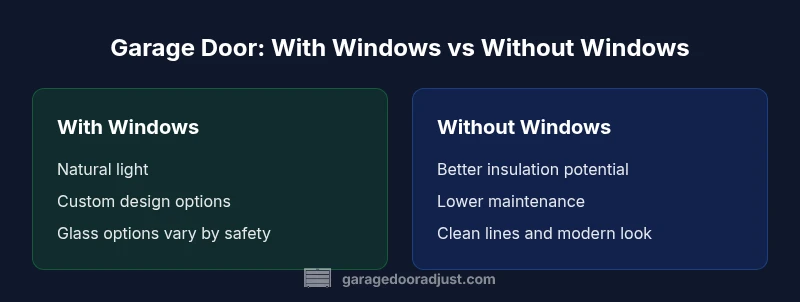
When choosing a garage door with or without windows, weigh natural light and curb appeal against energy efficiency, privacy, and security. Doors with windows offer brighter spaces and better aesthetics, but can impact insulation and maintenance unless you select tempered or insulated glass. The right choice depends on climate, privacy needs, and willingness to invest in higher-end glazing. This quick comparison helps you decide.
Overview of Windowed vs Solid Garage Doors
Choosing between a garage door with windows and a solid panel door is a decision that blends function with style. Windows can dramatically change curb appeal and interior lighting, but they also introduce variables in insulation, privacy, and maintenance. According to GarageDoorAdjust, homeowners who prioritize natural light often opt for windowed designs, while those living in extreme climates frequently favor solid doors for tighter energy performance. In this section we outline the practical implications of each path and set the stage for deeper comparisons later in the article.
Light, Privacy, and Aesthetics
Windows bring daylight into the space, reducing the need for electric lighting during daytime hours. For workshops, garages used as studios, or rooms adjacent to the garage, this light can be an asset. However, visibility into the garage from outside raises privacy and security questions. Window styles range from clear panes to frosted or decorative glass, each impacting visibility differently. Aesthetically, windows enable grid patterns and brand-new design language that complements the home exterior, but they require careful selection to avoid compromising the overall look if the surrounding architecture is minimalist or modern.
Energy Efficiency and Insulation Impacts
Energy performance hinges on the window glass and frame sealing. A garage door with windows can be as energy-efficient as a solid door if you choose high-performance insulated glazing and robust weather seals. Tempered or laminated glass with low-emissivity coatings helps minimize heat transfer, while tight edge seals prevent drafts. In climates with hot summers or cold winters, the wrong glass or a leaky frame can negate insulation gains, making close attention to installation details essential. This section emphasizes how to balance light with thermal performance to prevent energy losses.
Security Considerations
Security is a practical concern with any entry point, and windows add a potential vulnerability if not properly mitigated. Window glass, especially large panes, can be easier to access than solid panels, and certain window placements may invite break-ins. You can mitigate risk with laminated or tempered glass, reinforced frames, and strategic window sizing. Grilles or decorative overlays can also deter forced entry while maintaining aesthetic appeal. If you live in an area with high burglary risk, consider combining windowed designs with smart locks, motion lighting, and alarm integration to preserve both light benefits and security.
Maintenance and Durability
Glazing systems require regular maintenance: cleaning glass, inspecting seals, and ensuring hardware operates smoothly. Window frames are exposed to weather, which can cause wear if protective coatings degrade. Frosted or tinted glass can reduce UV glare but may require additional cleaning to remove smudges. In contrast, solid doors typically involve less frequent maintenance beyond routine hinge lubrication and surface cleaning. Homeowners should budget for periodic seal checks and potential weatherstripping replacement, especially in harsh climates.
Window Types and Materials for Garage Doors
Several glazing options influence safety, privacy, and energy performance. Tempered glass is stronger and shatters into small, less dangerous pieces, while laminated glass holds together on impact. Frosted, tinted, or decorative glass can preserve privacy while still letting light through. For those seeking maximum insulation, consider double or triple glazing paired with low-emissivity coatings and gas fills. The choice of frame materials (vinyl, steel, or wood-clad) also affects durability and maintenance needs, so select a combination that aligns with climate and usage patterns.
Cost Considerations and Value
Windowed doors typically entail a higher upfront cost than solid doors due to glass, framing, and installation complexity. Over the long term, energy performance, maintenance, and replacement glass must be weighed against the initial savings of a solid door. In general, expect a broader price spectrum driven by window type, size, and frame materials rather than a fixed price tag. Homeowners should evaluate total cost of ownership, including potential increases in home value and the ambiance added by natural light.
Installation, Retrofitting, and Codes
Adding windows to an existing door or selecting a windowed door during new installation requires careful alignment with local codes and structural considerations. Retrofitting may involve reinforcing the door opening, adjusting tracks, and upgrading weather seals. It is important to work with a qualified installer who can ensure proper flashing, glass certification, and glazing materials meet safety standards. For new builds, designers can plan window placement to maximize light while preserving energy performance and security.
Design, Curb Appeal, and Home Value
From a design perspective, windowed doors offer opportunities to harmonize with architectural details, such as color palettes, trim, and window grids. They can increase perceived value and curb appeal when chosen thoughtfully. For homeowners considering resale, the impact of windowed designs varies by market; some buyers value light and aesthetics, while others prioritize energy efficiency and privacy. A balanced approach often yields the best long-term satisfaction and return on investment.
Weather Performance, Seals, and UV Protection
Weather seals around windows are critical for preventing air leakage and moisture intrusion. High-quality gaskets and proper installation reduce drafts, while UV protective coatings limit sun damage to interior furnishings and flooring. When selecting glass, consider glare management and interior comfort, especially if the garage doubles as a workshop or living space. A well-sealed, UV-protected windowed door can perform comparably to a solid door in many climates when paired with proper insulation.
Decision Framework and Quick-Start Steps
To begin choosing between a garage door with windows or a solid door, list your primary needs: daily light, privacy, climate control, security, and maintenance tolerance. Compare options with a simple checklist: window type (clear, frosted, tinted), glass performance (insulation rating), frame material, and sealing quality. Conduct a quick energy audit to estimate potential heat gain or loss. Finally, consult with aGarageDoorAdjust-certified installer to validate feasibility and confirm that your choice aligns with both your budget and home style.
Practical Guidelines for Homeowners (Summary Section)
As you advance toward a decision, remember that there is no one-size-fits-all answer. A windowed door excels for light and style when paired with proper insulation and security measures, while a solid door offers straightforward energy efficiency and lower maintenance. The best approach is to tailor your choice to your climate, privacy needs, maintenance capacity, and long-term home improvement goals.
Comparison
| Feature | Door with Windows | Door without Windows |
|---|---|---|
| Light transmission | High | Low |
| Insulation quality | Moderate to high with proper glazing | High with solid panels and no glazing |
| Privacy | Low privacy unless frosted/decorative glazing used | High privacy |
| Security | Slightly higher vulnerability if glass is accessible | Lower risk due to solid panel |
| Maintenance | Glass cleaning and seal checks required | Minimal maintenance beyond hinges and weather seals |
| Cost range | Higher upfront cost due to glass and installation | Lower upfront cost |
| Aesthetics/curb appeal | Strong design potential with glass Grids | Clean, minimalist look |
| UV exposure/glare | Potential glare; UV protection recommended | No glare; less UV exposure |
Upsides
- Improved natural light and curb appeal
- Greater design flexibility with window shapes and grids
- Potential to tailor glass for safety and energy performance
- Can increase perceived home value when done well
Disadvantages
- Potential energy losses without high-performance glazing
- Increased maintenance and cleaning tasks
- Security considerations with visible glass
- Higher upfront cost and possible replacement costs
Windowed doors are advantageous for light and aesthetics when paired with energy-efficient glazing and solid security measures.
If your climate and lifestyle support better lighting and style, choose windowed doors with tempered/low-e glass and robust seals. If energy efficiency and low maintenance are priority, a solid door may be the safer default.
Got Questions?
Do garage doors with windows provide better natural light?
Yes, windowed doors permit natural light, reducing the need for artificial lighting. Balance light with privacy and security considerations.
Windowed doors let in more light, but you may trade privacy and security.
Do windows affect energy efficiency?
Windows can influence energy efficiency. Use insulated glazing, proper seals, and frame choices to minimize heat transfer.
Energy depends on glass quality and seals; choose insulating glass.
Can I add windows after installation?
Retrofitting is possible with a professional, but it may involve structural work and added cost.
Windows can be added later, but expect modifications.
What maintenance is required for windowed doors?
Regular cleaning, seal inspection, and UV protection checks help maintain performance and appearance.
Keep seals clean and check for wear regularly.
What window types work best for garages?
Tempered or laminated glass with tinted options offers safety and light control; frosted glass preserves privacy while letting light through.
Tempered or laminated glass is a good choice for safety.
Are frosted or decorative windows effective?
Yes, frosted or decorative glass reduces outside visibility while letting in light.
Frosted glass keeps privacy while letting light in.
Quick Summary
- Assess climate and privacy needs before choosing windows
- Opt for tempered or laminated glass for safety
- Prioritize high-performance glazing and sealing for energy efficiency
- Consider frosted or decorative glass to balance light and privacy
- Plan for regular maintenance of glass and seals