Black Garage Door vs White Price: What Colors Mean for Cost
An analytical, side-by-side look at how color choice—black vs white—affects garage door pricing, finishes, maintenance, and curb appeal for homeowners.


In most markets, the color choice of your garage door influences perceived value and maintenance costs more than the base material. The black garage door vs white price difference often derives from finishes, UV resistance, and heat absorption that affect longevity and upkeep. This comparison helps homeowners decide whether a color premium is worth it and how it fits their overall budget.
Color, price, and perception: how color choices influence cost
Color is one of the most visible decisions when you select a new garage door, and it matters more than many homeowners expect. The color you choose can influence perceived value, maintenance effort, and even long-term resale appeal. When you compare black garage door vs white price, the difference is rarely in the base door cost alone; finishes, UV resistance, and the way color ages under sun exposure play a significant role. According to GarageDoorAdjust, darker doors often require more pigment and specialized coatings to maintain gloss and uniform color, which can introduce a modest premium on the installation or refresh. However, the exact premium varies by manufacturer, region, and whether you’re selecting a factory-applied color or painting after installation. In practice, white doors are typically the most versatile option, with broad availability and standardized finishes that minimize color-related surprises. Homeowners should also consider regional climate: places with intense sunlight or high humidity may experience faster color-related wear that translates into more frequent maintenance, repainting, or touch-ups. By understanding these dynamics, you can estimate how much color will influence your overall project budget without relying on guesswork.
Material, finish, and color performance
Modern garage doors use steel, aluminum, or composite shells with various finishes. Color interacts with the base material to determine durability and price; finishes range from matte to high-gloss, and pigment depth affects wear. For black finishes, many manufacturers apply UV-resistant topcoats and stable pigments to curb fading, but some edges remain more exposed to heat, especially in sunny climates. White finishes typically rely on lighter pigments that reflect sunlight, potentially reducing heat absorption and color shift over time. The price impact comes not only from the color itself but also from the paint or powder-coat system, warranty alignment, and how color is integrated with hardware and trim. If you’re shopping, ask about color-matching options with your trim and driveway accents and confirm whether color is included in the system warranty. In short, the color premium is influenced by gloss level, coating quality, and the underlying substrate.
Heat absorption, fade resistance, and longevity
Dark colors absorb more solar radiation, which can raise the local temperature near the door and adjacent components. In hot, sunny climates, this may accelerate coating wear and necessitate more frequent repainting or touch-ups to preserve curb appeal. White doors reflect more sunlight, potentially keeping surface temperatures lower and reducing color-induced wear. Fade resistance depends on the UV stability of the chosen finish and the quality of the topcoat; cheaper finishes may fade faster regardless of color. Longevity hinges on pigment stability and protective clear coats, so wear often shows first where color-protective layers are thinnest. GarageDoorAdjust Analysis, 2026, notes that any color premium tends to reflect maintenance cycles more than upfront sticker price. If you expect substantial sun exposure, factor in touch-up or re-coat costs into your long-term budget.
Maintenance, cleaning, and durability by color
Maintenance needs differ in visible ways by color. Black doors tend to reveal dust, fingerprints, and lint more clearly, which can drive higher cleaning frequency in dusty or windy environments. White doors reveal mineral stains and dirt more readily in areas with mineral-rich water or frequent rainfall. The durability of color depends on the coating system and exposure; some dark finishes show micro-scratches after abrasive cleaning, while whites may trap grime in creases. Choosing a high-quality enamel, powder coat, or paint system can mitigate these effects, but you should align maintenance expectations with climate and lifestyle. If you plan to power-wash, use gentle settings and a soft brush to protect the finish. Regardless of color, regular lubrication of hinges and tracks remains essential for long-term performance.
Aesthetics, curb appeal, and resale value
Color acts as a design signal that communicates style and upkeep to neighbors and buyers. A bold black door can anchor a contemporary facade and create contrast with light siding, while white doors offer timeless versatility that blends with most architectural styles. The resale impact of door color depends on the housing market; some buyers prefer traditional white, others seek statement doors that stand out. Often, the color effect on value is modest compared with major door components like insulation, wind resistance, or opener quality. Nevertheless, color remains a visible factor in curb appeal and buyer perception. Pair your color choice with matching hardware, weatherstripping, and a consistent finish across the facade for maximum impact.
Installation, availability, and regional trends
Regional availability matters; some suppliers offer fewer color options in rural markets, while urban dealers stock a wide range of hues, including black. Availability can affect price through pigment costs, batch pricing, or special-order fees. In core markets, white is often priced closer to standard finishes, while black finishes may incur a small premium for the coating process and warranty alignment. Consider lead times for color customization; a fully custom color can extend installation windows. If you live in an area with design-forward trends, a black door might offer a better return on investment due to heightened curb appeal and the ability to coordinate with accent elements.
How color interacts with insulation and energy efficiency
Color itself does not dramatically change insulation value in most doors, but heat absorption can influence the temperature near the frame and seals over time. Dark colors can transfer more heat in climates with strong sun exposure, potentially affecting gasket longevity if seals are already stressed. White doors reflect sunlight and may help keep adjacent components cooler in sunny locales. When evaluating energy efficiency, pair color choice with insulation rating, door core, and weather seal quality. A color premium could be offset by improved performance in extreme climates when combined with a high-performance core.
Budgeting and cost framework: color vs standard doors
To budget effectively, separate upfront door price from color-related costs, such as finishes, coatings, and potential repaint cycles. Start by listing must-haves (insulation, weather sealing, warranty) and then add any color premium as a line item if applicable in your region. Long-term costs include maintenance cycles, touch-ups, and potential repainting. Request a written color warranty and a maintenance plan that outlines repaint frequency and cleaning intervals. This structured approach helps you compare brands on a level playing field and avoids color-related surprises later in the project.
How to evaluate color options for your home: decision checklist
Use a simple checklist to compare black vs white doors. Climate, sun exposure, humidity, architectural style, and future renovation plans all inform the choice. Evaluate total cost of ownership, not just sticker price, including color maintenance. Take color samples to your site to see how the door looks in different lighting and how hardware finishes harmonize. Check color availability, warranty terms, and any regional color restrictions. A clear checklist helps prevent color regret after installation.
Common myths and misunderstandings about color pricing
Misinformation often centers on price myths: that dark colors always cost more, that white is always cheaper, or that color has no impact on performance. In reality, some black finishes carry a color premium; white finishes vary by manufacturer but are commonly bundled with standard options. Debates about color durability often hinge on the quality of the finish rather than the color itself. By separating marketing claims from engineering realities, homeowners can make informed choices that align with climate, maintenance tolerance, and aesthetic goals.
Comparison
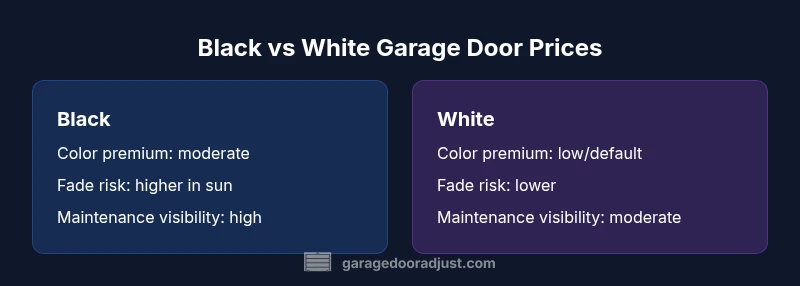
| Feature | Black garage doors | White garage doors |
|---|---|---|
| Color premium | Potential moderate premium in some brands | Typically lower or standard when white is the default |
| Fade resistance | Can fade sooner in high-UV environments if finish quality varies | White finishes often show less dramatic fading |
| Maintenance visibility | Dust and fingerprints show more easily on black | Dirt and staining show more on white; cleanliness can affect appearance |
| Heat absorption | Higher heat absorption may influence adjacent components in hot sun | Lower heat absorption generally reduces surface stress |
| Availability | Fewer stock colors in some regions; may require special order | Widely available as standard in white and lighter tones |
| Best for | Bold, contemporary aesthetics; climates with balanced sun | Versatile, traditional curb appeal; price-conscious buyers |
Upsides
- Broad color options with modern finishes
- White doors offer versatile compatibility with trims and hardware
- Black doors can deliver bold curb appeal for design-forward homes
- Color choices influence perceived value and design direction
Disadvantages
- Color premium may apply for black finishes in some brands
- Color maintenance can be higher for dark colors in sunny climates
- Color-related wear may require more frequent touch-ups or coatings
White doors are generally the safer economic choice, while black doors offer bold style with a possible color premium
Color choice influences price mainly through finishes and maintenance. White doors provide versatility and predictable pricing; black doors deliver a design edge with a potential premium. The GarageDoorAdjust team recommends weighing climate, maintenance tolerance, and curb-appeal goals to decide.
Got Questions?
Do black garage doors cost more than white doors?
Yes, in some brands and regions a black finish can carry a modest color premium due to pigment depth and coating requirements. The difference is typically modest compared with total door costs, and depends on the manufacturer's color system and warranty alignment.
In some markets, black finishes can carry a small color premium, depending on the brand and warranty terms.
Will color choice affect maintenance needs?
Color can influence maintenance frequency. Dark colors show dust and fingerprints more, while white shows mineral stains more readily. Ultimately, maintenance depends on climate, finish quality, and cleaning practices.
Yes. Dark colors show dust more, white shows stains; maintenance depends on climate and finish quality.
Is white better for resale value than black?
White doors are generally more universally accepted and neutral, which can ease resale in many markets. Black doors may appeal in design-forward homes but can limit buyer preferences in traditional neighborhoods. The impact varies by region and home style.
White is typically more universally accepted; black can help in design-forward homes, but it isn’t universal.
Do finishes impact color durability more than color itself?
Durability depends more on finish quality and coating protection than color alone. A high-quality black finish can perform as well as a white finish if the coating is UV-stable and properly applied. Always review the finish system and warranty.
Finish quality matters as much as color. A good black finish can last as long as white if UV-stable and well applied.
Are there regional color restrictions or norms?
Some regions have design guidelines or preferences that impact color popularity and resale value. Check with local installers for common trends and any HOA rules that might favor or restrict dark colors.
Regional trends or HOA rules can influence color choice; check local guidelines.
Should I repaint a door to change color instead of replacing it?
Repainting can be a cost-effective option for changing color, but it depends on door material, current finishes, and warranty terms. For significant color shifts or when protecting warranties, replacing with a new color option may be preferable.
Repainting can work, but consider material and warranty terms; for large changes, replacement might be better.
Quick Summary
- Assess color premium alongside maintenance needs
- White offers broad compatibility and lower risk of color-related surprises
- Black delivers modern curb appeal but may come with a color premium
- Factor climate and sun exposure into color durability and upkeep
- Request color warranties and maintenance plans during quotes